
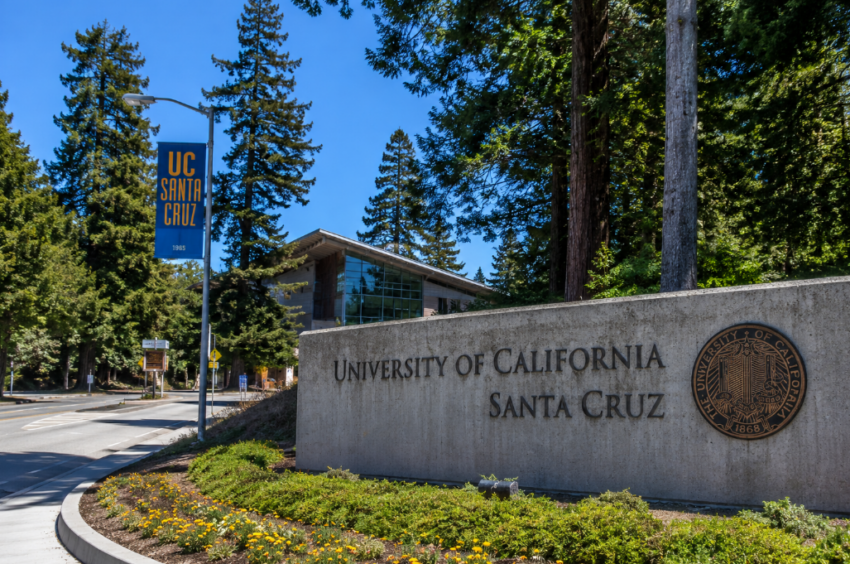
UC Santa Cruz increased security and warned students after threatening graffiti named January 18, 2011, as the date for possible violence on campus. The message was found weeks earlier in a men’s restroom in Social Sciences 2. University officials kept the campus open but urged everyone to remain alert.
The graffiti was discovered by a student in December 2010 and was later removed. Officials did not publicly release its exact wording or explain what type of violence it described. They said only that the message contained a threat tied to a specific date.
The university sent a campuswide email on January 11, one week before the date mentioned in the writing. The warning asked the campus community to report suspicious conduct or behavior that appeared unusual. Students were also encouraged to pay attention to their surroundings, travel in groups, and make sure their contact information was registered with CruzAlert, the university’s emergency notification system.
UC Santa Cruz published a FAQ on January 13 to explain how the campus would operate. Administrators said classes would meet on January 18 unless instructors moved or rescheduled them. Offices were also expected to follow their normal schedules.
Faculty members who wanted to change a class were told to consult their department chair. Teaching assistants were directed to speak with their supervising faculty members before moving laboratories or discussion sections. Students were advised to contact their instructors for updates.
Employees who were concerned about reporting to work were told to discuss the matter with their supervisors. The university said supervisors could consider leave requests or alternative work locations based on operational needs and campus policies. Campus police increased security without describing their deployment.
Officers from other UC campuses were brought to Santa Cruz to help. ABC7 reported that officers from UC Berkeley and UC Davis joined the operation. Police focused attention on the Social Sciences area where the graffiti had been discovered.
The university also coordinated with the Santa Cruz Police Department and the Santa Cruz County Sheriff’s Office. Local reporting said the additional agencies were prepared to assist campus police during an emergency. Officials said the response was intentionally cautious because the message named a clear date.
Campus leaders arranged training sessions for students and employees beforehand. Hundreds of people viewed a 20-minute training video about responding to violence. The material included a worst-case active-shooter scenario, although officials stressed that the graffiti did not necessarily describe that kind of attack.
The training gave participants basic instructions about recognizing danger, contacting police, and responding during an emergency. Campus safety pages also directed students to counseling services and employees to the university’s assistance program if the warning caused stress or anxiety.
Concern increased as January 18 approached. The date came after the Martin Luther King Jr. holiday weekend, when students and faculty were returning to their regular schedules. Some people decided not to come to campus.
SantaCruz.com reported that the Student Union Assembly canceled a meeting and that a small number of professors canceled classes. Other instructors moved or rescheduled their courses. Students exchanged information about the threat and class changes online.
The campus was noticeably quieter than usual on January 18.
CBS News reported that several classes that continued as scheduled had reduced attendance. One freshman said about half of the students were missing from an oceanography class. Other students said they believed attending class was a normal risk and chose not to change their routines.
No violence or other unusual event was reported during the day. Police remained visible, especially around the Social Sciences buildings, while students continued their activities. University officials said they believed an attack was unlikely but treated the warning seriously.
The person who wrote the message was not publicly identified. Available reports did not announce an arrest or establish a motive. Officials also did not confirm whether the writer was a student, employee, visitor, or someone else with access to the building.
The incident raised questions about why the campuswide warning came weeks after the graffiti was first discovered. Officials did not release a detailed timeline explaining every step of the investigation. Their public statements emphasized preparation, increased patrols, and the decision to notify the campus before the named date.
The warning came during an already difficult period for the university community.
On January 8, 2011, a gunman attacked a public event held by U.S. Representative Gabrielle Giffords in Tucson, Arizona. Six people were killed, including Gabriel Zimmerman, a 2002 UC Santa Cruz graduate who worked as Giffords’ community outreach director. The campus announced his death on January 10, one day before distributing the graffiti warning.
There was no reported evidence connecting the restroom message to the Tucson shooting. The timing, however, placed campus violence and emergency preparedness under intense public attention. Students were processing the death of an alumnus while also receiving a warning about a separate local threat.
After January 18 passed without an attack, officials indicated that the immediate danger associated with the dated message had ended. Regular campus operations continued. The incident remained an example of how universities respond when an anonymous threat contains little specific information but identifies a particular day.
The university chose not to close the campus. Instead, it combined added police coverage, public warnings, emergency training, and flexibility for instructors and employees. That approach allowed normal operations to continue while giving individuals the option to make different arrangements.
The original graffiti produced fear even though no attack followed. It disrupted classes, reduced attendance, changed meeting schedules, and required support from several law enforcement agencies. It also showed how a short anonymous message in a restroom could affect an entire campus weeks after it was written.
The most important later development was that January 18 ended without violence. Police found no public sign that the threatened event had been attempted. The identity and intent of the person responsible for the graffiti remained unconfirmed in the reports reviewed for this update, and those reports did not announce related criminal charges against any identified suspect.