
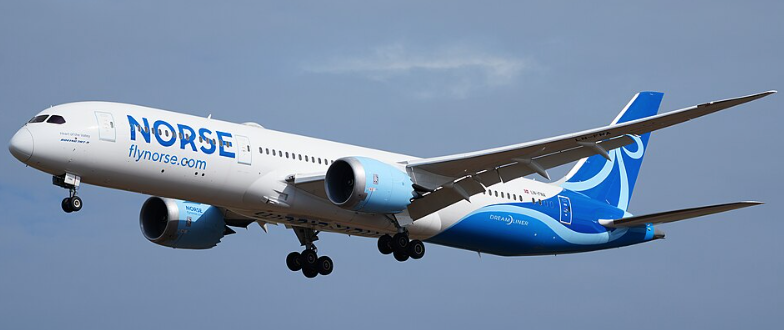
The Norwegian low-cost long-haul airline has canceled all flights and suspended ticket sales after failing to secure emergency financing, leaving passengers and employees facing an uncertain future.
Norse Atlantic Airways, the Norwegian budget airline specializing in long-haul international travel, filed for bankruptcy on Friday, November 27, 2026, after failing to secure emergency financing. The company’s Norwegian operating subsidiary submitted a bankruptcy petition to the Agder District Court after its board determined that continued operations were no longer financially possible. All Norse flights have been canceled, and ticket sales have stopped, disrupting travel plans for passengers across Europe, North America, Asia, and Africa.
The bankruptcy filing applies specifically to Norse Atlantic Airways AS, the Norwegian operating subsidiary of publicly traded parent company Norse Atlantic ASA. Other companies within the group, including its British subsidiary, were not included in Friday’s filing. However, flights operated by the British subsidiary have also been canceled, leaving the future of the remaining business uncertain.
Emergency Financing Efforts Fail
Norse first disclosed the severity of its financial difficulties on November 25, when it announced that it was seeking immediate funding and considering strategic alternatives. The airline suspended flights the following day and warned that bankruptcy could follow unless additional financing became available. Negotiations failed to produce sufficient funds to cover the company’s immediate financial obligations.
Chief Executive Officer Eivind Roald apologized for the disruption to passengers, employees, and business partners. Management and financial advisers are continuing to investigate whether parts of the business can be preserved. The Agder District Court will appoint a bankruptcy trustee to oversee the Norwegian subsidiary’s insolvency proceedings.
Aircraft Lessors Terminate Agreements
The airline’s financial difficulties intensified on Friday when aircraft leasing companies issued termination notices covering its entire fleet of 12 Boeing 787 Dreamliners. The notices demanded the return of the aircraft, creating another major obstacle to restoring flight operations. Norse disputed the validity of the lease terminations but acknowledged the serious consequences for its business.
According to Reuters, Norse originally arranged leases for 15 Dreamliners in 2021, including nine aircraft from AerCap Holdings and six from BOC Aviation. Three aircraft were subsequently returned to AerCap, reducing the fleet to 12. The leasing arrangements involved commitments extending over more than a decade.
Rising Fuel Costs Contribute to Financial Collapse
The airline was particularly vulnerable to the sharp increase in aviation fuel prices associated with the ongoing conflict in the Middle East. Long-haul flights require substantial quantities of fuel, making fuel expenditure an important consideration when airlines establish ticket prices and operating budgets. Unexpected price increases can quickly reduce profit margins, particularly for carriers selling inexpensive tickets.
Roald identified rising fuel costs as a decisive factor in the company’s financial collapse during an interview with Norwegian public broadcaster NRK. Norse had already been working to improve its financial performance before the latest increases in operating expenses. Its inability to absorb those additional costs ultimately complicated efforts to secure the funding necessary to remain operational.
An Attempt to Revive Budget Long-Haul Travel
Norwegian entrepreneur Bjørn Tore Larsen founded Norse Atlantic in 2021, and the airline began commercial operations in 2022. The company sought to revive affordable international air travel following Norwegian Air Shuttle’s withdrawal from long-haul operations during the COVID-19 pandemic. Its business model centered on offering inexpensive flights using Boeing 787 Dreamliners.
Unlike larger international airlines, which operate extensive networks of short-haul and long-haul routes, Norse concentrated primarily on longer journeys. This approach limited its access to passengers arriving on connecting flights from smaller regional airports. Industry analysts had identified that limitation as a potential difficulty for maintaining consistently profitable passenger services.
The airline subsequently expanded into aircraft leasing and charter operations to diversify its income. It also adjusted its scheduled passenger routes as market conditions changed, seeking opportunities beyond its original transatlantic network. These efforts ultimately proved insufficient to overcome its immediate financial difficulties.
Passengers Advised Not to Travel to Airports
Passengers holding tickets for canceled Norse flights have been advised not to go to airports unless they have secured alternative travel arrangements. The airline has also discontinued customer support through its usual communication channels, complicating efforts to resolve disrupted bookings.
Britain’s Civil Aviation Authority issued guidance on November 27 for passengers affected by the suspension of Norse Atlantic UK services. The regulator identified affected scheduled routes from London Gatwick to Bangkok, Cape Town, Orlando, and Phuket. Travelers who purchased tickets through travel agencies or tour operators should contact those businesses to determine what assistance is available.
Passengers who paid by credit or debit card may be able to recover money through their card providers, depending on applicable consumer protection rules. Travel insurance policies may also provide coverage for airline insolvency, although protection varies between policies. Customers can submit claims through the bankruptcy proceedings, but the recovery of their money is not guaranteed.
Uncertainty for Employees and the Remaining Business
The bankruptcy also places airline employees and their families in a difficult position. The Norse Atlantic Pilots Association expressed concern for affected workers and passengers following the announcement. The future employment of staff will depend partly on the outcome of insolvency proceedings and whether other parts of the company can continue operating.
Norse’s parent company has not announced a confirmed rescue agreement or a date for restarting flights. For now, passengers must make alternative travel arrangements while management explores possible options for preserving the remaining business.
IMAGE: Source Own work Author MarcelX42 CC4