
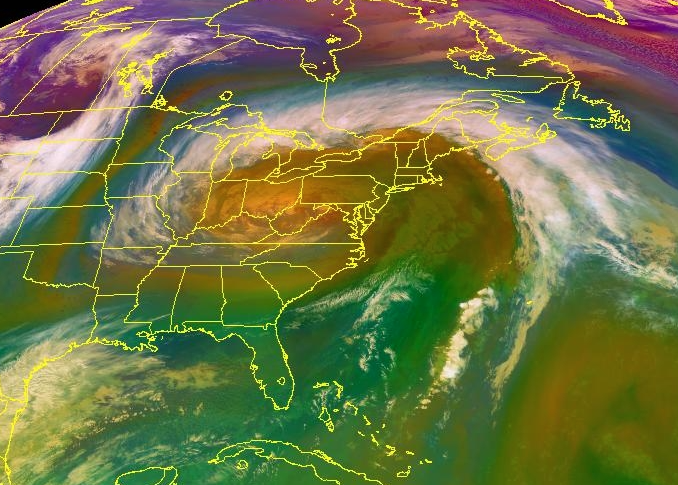
A powerful coastal storm disrupted Thanksgiving celebrations across the eastern United States, flooding communities, knocking out electricity and forcing the cancellation or postponement of major holiday events.
A powerful nor’easter swept across the eastern United States on Thanksgiving Day, November 26, 2026, bringing damaging winds, heavy rainfall and severe coastal flooding. The storm disrupted highway and air travel, forced emergency rescues and damaged electrical infrastructure across several states. Nearly one million utility customers nationwide were without electricity at one point Thursday evening as severe weather affected the East Coast and Midwest.
New Jersey, Pennsylvania, Maryland and Virginia were among the states experiencing significant disruptions. Emergency crews responded to flooded neighborhoods, fallen trees and damaged power lines while residents adjusted their holiday plans. The storm also forced the historic postponement of New York City’s Macy’s Thanksgiving Day Parade and the cancellation of Philadelphia’s traditional outdoor Thanksgiving parade.
Widespread Power Outages Across Multiple States
According to Reuters, approximately 961,000 utility customers nationwide were without electricity at 7:30 p.m. Eastern time on Thanksgiving Day. Wind gusts reaching approximately 70 mph in some coastal areas brought down trees and electrical lines. Heavy rainfall and flooded roads complicated efforts to reach damaged equipment.
Pennsylvania utility company PECO activated its emergency response organization ahead of the storm. Utility providers across the affected region prepared additional personnel and equipment to restore electricity when conditions permitted. However, continued strong winds created safety concerns for repair crews.
New Jersey Governor Mikie Sherrill declared a state of emergency ahead of the storm, while New York Governor Kathy Hochul also issued an emergency declaration covering affected areas of her state. The declarations allowed authorities to coordinate emergency resources and respond to dangerous conditions.
Severe Flooding Along the Jersey Shore
Coastal communities in southern New Jersey experienced some of the storm’s most significant flooding. Strong onshore winds pushed seawater inland during high tides, inundating streets and residential neighborhoods. Avalon, Ocean City, Stone Harbor and Atlantic City were among the communities affected.
Local authorities in Avalon reported exceptionally severe flooding, with emergency responders assisting motorists who became stranded after entering flooded streets. In Ocean City, residents encountered substantial standing water that made ordinary journeys dangerous. Floodwaters also carried debris into streets and created hazards involving electrical equipment.
WHYY reported that conditions resembled those experienced during the January 2016 nor’easter, when strong winds and elevated tides caused extensive flooding across southern New Jersey. The Middle Thorofare Bridge was restricted to emergency vehicles, while other transportation routes were affected by flooding and wind damage.
Atlantic City officials encouraged residents in vulnerable areas to consider voluntary evacuation. Authorities remained concerned about additional flooding during Thursday evening’s high tide, even as water began receding in some neighborhoods.
Macy’s Parade Postponed for the First Time
The storm prompted an unprecedented change to one of America’s best-known Thanksgiving traditions. Organizers postponed the 100th Macy’s Thanksgiving Day Parade in Manhattan until Saturday, November 28. According to the Associated Press, it was the first postponement in the event’s history.
The decision followed discussions between Macy’s, the New York Police Department and city emergency management officials. Strong winds presented particular concerns because of the difficulty of safely controlling the parade’s enormous inflatable characters.
New York City Mayor Zohran Mamdani issued a travel advisory ahead of the storm, encouraging residents to limit unnecessary journeys. Coastal flooding affected several areas of the city and surrounding communities, while falling trees and heavy rainfall created additional transportation hazards.
The rescheduled parade is expected to begin at 8:30 a.m. Saturday. The change has affected visitors, performers and event workers who had arranged their travel and accommodation around the original Thanksgiving schedule.
Philadelphia Cancels Its Outdoor Parade
Philadelphia also abandoned plans for its traditional Thanksgiving street parade along the Benjamin Franklin Parkway. Organizers determined that the dangerous weather made the outdoor event unsuitable for participants and spectators. An alternative television presentation replaced the planned street procession.
Philadelphia’s Thanksgiving parade dates to 1920 and is recognized as the oldest Thanksgiving parade in the United States. The cancellation represented another significant interruption to holiday traditions across the region.
Transportation problems extended beyond the city itself. The Commodore Barry Bridge, which crosses the Delaware River between Pennsylvania and New Jersey, was among the major routes closed because of storm-related hazards.
Virginia and North Carolina Experience Flooding
The storm also caused considerable disruption farther south along the Atlantic Coast. In Norfolk, Virginia, floodwaters covered streets and stranded motorists on Thanksgiving morning. Emergency personnel responded to numerous calls for assistance throughout the day.
High winds forced the temporary closure of the Chesapeake Bay Bridge-Tunnel, an important transportation link in southeastern Virginia. In North Carolina, seawater crossed protective dunes and inundated sections of Highway 12, disrupting travel along the Outer Banks.
These incidents demonstrated how coastal storms can interrupt transportation even in communities located far from the center of a weather system. Authorities warned motorists against attempting to cross flooded roads because water depth and underlying road damage can be difficult to determine.
Recovery Efforts Continue Into Friday
The National Weather Service had issued numerous warnings for coastal flooding, damaging winds and heavy rainfall ahead of Thanksgiving. The combination of elevated tides, strong onshore winds and persistent rainfall increased flooding risks in vulnerable coastal communities.
Airline passengers also faced delays and cancellations during one of the country’s busiest holiday travel periods. Several major airlines introduced travel waivers, allowing eligible passengers to adjust their reservations because of the severe weather.
As Friday began, emergency responders and utility workers continued addressing the storm’s effects. Weather conditions were expected to improve in parts of the Northeast ahead of Saturday’s rescheduled Macy’s parade. However, the restoration of electricity and reopening of flooded transportation routes remain priorities for communities recovering from the Thanksgiving storm.
IMAGE: NOAA Sat Image