
Pennsylvania has recorded nine measles-associated deaths in 2026, while the United States has lost its measles elimination status. Health officials are urging adults to review their vaccination history and determine whether they need additional protection.
With measles infections rising across the United States, health officials are encouraging adults to review their vaccination records. Pennsylvania confirmed its ninth measles-associated death on Monday, November 23, 2026, as the country faces its worst measles resurgence in more than three decades.
The latest fatality involved an unvaccinated Centre County resident who tested positive for the virus. Pennsylvania health officials reported 1,679 confirmed infections across 46 counties in an updated announcement Wednesday.
Although most adults who received recommended measles vaccinations remain protected, some may need an additional dose of the measles, mumps, and rubella (MMR) vaccine. Recommendations depend on vaccination history, age, medical circumstances, and exposure risk.
Measles Cases Continue to Rise Nationwide
The Centers for Disease Control and Prevention (CDC) reported 6,039 confirmed measles cases nationwide as of November 24. Approximately 97 percent of those infections were associated with outbreaks.
The resurgence has already cost the United States its measles elimination status, a distinction the country had maintained since 2000.
On November 17, the Pan American Health Organization confirmed that continuous transmission of the virus had become reestablished in the United States. Mexico and Bolivia also lost their elimination status.
Federal health agencies have committed to strengthening disease surveillance, vaccination programs, and coordination with state health departments to contain the outbreaks.
Do Fully Vaccinated Adults Need a Booster?
For most adults who received two properly administered doses of the measles vaccine, the answer is no.
The CDC estimates that one dose of MMR is approximately 93 percent effective against measles. Two doses increase that protection to approximately 97 percent.
People with documentation of two valid doses generally do not need a third dose for measles protection, even during an outbreak.
Although infections occasionally occur among fully vaccinated individuals, they are uncommon. Vaccination also helps reduce the likelihood of serious illness and complications.
Who Should Consider Another Measles Vaccination?
Adults born in 1957 or later who lack evidence of immunity generally need at least one MMR dose.
Certain groups face greater exposure risks and may need two doses, including:
- Healthcare workers.
- International travelers.
- College and university students.
- People living in outbreak areas where local health authorities recommend a second dose.
- Certain people who have close contact with immunocompromised individuals.
When two doses are required, they should be administered at least 28 days apart.
People who received only one childhood vaccination may already meet routine recommendations. However, their healthcare provider may recommend a second dose based on their current circumstances.
People Vaccinated During the 1960s
Adults vaccinated between 1963 and 1967 may need to review which type of measles vaccine they received.
An early version of the vaccine contained an inactivated virus and did not provide the same reliable protection as the live vaccine used today.
The CDC recommends revaccination for people who received the older inactivated vaccine. Adults vaccinated during those years who cannot determine which formulation they received should also discuss revaccination with a healthcare provider.
Local guidance distributed by the Allegheny County Medical Society advises physicians to review patients’ vaccination histories and ensure appropriate protection during the ongoing outbreak.
What About Adults Born Before 1957?
People born before 1957 are generally presumed to have natural immunity because measles circulated widely before vaccines became available.
Most people who recover from measles develop lifelong immunity. However, rare exceptions can occur, particularly among individuals with certain medical conditions affecting their immune systems.
The CDC does not routinely recommend vaccination or immunity testing for people born before 1957. Special considerations may apply to healthcare workers or individuals with unusual medical circumstances.
Older adults concerned about their protection should discuss their individual circumstances with a healthcare professional rather than assuming that everyone needs another vaccination.
What if Vaccination Records Are Missing?
Adults who cannot locate their vaccination records can contact former healthcare providers, state immunization registries, or other organizations that may have maintained those records.
If documentation cannot be found, an eligible adult may receive the MMR vaccine. Receiving another dose when someone is already immune is generally not harmful.
A blood test measuring measles-specific antibodies is another option, although routine testing is not necessary for everyone.
Pregnant women and people with severely weakened immune systems should not receive the live MMR vaccine. They should seek individualized medical guidance, especially after possible exposure.
Pennsylvania Expands Vaccination Efforts
Pennsylvania has significantly expanded access to measles vaccinations since its outbreak began in late April.
As of November 25, state health center staff had administered nearly 7,600 MMR vaccinations through 292 temporary vaccination clinics. State health centers and temporary clinics have administered more than 12,000 doses combined during 2026.
Demand has also increased among other healthcare providers. Approximately 25,000 MMR doses are administered statewide during a typical month. That figure exceeded 62,000 in October.
Additional vaccination clinics are planned according to community demand.
Recognizing Measles Symptoms
Measles typically begins with fever, coughing, a runny nose, and red or watery eyes. A rash generally develops several days later, beginning around the head before spreading across the body.
The virus can remain infectious in the air for up to two hours after an infected person leaves an area. Serious complications include pneumonia and inflammation of the brain.
Anyone who suspects they have measles should contact a healthcare provider before visiting a medical office. Calling ahead allows staff to arrange appropriate precautions and reduce the risk of exposing other patients.
Pennsylvania residents with questions about possible exposure can also contact the state health department at 877-724-3258.
Health officials continue to encourage eligible residents to obtain recommended vaccinations. For adults who are uncertain about their immunity, reviewing their vaccination records with a healthcare provider or pharmacist is an important first step.
Measles vaccines still use traditional vaccine technology, not mRNA.
The MMR vaccine (measles, mumps, and rubella) contains live, weakened viruses that stimulate the immune system without causing the disease in most healthy individuals.
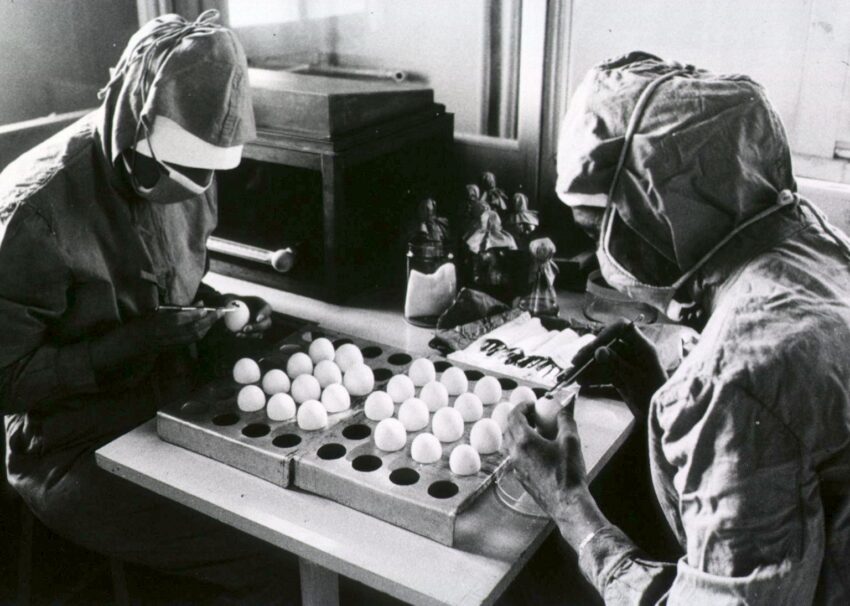
Modern manufacturing uses laboratory-grown cells rather than the whole eggs shown in your historical photograph.
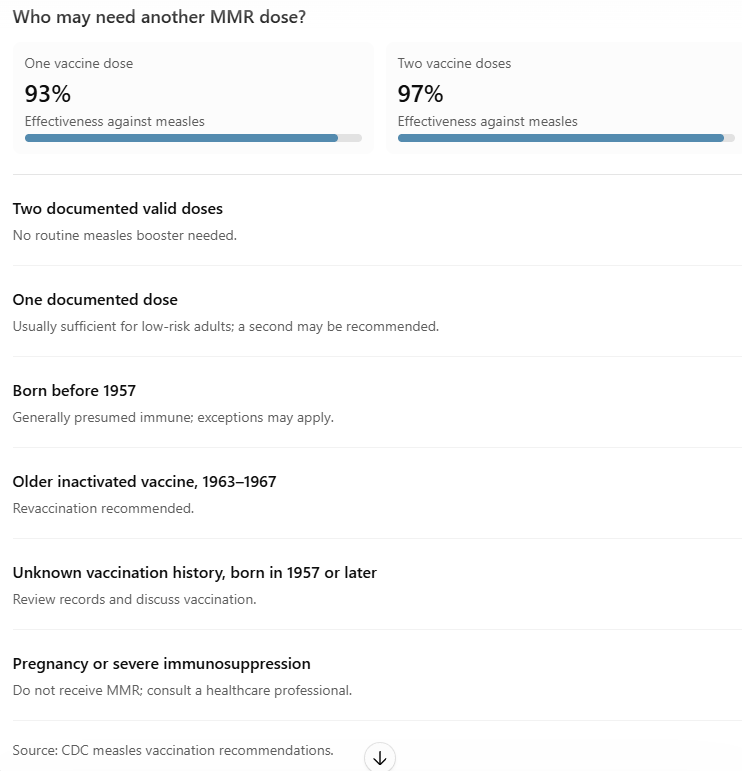
IMAGE: Preparation of measles vaccine at the Tirana (Albania) Institute of Hygiene and Epidemiology. Two technicians, wearing surgical gowns, are making small openings in eggs.. Photo: World Health Organization photo by D. Henrioud / Wikimedia, taken 2009-05-07, Attribution