
An unvaccinated Pennsylvania resident has died as measles outbreaks spread across the United States. New deaths in New York and Wisconsin add to concerns over declining vaccination rates and the country’s ability to maintain measles elimination status.
Pennsylvania health officials confirmed a sixth measles-associated death on Wednesday, November 4, 2026, as outbreaks continued spreading across the United States. The latest victim was an unvaccinated resident of Jefferson County who had tested positive for the highly contagious virus.
The Pennsylvania Department of Health reported 1,467 confirmed measles cases across 45 counties, making the state the center of the nation’s largest ongoing outbreak. Officials also confirmed 283 hospitalizations, underscoring the serious health consequences of a disease that vaccines can largely prevent.
The announcement came during a particularly troubling week for public health authorities. New York reported the death of a child associated with measles on November 2, while Wisconsin confirmed the death of an infant on November 5.
Pennsylvania Confirms Sixth Measles-Associated Death
Pennsylvania officials announced the latest death without releasing the person’s name, age or other identifying details. The department said protecting the family’s privacy was important as relatives mourned.
The death occurred in Jefferson County, where another measles-associated fatality had previously been recorded. Pennsylvania’s six confirmed deaths this year include two Jefferson County residents, three Lancaster County residents and one Mifflin County resident.
The state uses specific medical and epidemiological criteria when classifying a death as measles-associated. The person must have clinical evidence of measles and a positive laboratory test, with death occurring within 30 days after symptoms began.
Officials also examine whether the death resulted from an unrelated cause, such as an accident. Medical records and evidence of exposure may be considered before a case is included in the state’s official death count.
The department said it was continuing to investigate a separate death reported in Franklin County during October. As of November 4, that case had not met the criteria required for classification as a measles-associated death.
The distinction matters because a positive measles test does not automatically establish that the infection was the underlying cause of death. Health authorities use available medical evidence to determine how each death should be recorded.
Pennsylvania’s latest update included 34 additional cases since November 2. The outbreak has affected nearly half of the state’s counties and placed substantial demands on hospitals, healthcare workers and local health departments.
More Than 4,800 Measles Cases Reported Nationwide
The Centers for Disease Control and Prevention reported 4,852 confirmed measles cases nationwide as of October 29, 2026. That represented more than twice the 2,289 cases recorded during all of 2025.
The infections were reported across 47 jurisdictions, including states and the District of Columbia. The total also included a small number of cases among international visitors to the United States.
Children and teenagers accounted for a substantial share of infections. Approximately 41% of reported cases involved patients ages 5 through 19, while children younger than five represented another 17%.
Adults accounted for approximately 41%, showing that measles is not limited to young children. People without immunity can become infected at any age and may develop serious complications.
The CDC reported that 511 patients had been hospitalized, representing approximately 11% of confirmed cases. Among children younger than five, the hospitalization rate was approximately 16%.
Vaccination status remained one of the clearest patterns in the national data. About 96% of confirmed cases occurred among people who were unvaccinated or whose vaccination status was unknown.
The actual number of infections may be higher than reported totals. Some people may never receive testing, while others may be diagnosed after reporting deadlines or outside established surveillance systems.
New York and Wisconsin Report Child Deaths
New York’s Department of Health announced the death of a child in Lewis County on November 2. Officials described it as the state’s first known measles-associated death in more than 30 years.
The department offered support to local health authorities and emphasized vaccination as the most effective means of preventing serious illness. Additional details about the child were withheld to protect the family.
Three days later, Wisconsin reported that an infant had died in connection with an outbreak in the southwestern part of the state. The coroner identified measles as the immediate cause of death.
Wisconsin officials said it was the state’s first reported measles death since 1990. Health Secretary Kirsten Johnson expressed condolences and urged families to review their vaccination status.
As of November 3, Wisconsin had recorded 431 cases across 13 counties, along with nine hospitalizations. State officials warned that the reported infections probably underestimated the actual number because some cases were not detected.
The deaths in Pennsylvania, New York and Wisconsin demonstrate how outbreaks can affect communities in different parts of the country. They also show that serious outcomes remain possible even though measles vaccination has been available for decades.
Federal and state death totals do not always match immediately. Different reporting schedules, medical reviews and classification procedures can affect when individual deaths appear in official statistics.
Measles Can Cause Serious Health Complications
Measles is a highly contagious respiratory infection that spreads through the air when an infected person breathes, coughs or sneezes. The virus can remain infectious in a room for up to two hours after the person leaves.
Among people without immunity, exposure creates a particularly high risk of infection. The CDC estimates that up to nine out of 10 susceptible people who have close contact with someone with measles will become infected.
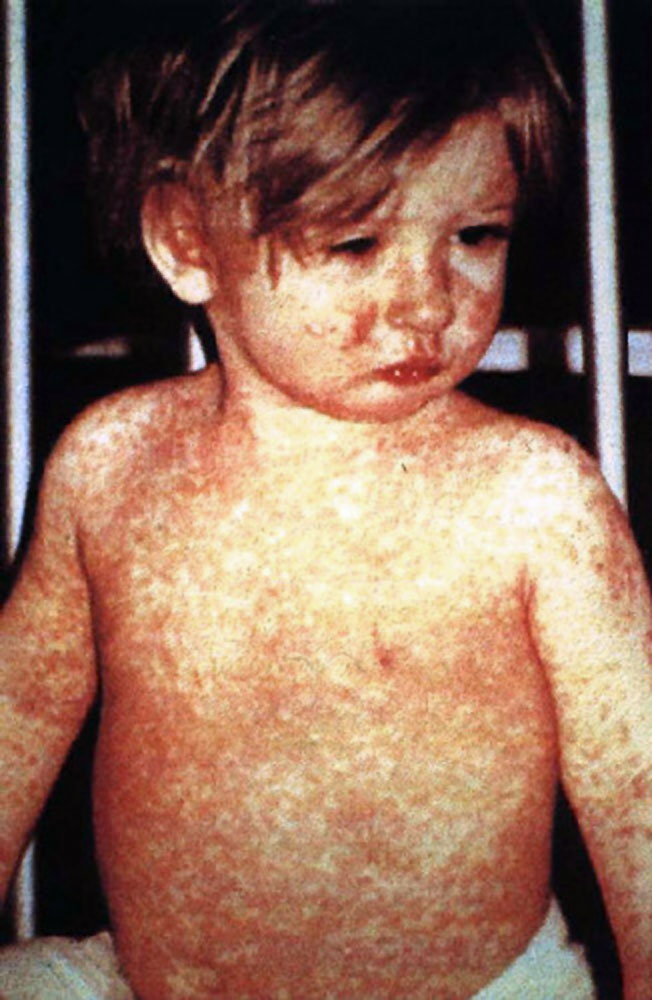
Symptoms generally begin seven to 21 days after exposure. Early signs include fever, cough, runny nose and red, watery eyes, followed by a distinctive rash that usually starts on the face and spreads downward.
People can spread the virus before they realize they are infected. They are typically contagious for about four days before the rash appears and four days afterward.
Although many patients recover, measles can cause pneumonia, severe dehydration and inflammation of the brain known as encephalitis. Some complications can produce permanent disability or death.
Young children, pregnant people and individuals with weakened immune systems may face additional risks. Severe illness can also occur in otherwise healthy patients.
Public health officials emphasize that measles should not be treated as a harmless childhood infection. The disease can spread rapidly through schools, healthcare facilities and households when vaccination coverage is insufficient.
Vaccination Campaigns Expand Across Pennsylvania
Pennsylvania has increased its vaccination efforts in response to the outbreak. Health department employees have administered more than 6,800 doses of the measles, mumps and rubella vaccine through 241 temporary vaccination clinics since late April.
Including vaccinations delivered at state health centers, department nurses have administered more than 10,900 MMR doses during 2026. Additional clinics are being planned in communities experiencing continued transmission.
Demand for vaccination has also increased through other healthcare providers. Pennsylvania reported more than 61,000 MMR doses administered statewide during October, compared with approximately 25,000 during a typical month.
The vaccine remains highly effective. According to the CDC, one dose provides approximately 93% protection against measles, while two doses provide approximately 97% protection.
Routine childhood vaccination generally begins with a first dose at 12 to 15 months of age. A second dose is normally recommended at ages four through six years.
Pennsylvania is also recommending an early dose for infants ages six through 11 months who live in or travel to counties with sustained measles transmission. That additional dose does not replace the two doses normally given after a child’s first birthday.
Adults who lack documentation of immunity are encouraged to discuss vaccination with a healthcare professional. Requirements and recommendations may differ according to age, medical circumstances and exposure risk.
U.S. Measles Elimination Status Faces Renewed Scrutiny
The United States achieved measles elimination status in 2000 after sustained vaccination efforts interrupted continuous domestic transmission. Elimination does not mean the virus can never enter the country or cause outbreaks.
Instead, it means measles transmission has not continued uninterrupted within the country for at least 12 months. Imported cases can still occur, particularly when travelers encounter outbreaks abroad.
Extended transmission in several states has raised concerns about whether the United States can maintain that status. Public health authorities are reviewing the duration and relationships between outbreaks as they assess the national situation.
Maintaining high vaccination coverage is essential to preventing widespread transmission. Health experts generally identify coverage of approximately 95% as an important community protection threshold because measles spreads so easily.
When vaccination rates fall below that level, outbreaks can spread among susceptible people. The risk becomes particularly serious for infants who are too young to receive their routine first dose.
The CDC’s reported case count for 2026 has already exceeded the total from 2025, making this the country’s highest annual measles count in more than three decades.
Pennsylvania’s investigation of additional cases and the newly reported infant death in Wisconsin show that the outbreak remains active. Health officials are continuing vaccination campaigns, monitoring hospitalizations and reviewing deaths while working to prevent further transmission.
IMAGE: Measles. This child shows a classic day-4 rash with measles.. Photo: CDC/NIP/Barbara Rice / Wikimedia, Public domain