
Levent Alpöge says he and Anthropic’s Claude AI system have developed a computer-checkable proof of a 167-year-old mathematical problem. Experts are examining the work, while a separate human-written proof has also emerged.
A mathematician working at Anthropic announced Friday, November 20, 2026, that he believes artificial intelligence helped him prove the Riemann hypothesis, one of mathematics’ most difficult unsolved problems. Levent Alpöge published a four-page statement describing his work with Anthropic’s Claude AI system. His announcement included millions of lines of computer code intended to verify the mathematical argument.
The claim immediately attracted attention from researchers worldwide, some of whom reported successfully compiling the computer-generated proof. However, the mathematics community has not formally accepted the result, and important questions remain about its correctness and meaning. A separate proposed proof, developed without artificial intelligence, was also released Friday.
Anthropic Mathematician Announces Potential Breakthrough
Alpöge said he and Claude had developed an argument addressing both the Riemann hypothesis and a broader mathematical statement called the generalized Riemann hypothesis. He described the discovery as the result of weeks of intensive work, beginning in October. The announcement appeared on his personal website alongside files containing the proposed formal proof.
“I believe I have, working with Claude, discovered a proof of the Riemann Hypothesis,” Alpöge wrote.
According to TechCrunch, Alpöge contacted Anthropic CEO Dario Amodei on November 15 to discuss how to announce the discovery. He acknowledged that the timing was awkward because of significant developments involving his employer. His statement also reflected uncertainty about presenting a mathematical argument that he had not yet fully explained in conventional written form.
Alpöge described an extraordinary situation in which the AI system appeared to advance beyond his ability to follow every mathematical detail. He said the work combined techniques from several highly specialized areas of mathematics. Rather than publish an incomplete human-readable explanation, he released the computer-checkable version.
What Is the Riemann Hypothesis?
The Riemann hypothesis was proposed in 1859 by German mathematician Bernhard Riemann. It concerns the distribution of prime numbers, which are whole numbers greater than one that can only be divided evenly by themselves and one. Examples include 2, 3, 5, 7, and 11.
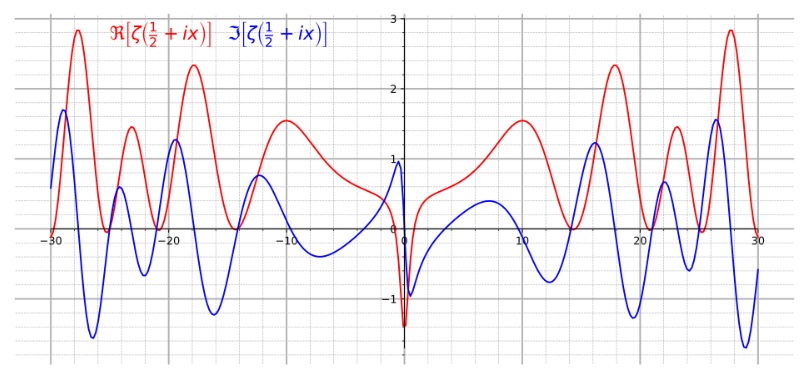
Prime numbers appear throughout mathematics, but their distribution becomes increasingly difficult to predict as numbers grow larger. Riemann studied a mathematical expression called the zeta function, which reveals important information about this distribution. His hypothesis states that certain solutions, known as nontrivial zeros, all lie on a specific line in the complex number system.
Mathematicians have tested enormous numbers of these solutions without discovering an exception. However, checking individual cases cannot establish that the statement holds for every possible solution. A complete proof must demonstrate that the relationship is always true.
The Clay Mathematics Institute included the Riemann hypothesis among its seven Millennium Prize Problems in 2000. Each problem carries a $1 million prize for an accepted solution. The institute continues to classify the hypothesis as unsolved while researchers examine Alpöge’s announcement.
How Lean Is Being Used to Check the Proof
An important feature of Alpöge’s claim is the use of Lean, an open-source system designed to check mathematical proofs. Unlike ordinary programming languages, Lean can represent precise mathematical statements and verify whether logical arguments establish them. Its underlying checking system is designed to reject steps that do not follow from accepted rules.
Alpöge released approximately 17 million lines of Lean code distributed across 14 downloadable archive files. The collection contains thousands of mathematical statements and supporting arguments. It is far larger than a conventional research paper, making direct human examination unusually difficult.
Researchers including Andrew Sutherland of the Massachusetts Institute of Technology reported successfully compiling the formalized result. That represents an important preliminary check because the software accepted the submitted arguments under the conditions of the build. However, independent mathematical review must also establish that the statements and assumptions correspond to the problem being claimed as solved.
Experts are examining whether the files rely on any hidden assumptions or incorrectly formulated definitions. They must also determine whether the formal proof establishes the full generalized hypothesis rather than a weaker result. Successful compilation is significant evidence, but it does not automatically settle those questions.
Mathematicians React With Excitement and Caution
The announcement prompted immediate discussions among specialists in number theory and formal verification. Chris Birkbeck of the University of East Anglia described advanced methods appearing in the code, including Galois representations and automorphy-lifting arguments. These techniques connect different branches of mathematics and are difficult even for experienced researchers.
Quanta Magazine reported that some mathematicians were impressed by the scope of the proposed argument. Others questioned whether a proof presented primarily as machine-readable code would provide the understanding normally expected from mathematical research. Researchers want to know not only whether the formal steps are valid, but also why the mathematical ideas work.
Maksym Radziwill, a mathematician at New York University, expressed concern about the limited explanatory material accompanying the submission. He questioned aspects of Alpöge’s written account and emphasized the importance of mathematical understanding. His criticism did not establish that the proof was wrong, but it illustrated why further examination remains necessary.
The debate also concerns the role of artificial intelligence in discovering mathematical ideas. AI systems have increasingly assisted researchers with calculations, conjectures, and formal verification. Alpöge’s claim suggests a potentially larger role in developing sophisticated arguments that humans may need considerable time to interpret.
Separate Human-Written Proof Also Released
Another remarkable development occurred the same day when Stanford mathematician Ravi Vakil announced a separate proposed proof by Alessandro Maria Masullo. Masullo had reportedly spent about 12 years developing an argument concerning the generalized Riemann hypothesis. His work was written without artificial intelligence.
Vakil said mathematician Brian Conrad had been reviewing the manuscript for months and providing extensive feedback. The original plan was to continue refining the work before announcing it publicly. Alpöge’s announcement prompted the earlier release of Masullo’s draft, titled The Music of the Primes.
The two submissions differ significantly in presentation. Alpöge’s relies on an enormous collection of formally structured computer code, while Masullo’s is a traditional mathematical manuscript. Neither approach guarantees correctness without careful independent examination.
Vakil subsequently updated his announcement after mathematicians identified potential problems in Masullo’s manuscript, some with assistance from AI systems. He emphasized that all questions must be resolved before the proof could be accepted. The development demonstrated how quickly the wider mathematical community began testing the competing claims.
Previous Research and the Importance of Verification
Alpöge has also worked on difficult problems involving the Navier-Stokes equations, which describe the behavior of fluids. His collaboration with mathematician Tristan Buckmaster concerned an important variation of that mathematical problem. Those results are separate from the Riemann hypothesis and should not be treated as proof that either Millennium Prize Problem has been officially solved.
The Clay Mathematics Institute has strict requirements before recognizing a solution. A proposed proof must appear in a qualifying publication, at least two years must pass, and the result must gain broad acceptance among mathematicians. An announcement or successful software test alone does not meet those requirements.
Even if the computer-generated argument survives technical checks, researchers would still need to understand its mathematical structure. That process could produce shorter explanations, uncover previously unknown connections, or expose problems not immediately apparent in the initial announcement. Anthropic had not issued a separate official declaration validating the result when the news first emerged.
For now, Alpöge’s submission and Masullo’s manuscript remain proposed solutions awaiting extensive examination. The immediate task for mathematicians is to verify the formal statements, check the arguments, and determine whether either submission withstands independent scrutiny. The Riemann hypothesis remains officially unsolved until that work establishes otherwise.
IMAGE: Riemann Critical Line Author Slonzor Permission (Reusing this file) Public Domain