
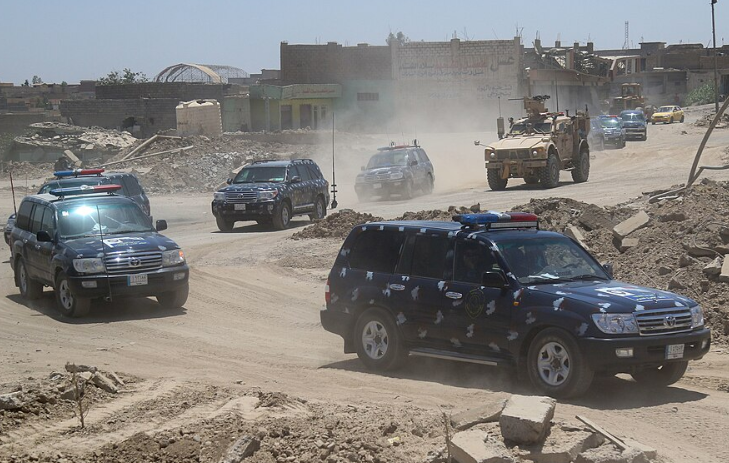
Iraqi government forces entered Jurf al-Sakhar on November 20, 2026, following negotiations with the Iran-backed militia Kataib Hezbollah. The deployment aims to restore state authority and protect oil infrastructure while avoiding an armed confrontation.
Iraqi government forces entered Jurf al-Sakhar in Babil province on Friday, November 20, 2026, after reaching a security agreement involving the powerful Iran-backed militia Kataib Hezbollah. The deployment follows government allegations that an oil-smuggling network operated from the area, which has remained under militia control for more than a decade. Iraqi authorities say the operation is intended to strengthen government control without triggering a military confrontation.
Prime Minister Ali al-Zaidi ordered security forces to enter the strategic area south of Baghdad after giving the armed group a deadline to withdraw. Army personnel, federal police, and specialized security units began taking positions under a negotiated arrangement. The operation represents an important test of the government’s ability to exercise authority over armed groups operating within Iraq.
Government Forces Enter Militia Stronghold
A convoy of Iraqi security vehicles carrying national flags entered Jurf al-Sakhar on Friday as government troops established positions in the town. Security officials announced that the operation would involve several branches of Iraq’s armed forces. The deployment followed days of negotiations intended to prevent violence between government troops and Kataib Hezbollah fighters.
Lt. Gen. Saad Maan, head of Iraq’s Security Media Cell, appeared alongside other officials to explain the operation. He emphasized that the deployment was intended to establish government authority rather than create a confrontation with local forces. Officials said the armed forces would assume responsibility for protecting the area and its residents.
The agreement calls for a new security headquarters to oversee the transfer of responsibilities. Iraq’s Energy Police have also begun securing an oil pipeline that passes through the region. Additional security measures include protecting transportation routes and coordinating patrols among participating forces.
The operation does not necessarily mean Kataib Hezbollah has completely surrendered its positions. Reports indicate that the agreement involves a phased redeployment of some fighters, with government forces gradually assuming greater responsibility. The extent of the militia’s remaining presence will become clearer as the arrangements are implemented.
Oil Smuggling Allegations Prompt Government Action
The confrontation began after Iraqi authorities investigated suspected illegal oil operations in Jurf al-Sakhar. Government officials accused an armed network of diverting state-owned petroleum through unauthorized facilities and transportation routes. Investigators estimated that the alleged activity involved oil worth hundreds of millions of dollars.
An investigative committee examined suspected operations near pipelines crossing the area. According to reporting by The National, investigators reviewed satellite imagery showing tanker trucks and activity at several locations. Officials said the evidence suggested organized smuggling operations dating back several years.
The government subsequently referred findings from its investigation to the judiciary. Nine senior security and oil officials have been dismissed in connection with the investigation, according to Reuters. However, the allegations have not been established through completed criminal proceedings.
Kataib Hezbollah has rejected accusations that it organized or protected an oil-smuggling network. Its representatives argue that the allegations are politically motivated and intended to force the group from territory it has controlled since 2014. The militia has not accepted the government’s account of the suspected illegal activity.
Kataib Hezbollah Rejects Accusations
Kataib Hezbollah is one of Iraq’s most influential Iran-backed armed organizations. The United States has designated it as a terrorist organization because of its involvement in attacks against American and coalition interests. The group maintains considerable military influence while also participating in Iraq’s political system.
Its political party, Huquq, or Rights, holds five seats in parliament. Kataib Hezbollah also maintains connections to Iraq’s Popular Mobilization Forces, known as the PMF. The organization includes armed factions that helped fight the Islamic State group and later received formal recognition within Iraq’s security structure.
Although the PMF officially falls under the prime minister’s authority, individual factions have sometimes operated independently of the government’s chain of command. Kataib Hezbollah is among the groups that have resisted demands to surrender their weapons. That independence has created recurring disputes over security responsibilities and government authority.
Before Friday’s deployment, a senior Kataib Hezbollah representative warned that the group would resist efforts to remove it from Jurf al-Sakhar. The militia organized a media visit to demonstrate its continued presence in the region. Its representatives nevertheless indicated that they did not want an armed confrontation.
Iranian Mediation Helps Prevent Fighting
The dispute prompted intensive negotiations involving senior Iraqi political figures and representatives of Iran. Esmail Qaani, commander of Iran’s Islamic Revolutionary Guard Corps Quds Force, reportedly traveled to Baghdad earlier in the week. Iraqi political sources said he participated in efforts to reduce tensions between the government and Kataib Hezbollah.
The negotiations reflected the considerable influence Iran maintains through its relationships with Iraqi political parties and armed organizations. Several senior Iraqi politicians favored a negotiated transfer of security responsibilities rather than a military operation. They feared that direct fighting could spread beyond Jurf al-Sakhar.
Under the resulting arrangement, government forces would enter the area while some militia fighters redeployed elsewhere. The compromise allowed Baghdad to establish a greater security presence without requiring an immediate armed confrontation. However, the terms do not resolve the broader disagreement over independent militia weapons.
The United States has also pressed Iraq to bring armed factions more firmly under government control. Washington considers Kataib Hezbollah a significant security threat because of its history of attacks involving American personnel and facilities. Baghdad must balance those pressures against the risk of domestic conflict.
Displaced Families Hope to Return Home
Jurf al-Sakhar has experienced years of conflict and displacement. Iraqi forces and allied militias retook the area from the Islamic State group in 2014. Kataib Hezbollah subsequently became one of the most powerful armed organizations operating there.
Many residents who fled during the fighting have been unable to return to their homes. Estimates of the displaced population vary, with some assessments placing the number between 120,000 and 180,000 people. Restrictions on access have remained a major source of concern for former residents.
The government’s deployment has created cautious optimism among some Iraqis who hope the change will improve security. Residents interviewed after the operation said conditions appeared calm and government troops were behaving cooperatively. However, the return of displaced families will require more than a change in military positions.
Reopening roads, restoring public services, and determining whether homes remain safe are among the unresolved challenges. Some observers have also called for investigations into alleged abuses and possible burial sites in the area. Authorities have not announced a comprehensive timetable for displaced families to return.
Prime Minister Seeks Greater State Control
Prime Minister al-Zaidi has made reducing the independence of armed groups an important part of his government’s security agenda. The Jurf al-Sakhar operation represents one of the most visible efforts to pursue that policy. It also demonstrates the political risks associated with confronting organizations that possess considerable military power.
Following the deployment, al-Zaidi addressed government troops from a military operations center in Baghdad. He emphasized that armed organizations should operate under the authority of the Iraqi state. His remarks presented the operation as part of a wider effort to combat corruption and strengthen national institutions.
The government must now ensure that its forces can maintain their positions and enforce security decisions. Protecting oil infrastructure will be an important part of that responsibility, especially while allegations of illegal petroleum trafficking remain under investigation. Officials will also need to determine how militia units fit into the new arrangements.
Security Handover Enters Its Next Phase
The deployment has reduced the immediate danger of fighting between government forces and Kataib Hezbollah. However, the negotiated compromise leaves important questions about the militia’s future presence and the government’s ability to exercise independent authority. The oil-smuggling investigation also remains unresolved.
Security officials have announced plans to establish a permanent command structure and reopen transportation routes. Those measures could improve access for civilians and help authorities monitor critical infrastructure. Their effectiveness will depend on continued cooperation among the forces operating in the area.
For residents displaced since 2014, the most important development would be a safe and lasting opportunity to return home. For Baghdad, the challenge is ensuring that the new security arrangements produce lasting government control rather than another temporary compromise. The next phase will test whether the agreement can deliver both security and meaningful change in Jurf al-Sakhar.
The government is now focused on restoring order and ensuring that the area returns to full state control.
IMAGE: United States Army with the ID 170607-A-DP764-003 CC0