
The AI chipmaker raises its long-term growth forecast as interim CEO Colette Kress takes charge and the board rejects Jensen Huang’s return.
Nvidia reported record quarterly revenue of $115.8 billion on November 17, 2026, as the artificial intelligence chipmaker delivered strong financial results following the sudden departure of longtime chief executive Jensen Huang. Revenue more than doubled from a year earlier, helping the company’s shares rise approximately 4% in after-hours trading despite uncertainty surrounding its leadership.
The earnings announcement came just days after Huang resigned as president, chief executive and board member. Chief Financial Officer Colette Kress is serving as interim CEO, while Harvey C. Jones has become Nvidia’s first board chair. The company also increased its revenue growth forecast for fiscal 2028, reflecting continued confidence in demand for AI infrastructure.
Nvidia Revenue More Than Doubles in Third Quarter
Nvidia generated $115.8 billion in revenue during its third fiscal quarter, which ended October 25. Sales increased 20% from the preceding quarter and 103% compared with the same period in 2025.
The company reported net income of approximately $65.3 billion, more than twice the $31.9 billion recorded a year earlier. Earnings reached $2.70 per diluted share under generally accepted accounting principles, exceeding analysts’ expectations.
The results also surpassed Nvidia’s previous quarterly revenue forecast of approximately $108 billion. That performance demonstrated that demand for its advanced processors remained strong despite growing competition and uncertainty surrounding the company’s leadership.
Nvidia’s data center division continued to account for the overwhelming majority of its business. Revenue from that segment reached $107.6 billion, representing a 21% increase from the previous quarter and a 110% increase year over year.
The division supplies processors, networking technology and computing systems used by companies developing and operating artificial intelligence services. Major technology companies have continued investing heavily in data centers to support increasingly demanding AI applications.
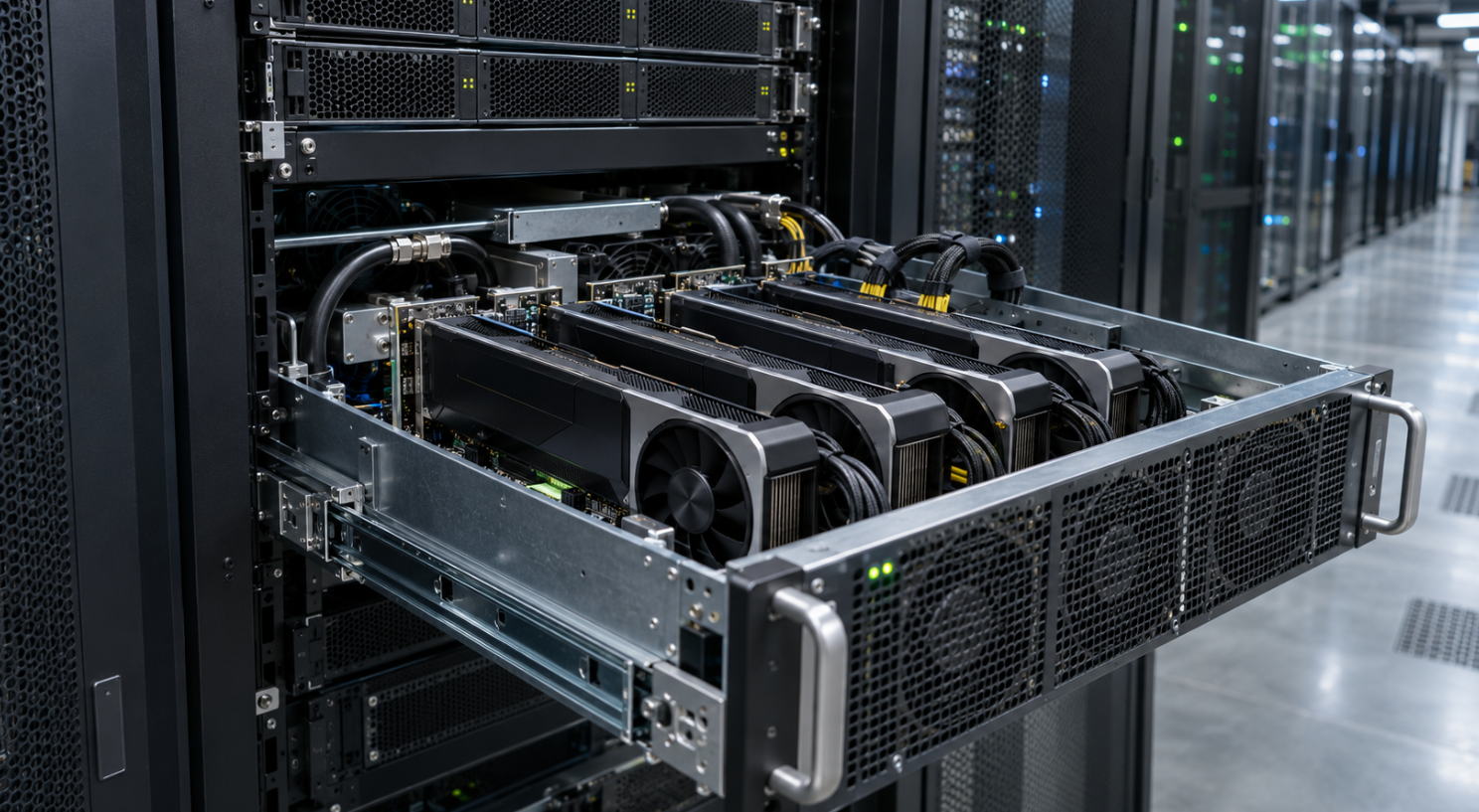
Nvidia has also begun shipping its Vera Rubin NVL72 platform, a new generation of computing infrastructure designed for large-scale AI workloads. The company described the product’s early rollout as particularly strong, with major cloud providers preparing to deploy the technology.
Nvidia Raises Revenue Growth Forecast
Nvidia expects revenue of approximately $130 billion in the fourth quarter of fiscal 2027, with a possible variation of 3% in either direction. The forecast exceeded Wall Street’s average expectation of approximately $125.25 billion, according to Reuters.
The company also raised its outlook for fiscal 2028 revenue growth from approximately 70% to 75%. Kress explained during the earnings conference call that stronger demand and improved supply arrangements supported the higher projection.
The guidance represents management’s expectations rather than guaranteed future results. Nvidia must continue increasing production and securing customer orders to achieve the anticipated growth.
The fourth-quarter forecast also assumes no revenue from sales of data center computing products to China. That assumption reflects continuing uncertainty surrounding U.S. export restrictions on advanced semiconductor technology.
Nvidia expects gross profit margins of approximately 71% to 72% during the fourth quarter, below the 74.8% reported in the latest quarter. Changes in product mix, manufacturing expenses and the introduction of new systems can influence those margins.
Investors responded positively to the financial results and forecasts. Nvidia shares advanced approximately 4% in extended trading, although the stock remained substantially below its early October peak.
Board Rules Out Jensen Huang’s Return
Nvidia’s leadership transition remained a major focus of the earnings conference call. Jones opened the discussion by addressing speculation that Huang might return to the company he co-founded in 1993.
The board had unanimously accepted Huang’s resignation and did not intend to reinstate him, Jones said. His remarks followed public calls from several prominent technology executives and investors who wanted the former CEO restored.
Huang had indicated that he would consider returning if Nvidia’s board believed his reinstatement would benefit the company. Nevertheless, Jones made clear that directors were proceeding with plans to appoint a permanent successor.
The board has hired executive recruitment firm Heidrick & Struggles to assist with the search. Nvidia intends to consider both internal and external candidates, although no timetable for completing the process has been announced.
Kress, who joined Nvidia in 2013, will continue serving as both interim chief executive and chief financial officer. Her long experience overseeing Nvidia’s finances places her in a central position during the transition.
The company has emphasized that its established leadership team remains responsible for executing its technology roadmap and maintaining relationships with customers. Jones has expressed confidence that Nvidia can continue operating without major interruptions.
Huang’s Departure Brings Regulatory Scrutiny
Huang’s resignation followed reports concerning personal relationships, including one involving a Chinese businesswoman whose possible intelligence connections have attracted attention from U.S. authorities. The allegations have raised questions about corporate oversight and national security risks.
Reuters reported that American intelligence agencies were examining the extent of the woman’s alleged connections to China’s Ministry of State Security. Chinese authorities have rejected allegations that an espionage operation targeted Huang.
The existence of an investigation does not establish that classified information was compromised or that Huang committed an espionage-related offense. The full circumstances surrounding his departure remain under examination.
The Wall Street Journal also reported that the Securities and Exchange Commission was investigating Nvidia following Huang’s resignation. Reuters said the agency declined to comment, leaving the precise scope and potential outcome of that inquiry unresolved.
Nvidia’s board has established an independent committee to investigate matters connected with the leadership controversy. The company has not announced findings that establish wrongdoing or identify a specific regulatory violation.
Separately, the board created a National Security and Export Control Oversight Committee on November 17. The committee is responsible for reviewing the company’s national security policies, export control compliance and global trade risks.
The new committee will be chaired by director Suzanne Nora Johnson, with directors Stephen Neal and John Dabiri also serving. Its creation comes as the United States increases scrutiny of technology exports and access to advanced AI processors.
Export Controls Remain a Major Challenge
Nvidia’s relationship with China remains an important issue because American restrictions limit the sale of its most advanced AI processors to certain Chinese customers. Washington has introduced controls intended to prevent sensitive semiconductor technology from supporting military and intelligence applications.
U.S. authorities have also examined whether processors shipped to companies in Southeast Asia were subsequently transferred to China. Such arrangements could raise export compliance concerns if restricted technology reached unauthorized recipients.
Nvidia has maintained that access to international markets supports American technological competitiveness. However, its latest earnings guidance shows that the company is preparing for continued restrictions on data center computing sales to China.
The challenges are not limited to individual shipments. American policymakers are also examining the use of overseas data centers that could allow restricted customers to access powerful processors remotely.
For Nvidia, these developments create uncertainty even while demand elsewhere continues expanding. The company’s ability to manage export restrictions while maintaining relationships with global customers will remain important to its future growth.
AMD Reports Strong Growth as Competition Intensifies
Nvidia’s leadership changes come as rival semiconductor manufacturer Advanced Micro Devices continues expanding its AI computing business. AMD reported third-quarter revenue of $13.4 billion on November 3, an increase of 45% from a year earlier.
AMD’s data center division generated $8.5 billion, representing year-over-year growth of 97%. Demand for EPYC server processors and the introduction of Instinct MI450 accelerators contributed to the increase.
The company also improved its profitability. Its operating margin rose to 21%, compared with 14% during the same quarter in 2025, while quarterly net income reached approximately $2.4 billion.
AMD expects approximately $17 billion in fourth-quarter revenue, representing sequential growth of about 27% at the midpoint of its guidance. The forecast reflects expectations of continued demand for processors used in AI infrastructure.
The two companies remain significantly different in scale. Nvidia’s quarterly revenue was more than eight times AMD’s, and its data center division alone generated substantially more revenue than AMD’s entire business.
Nevertheless, AMD’s growth demonstrates that demand for AI computing equipment extends beyond one supplier. Its expanding product lineup provides additional options for technology companies building large data centers.
Nvidia’s leadership transition could create opportunities for competitors, but there is no established evidence that AMD has gained customers or market share directly because of Huang’s departure.
Investors Face Strong Growth and Leadership Uncertainty
Nvidia’s latest results show that its core business continued expanding rapidly through the third quarter, before Huang’s resignation. The company’s outlook suggests management expects demand to remain strong as new products reach customers.
However, the earnings report does not establish how the leadership change will affect Nvidia over the longer term. The company must still appoint a permanent chief executive, address outstanding investigations and maintain confidence among customers and investors.
Kress and the remaining leadership team will oversee the rollout of Vera Rubin products while managing Nvidia’s extensive supply chain and relationships with major cloud computing companies.
The company has already indicated that it expects no immediate interruption to customer commitments or product development. Maintaining that stability will be an important test of the management team as the search for a new CEO continues.
Nvidia’s next quarterly results will provide a clearer measure of whether the company can meet its $130 billion revenue forecast. For now, the board is moving forward with its leadership search while regulators continue examining questions surrounding Huang’s departure.
IMAGE: DNR Art Department