
The justices temporarily lift a federal court order blocking construction in the Big Bend region, allowing the administration to proceed while legal challenges over environmental protections continue.
The U.S. Supreme Court cleared the way for President Donald Trump’s administration to resume border wall construction in the Big Bend region of West Texas on Monday, November 9, 2026. The decision temporarily lifts a federal judge’s order that stopped construction over concerns about the administration’s authority to bypass environmental and conservation laws.
In an 8-1 ruling, the justices granted the administration’s emergency request to suspend the lower court’s injunction. Justice Ketanji Brown Jackson was the only justice to publicly dissent from the decision.
The order allows work to resume across a remote section of the U.S.-Mexico border that includes Big Bend National Park. However, the Supreme Court did not issue a final decision resolving every legal challenge to the project.
Supreme Court Finds Government Likely to Prevail
The case, Mullin v. Friends of the Ruidosa Church, centers on the federal government’s authority to waive laws that would otherwise apply to border barrier construction.
The Department of Homeland Security relied on Section 102 of the Illegal Immigration Reform and Immigrant Responsibility Act of 1996. That law gives the homeland security secretary broad authority to build barriers and roads in areas identified as having high levels of illegal entry.
It also permits the secretary to waive legal requirements considered obstacles to rapid construction. The Trump administration used that authority to set aside environmental and conservation protections in the Big Bend region.
The Supreme Court found that the federal government was highly likely to prevail on its argument that the district court lacked jurisdiction over a central claim brought by the challengers.
Under the 1996 law, federal courts may hear constitutional challenges to the secretary’s waiver decisions, but ordinary claims that the department exceeded its statutory authority face strict limits.
The challengers had relied partly on the major questions doctrine, which generally requires clear congressional authorization for certain agency decisions involving issues of major economic or political importance.
The Supreme Court rejected the argument that this doctrine, by itself, created a constitutional claim that the district court could consider. The justices characterized it as a principle of statutory interpretation rather than an independent constitutional violation.
The majority also determined that the government’s interest in carrying out congressionally authorized border construction outweighed the environmental, recreational and aesthetic harms alleged by the plaintiffs for purposes of the emergency stay.
Jackson would have denied the administration’s request, but she did not issue a separate written explanation of her disagreement.
Lower Court Had Blocked Construction in October
The dispute began when environmental advocates and local residents challenged the administration’s decision to waive federal protections for the Big Bend project.
The plaintiffs include the Center for Biological Diversity, a local river guide and Friends of the Ruidosa Church, an organization concerned about preserving a historic church near the border.
They argued that the government had exceeded its authority by waiving laws designed to protect natural habitats, cultural landmarks and other resources.
U.S. District Judge Kathleen Cardone issued a preliminary injunction on October 2, blocking construction associated with the disputed waivers. Her subsequent written explanation found that the challengers had a strong likelihood of succeeding on their major questions argument.
The administration asked the Supreme Court to intervene, arguing that construction delays threatened border security and interfered with authority Congress had expressly granted.
The justices agreed to suspend the injunction while the administration pursues further Supreme Court review. The temporary stay will end if the Court declines to hear the government’s petition, assuming the petition is filed on time.
If the justices agree to hear the case, the stay will remain in effect until the Court issues its judgment. Other legal proceedings concerning the project may also continue.
Big Bend Project Includes Walls, Roads and Surveillance
The disputed construction covers the Big Bend Sector, a region stretching approximately 517 miles along the Texas-Mexico border.
The sector includes rugged mountains, desert landscapes, remote ranches and protected public lands. Big Bend National Park and Big Bend Ranch State Park are among the best-known areas that could be affected by the planned infrastructure.
The administration’s broader project includes more than 150 miles of barriers reaching approximately 30 feet high, along with patrol roads, surveillance cameras, sensors and other equipment.
Government officials initially considered constructing a tall border wall through Big Bend National Park. After opposition from residents, conservation groups and elected officials, they said the park would instead receive other security measures.
Those measures include vehicle barriers, patrol roads and surveillance systems. The administration has indicated that the national park will not receive the same continuous 30-foot wall planned for other portions of the region.
However, environmental organizations argue that roads and smaller barriers can still cause significant damage, particularly where construction requires cutting through rock formations or disturbing sensitive habitats.
Plans for the park have changed several times, and Customs and Border Protection has not finalized every detail. The Supreme Court’s order permits construction under the disputed waivers but does not establish where every section of infrastructure will be placed.
Administration Cites Immigration and Drug Trafficking
The Trump administration maintains that additional barriers are necessary to discourage unauthorized border crossings and drug trafficking.
Homeland Security officials designated the Big Bend Sector as an area of high illegal entry when issuing the construction waivers. The government has argued that leaving large stretches of the border without physical barriers could create opportunities for criminal organizations.
In its Supreme Court filing, the administration warned that gaps in border infrastructure could attract smugglers and other criminal activity. It also argued that Congress had already authorized the use of broad waivers to accelerate construction.
Opponents dispute whether the scale of the project is justified by the region’s actual border activity.
According to figures reported by The Texas Tribune, the Big Bend Sector accounted for approximately 1.3% of southwest border apprehensions during fiscal year 2025. The region recorded 3,096 encounters during that period.
Those figures place Big Bend among the least active Border Patrol sectors for migrant apprehensions, despite its extensive border frontage.
The administration argues that existing apprehension numbers do not fully measure the security risks posed by remote terrain. Opponents maintain that the low numbers make large-scale construction difficult to justify.
Environmental Groups Warn of Permanent Damage
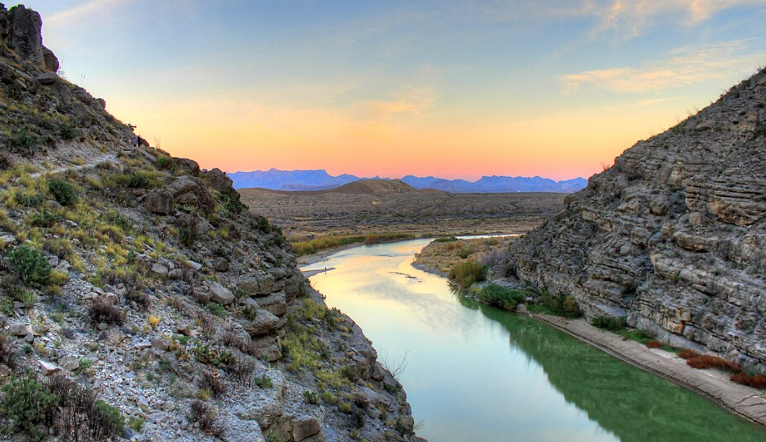
Big Bend National Park is known for its desert ecosystems, mountain ranges, canyons and the Rio Grande, which forms part of the international boundary.
The region supports wildlife and plant species adapted to its difficult environment. It also contains historic locations and cultural resources that conservation advocates say could be damaged by construction.
Environmental organizations have raised concerns about habitat fragmentation, restricted wildlife movement, erosion and changes to natural drainage patterns.
They also argue that heavy machinery, blasting and new patrol roads could permanently change areas that have remained relatively undisturbed.
Laiken Jordahl, a national public lands advocate with the Center for Biological Diversity, condemned the Supreme Court’s decision. He warned that contractors could damage desert landscapes and canyon walls before the legal questions surrounding the project receive a final resolution.
Preservation concerns extend to the historic Ruidosa Church, an adobe structure near the border. Supporters of the church argue that nearby construction could threaten the fragile building and its cultural significance.
The opposition has also included some Republican elected officials, demonstrating that concerns about the project extend beyond disagreements over immigration policy.
Local residents and business owners have warned that damage to scenic areas could affect tourism, recreation and the region’s economy.
Federal Border Funding Supports Expansion
The Big Bend construction is part of a much larger federal border security program funded through legislation approved in 2025.
Congress provided approximately $46 billion for border infrastructure and related projects. The administration has used that funding to accelerate construction across several sections of the southern border.
The Texas Tribune reported that federal officials had awarded approximately $7.5 billion in contracts associated with work in the Big Bend Sector.
The funding covers different types of infrastructure, including physical barriers, access roads and surveillance technology. Not every contract involves building a continuous wall.
The administration views these investments as necessary to strengthen border enforcement and provide agents with better access to remote areas.
Opponents argue that the spending could produce limited security benefits while imposing substantial environmental and economic costs. They have also questioned whether less disruptive approaches could address the government’s concerns.
Legal Dispute Continues After Supreme Court Order
The November 9 ruling gives the administration immediate relief from the district court’s construction ban. It does not establish that every environmental or constitutional challenge to the project has been permanently resolved.
The Supreme Court focused on the limits Congress placed on judicial review and the legal standards governing an emergency stay. Its decision leaves further proceedings to determine the remaining issues.
Customs and Border Protection has not announced a definitive timetable for restarting all affected work. Some construction had already begun before the lower court intervened.
The project will continue to face scrutiny from residents, environmental organizations and local officials concerned about its effects on the region.
For now, the administration can resume work under its existing waivers while the courts consider the next stage of the dispute. The central unresolved issue is whether the remaining legal challenges can impose additional limits before construction permanently changes portions of the Big Bend landscape.
IMAGE: Source www.goodfreephotos.com (gallery, image) Author Yinan Chen CC0