
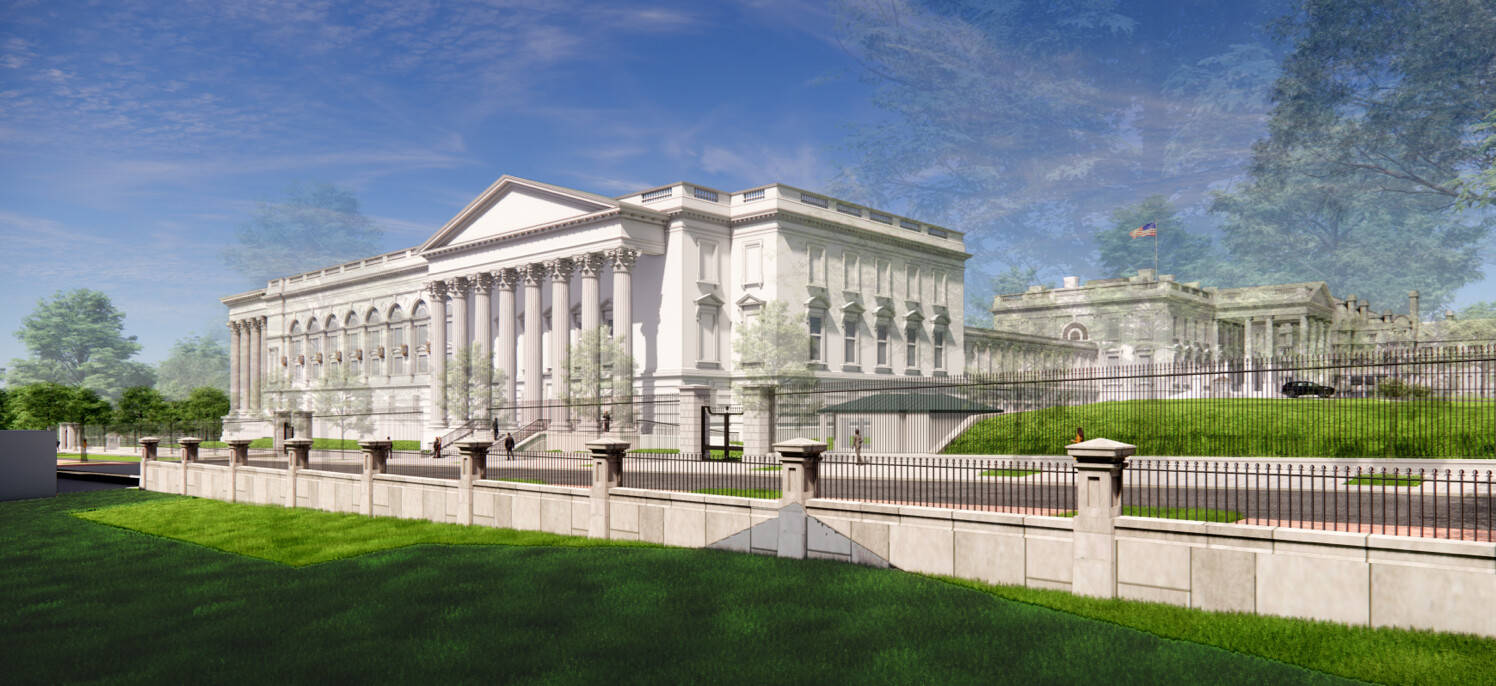
The Supreme Court allowed the Trump administration to continue building a new massive ballroom at the White House while legal challenges are ongoing. Chief Justice John Roberts led a four-justice dissent in the decision, which was a 5-4 vote.
The court did not rule on whether the project itself is legal, but said that the National Trust for Historic Preservation lacked standing to sue, according to ms.now. Roberts had previously issued a temporary order allowing construction to continue while the full court reviewed the case. The earlier stay was only a placeholder until the full court could rule on the matter.
The majority opinion said that the government likely has a strong case in showing that the lawsuit does not meet legal requirements for standing. It also stated that the government would suffer irreparable harm without allowing the project to move forward.
The court emphasized that it was not passing judgment on whether the East Wing construction is lawful, according to a report from CBS News. A lower court had previously issued an injunction against the project, but that order has not taken effect yet.
District Judge Richard Leon noted that his ruling would not stop all construction, only certain aspects of the project. The court said that measures needed for safety and security could still be carried out without locking in the size or scale of the ballroom.
The National Trust for Historic Preservation had argued that professor Alison Hoagland had standing to sue. Hoagland is an architectural historian who studies the White House and President’s Park in her work.
The appeals court majority found that Hoagland had enough connection to the case to bring suit. However, the Supreme Court majority said this did not meet legal requirements for standing.
The project is part of a larger renovation effort that includes a new ballroom in the East Wing area. The structure is described as a superstructure made of concrete and steel, rising up to 70 feet high in some places. It has a footprint of nearly 50,000 square feet and is five stories deep.
The Justice Department said the construction is 65% complete and that delays could prevent finishing the project. Solicitor General D. John Sauer argued that the renovations are essential and should not be blocked. He said that any delay threatens the president’s safety and security.
Sauer also noted that the structure is beyond the point of return due to current progress. The White House expects the structure to be substantially completed by November.
The full project is expected to finish by August 2028. The case has drawn attention for the role Chief Justice Roberts played in the decision.
This is notable because Roberts has previously supported GOP-majority positions on separation-of-powers issues. The court’s unsigned opinion did not address the broader constitutional question of who controls federal property in Washington D.C.
The appeals court had said Congress holds full constitutional control over federal property and funding for it.
The lawsuit will now return to lower courts, but the key parts of the project are likely to be finished regardless, dailysignal.com reported. The project is scheduled to be completed by August 2028.
IMAGE: The White House / Wikimedia Commons (Public domain)