
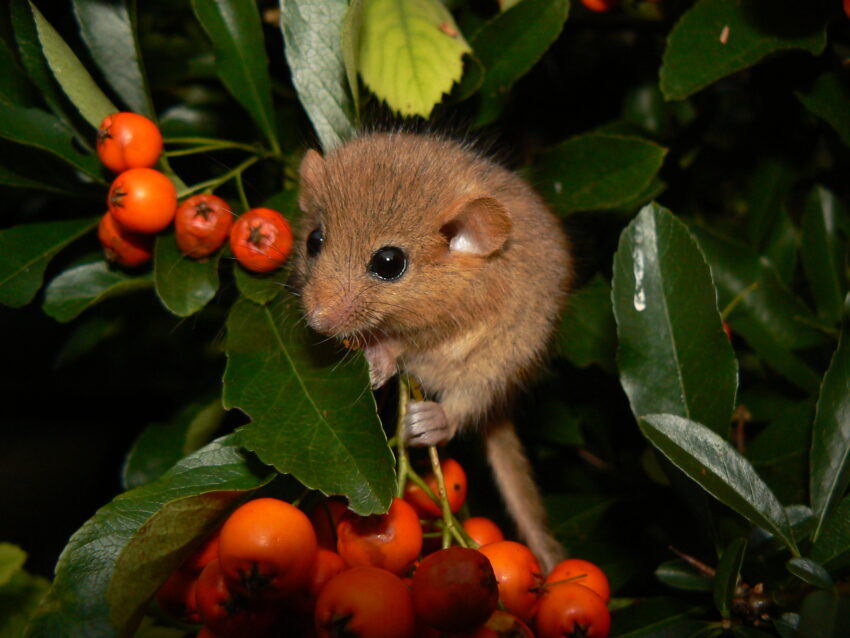
New monitoring data suggests hazel dormouse numbers rose by nearly 10% between 2020 and 2025, but conservationists warn that habitat loss and uncertain climate effects still threaten the species.
Britain’s endangered hazel dormouse may finally be showing signs of recovery after decades of steep population declines. New figures from a national wildlife monitoring programme suggest that numbers increased by almost 10% between 2020 and 2025, offering cautious hope for one of the country’s most threatened native mammals.
The encouraging findings come after a long period of losses. Hazel dormouse populations remain nearly 60% below their levels in 2000, and conservationists warn that the recent improvement is not enough to establish a lasting recovery.
Researchers believe warmer and drier springs and summers may have helped the animals survive and reproduce. However, scientists emphasize that the estimated increase carries considerable uncertainty and that changing weather conditions could create new difficulties in the years ahead.
Dormouse Population Shows Signs of Improvement
The findings come from the National Dormouse Monitoring Programme, which is coordinated by the wildlife charity People’s Trust for Endangered Species (PTES). The programme has monitored hazel dormice at sites across England and Wales since 1998, using information collected by trained volunteers and wildlife specialists.
The latest analysis suggests that dormouse numbers increased by almost 10% from 2020 to 2025. This contrasts with the longer-term pattern of decline, which has averaged approximately 3.5% annually since 2000.
Ian White, a dormouse specialist with PTES and a co-author of the report, welcomed the apparent improvement. He described the findings as grounds for cautious optimism while emphasizing that the species remains in serious difficulty.
The monitoring results are encouraging because hazel dormice have disappeared from large parts of their former British range. Native populations are thought to have vanished from around 20 English counties since Victorian times.
Today, the animals are largely concentrated in southern England and parts of Wales. Their disappearance from other regions reflects decades of habitat destruction, declining woodland quality, and increasingly fragmented landscapes.
The recent increase does not mean that the species has recovered throughout Britain. It suggests that conditions at monitored locations may have become more favorable during the five-year period.
Why Warmer Summers May Be Helping Dormice
Scientists believe the apparent population improvement may be connected to unusually warm and dry weather during recent springs and summers. These conditions can influence how much food dormice find and how much time they spend actively feeding.
Hazel dormice are small, golden-brown rodents that spend much of their lives climbing through trees and shrubs. They are mainly active at night, feeding on flowers, insects, berries, and nuts as different foods become available throughout the year.
The animals are particularly well known for sleeping through long periods of the year. Their winter hibernation usually lasts from around October until April or May, depending on weather conditions and food availability.
During hibernation, dormice dramatically reduce their body temperature and metabolism to conserve energy. They usually spend this period in carefully constructed nests on or near the ground, often beneath leaf litter or around tree roots.
Even during warmer months, dormice sometimes enter a temporary state known as torpor. This shorter period of reduced activity helps them conserve energy when temperatures fall or food becomes difficult to find.
Researchers suspect that warmer, drier summers may reduce the frequency of torpor. With fewer periods of inactivity, dormice may have more opportunities to find food, reproduce, and accumulate the fat reserves needed for winter.
The relationship is particularly important because dormice have relatively short breeding seasons. Favorable conditions early in the year may allow females to produce additional litters and give young animals more time to gain weight before hibernation.
Monitoring Reveals Links Between Sleep and Breeding
The monitoring programme has also identified a possible relationship between frequent torpor and poor reproductive success. Sites where dormice were recorded entering torpor more often tended to have fewer adults and smaller numbers of litters.
This finding supports the idea that prolonged cold or wet periods during the active season can create difficulties for the animals. Dormice that spend additional time conserving energy may have fewer opportunities to breed successfully.
Dr. Charlotte Armitage, an ecologist involved in the research, said favorable summer conditions could help dormice devote more energy to reproduction. She also emphasized that scientists still need to investigate the broader effects of climate change.
Earlier PTES monitoring work provides additional reasons for optimism. The charity reported that the winter of 2024–2025 appeared unusually favorable for dormice, with estimated overwinter mortality of approximately 31%.
By comparison, earlier monitoring suggested that roughly half of mature dormice typically died during hibernation. Better survival through one winter can leave more breeding adults available when spring arrives.
Spring 2025 was exceptionally warm and sunny across the United Kingdom, while summer 2025 was also unusually warm. PTES researchers suggested that favorable growing conditions may have supported fruit production and provided important food before hibernation.
However, researchers caution that weather patterns and population changes occurring together do not necessarily prove that one caused the other. Other environmental factors, including habitat quality and local conservation work, may also influence dormouse numbers.
Climate Change Could Still Threaten the Species
Although warmer summers may offer some benefits, scientists warn against assuming that climate change will improve the long-term outlook for hazel dormice. The animals depend on seasonal conditions that allow them to feed, breed, and hibernate successfully.
One concern involves warmer and less predictable winters. Dormice normally benefit from relatively stable winter temperatures that allow them to remain in hibernation without repeatedly using their stored energy.
Unseasonably warm conditions can interrupt hibernation, causing animals to wake when food is unavailable. These interruptions may reduce their energy reserves and make survival until spring more difficult.
Long periods of summer drought could also create problems. Although some warm and dry conditions may encourage food production, severe drought can reduce the availability of flowers, fruits, and other resources.
Scientists therefore expect the effects of a changing climate to vary with the season and the severity of local weather conditions. A favorable summer does not necessarily compensate for a difficult winter or the loss of suitable habitat.
The uncertainty makes long-term monitoring especially important. Researchers need observations across multiple years to determine whether the recent population increase represents a lasting change or a temporary improvement.
Woodland Restoration Remains Essential
Conservationists say protecting and restoring suitable habitats remains one of the most reliable ways to improve dormouse survival. The animals depend on connected woodland, hedgerows, and dense vegetation that allow them to travel while remaining sheltered.
Woodlands containing different layers of trees, shrubs, and climbing plants can provide food throughout the active season. Hazel, honeysuckle, bramble, and other native plants are particularly useful because they offer flowers, fruits, nuts, or protective cover.
Traditional woodland management practices, including carefully planned coppicing, can help maintain the diverse vegetation dormice need. Coppicing involves cutting selected trees near ground level to encourage new growth and create varied woodland structure.
Habitat fragmentation remains a major threat because dormice are reluctant to cross open ground. Roads, cleared fields, and gaps between wooded areas can isolate populations and prevent animals from reaching suitable breeding habitats.
PTES supports habitat restoration, reintroductions, and long-term population monitoring. Its conservation work includes releasing dormice into carefully selected woodlands where suitable habitat can support new populations.
At Bradgate Park in Leicestershire, for example, conservationists have monitored a reintroduced population and recorded evidence of successful breeding. Such projects demonstrate that targeted conservation work can help locally, although wider recovery requires suitable habitat across connected landscapes.
What Happens Next for Britain’s Dormice?
The National Dormouse Monitoring Programme will continue collecting information from nest boxes and other survey sites. Volunteers record the animals’ numbers, ages, weights, and breeding activity, allowing researchers to compare populations across different seasons and locations.
These observations will help conservationists assess whether the apparent increase between 2020 and 2025 continues. They may also reveal how dormice respond to changing temperatures, rainfall patterns, and woodland management practices.
The latest findings provide a welcome change from years of consistently troubling population reports. Yet Britain’s hazel dormouse remains far less common than it was at the beginning of the century.
The next important test will be whether improved breeding and winter survival can be sustained across several seasons. For now, protecting connected woodlands and hedgerows remains essential to turning a possible short-term improvement into a lasting recovery.
IMAGE: Hazel dormouse (Muscardinus avellanarius) on a Firethorn (Pyracantha coccinea). Photo: Danielle Schwarz / Wikimedia, taken 2007-09-23, CC BY-SA 3.0