
Federal prosecutors accuse Comey of disclosing national defense information in 2016, but his attorneys challenge the charges and the unusual filing procedure used to pursue them.
The U.S. Justice Department has filed a third criminal case against former FBI Director James Comey, accusing him of improperly disclosing sensitive national defense information in 2016. The allegations became public on Monday, October 26, 2026, after a federal judge ordered previously sealed court documents released in Washington, D.C.
The latest filing contains two felony counts involving the alleged transmission of national defense information and a conspiracy to transmit that information. Prosecutors claim Comey directed another person to provide sensitive government material to a newspaper reporter while serving as FBI director.
Comey, 65, denies the allegations and has accused the Justice Department of abusing its authority. His attorneys are challenging the legality of the prosecution, arguing that the government failed to obtain a grand jury indictment before the applicable deadline.
The case is unusual because prosecutors filed a document known as a criminal information rather than obtaining an indictment from a grand jury. The government says the procedure preserved its ability to prosecute, while Comey’s lawyers argue that the filing was legally insufficient.
The dispute could determine whether prosecutors can proceed with their latest attempt to bring Comey to trial.
Prosecutors Allege Improper Disclosure in 2016
The allegations concern information that reportedly appeared in an October 5, 2016, newspaper article about U.S. government email surveillance.
According to court records described by Reuters and other news organizations, prosecutors allege that Comey directed an unnamed individual to communicate sensitive information to a reporter.
The article concerned government intelligence activities and allegations involving the monitoring of email communications. Prosecutors contend that the information should not have been disclosed to someone who lacked authorization to receive it.
The criminal filing alleges that Comey knowingly participated in transmitting national defense information. It also accuses him of conspiring with another person to accomplish that disclosure.
These allegations have not been established in court. No public trial has taken place, and Comey has not been convicted of wrongdoing in connection with the latest case.
The Justice Department has released limited information about the underlying evidence. Additional details may emerge if a grand jury returns an indictment and the prosecution advances.
The case focuses on conduct that allegedly occurred while Comey led the FBI under President Barack Obama.
Comey served as FBI director from September 2013 until May 2017, when President Donald Trump dismissed him during his first presidential term.
Unusual Filing Creates Legal Dispute
Federal prosecutors initiated the latest proceeding on October 5, 2026, approximately 10 years after the alleged disclosure. The timing is central to the defense’s challenge.
The criminal allegations involve an offense subject to a 10-year statute of limitations. Such deadlines generally limit how long the government may wait before initiating a prosecution.
Rather than first presenting the case to a grand jury, prosecutors filed a criminal information in federal court. A criminal information formally sets out accusations made by prosecutors. Unlike an indictment, it does not require a grand jury to review the evidence and authorize the charges.
For federal felony cases, a grand jury indictment is ordinarily required unless the defendant waives that right.
Comey has not agreed to such a waiver. The Justice Department maintains that filing the information was an acceptable way to preserve the statute of limitations while prosecutors continued seeking an indictment.
A department spokesperson said the procedure has been recognized by federal appeals courts and is a legitimate method of preserving prosecution deadlines.
Comey’s attorneys dispute that interpretation. They argue that the government cannot preserve its right to pursue these felony allegations merely by filing a criminal information without his consent.
The defense has asked the court to dismiss the proceeding, arguing that the statutory deadline expired without a valid indictment.
The disagreement presents a legal question separate from whether the government’s underlying allegations are true.
A judge must determine whether the filing was sufficient to preserve the prosecution before the case can proceed as prosecutors intend.
Comey Denies Wrongdoing
Comey responded publicly after the previously sealed accusations became available. In a video posted on social media, he criticized the latest prosecution and said the allegations were another example of improper conduct by the Justice Department.
He maintained that he had committed no crime and expressed confidence in the federal judiciary.
Comey’s attorney, Patrick Fitzgerald, also rejected the accusations. Fitzgerald said the former FBI director maintains his innocence and argued that the latest allegations concern matters previously examined by federal prosecutors.
According to the defense, earlier investigations into the alleged disclosure did not result in recommendations to bring criminal charges.
That history could become part of the broader dispute over how the latest prosecution was initiated.
However, the existence of earlier investigations does not automatically prevent prosecutors from reconsidering allegations. Whether the government can proceed depends on the applicable law, the evidence and the procedural issues now before the court.
The Justice Department has defended its actions and said the investigation remains active.
It has not publicly established a trial date for the new case.
Earlier Federal Case Was Dismissed
The latest allegations follow two other criminal proceedings brought against Comey during Trump’s second term.
In September 2025, federal prosecutors charged Comey with making a false statement to Congress and obstructing a congressional proceeding.
Those accusations concerned testimony he gave in September 2020 about FBI investigations and communications with reporters.
Comey pleaded not guilty. The case was dismissed in November 2025 after a federal judge determined that the prosecutor responsible for obtaining the indictment had been unlawfully appointed.
The ruling concerned the prosecutor’s legal authority rather than a determination that Comey was innocent or guilty of the underlying allegations.
The Justice Department appealed the dismissal.
The previous prosecution remains significant because it illustrates how disputes over legal procedures have affected the government’s efforts to bring criminal cases against the former FBI director.
The latest proceeding raises a different procedural question: whether prosecutors can use a criminal information filed without the defendant’s consent to preserve a deadline for felony charges.
Separate North Carolina Case Remains Pending
Comey also faces an unrelated federal prosecution concerning a social media photograph posted in 2025.
The image showed seashells arranged to form the numbers 8647. Some Trump administration officials interpreted the numbers as a threatening reference to the president, who was the 47th president of the United States.
Comey has disputed that interpretation and denied intending to threaten anyone. Federal prosecutors subsequently brought charges connected to the alleged threat.
That case remains pending in North Carolina and is separate from the newly disclosed allegations involving national defense information.
The existence of multiple prosecutions has increased public attention to the Justice Department’s treatment of Comey, who has been a prominent critic of Trump since leaving the FBI.
Critics of the administration have questioned whether the cases reflect political retaliation. Supporters of pursuing the allegations argue that former senior officials should be subject to criminal investigations when prosecutors believe evidence supports charges.
The political debate does not determine whether Comey violated federal law. Those questions must be resolved through the courts under the applicable evidentiary and constitutional standards.
Judge Rules Comey’s Daughter Was Illegally Fired
The latest developments came on the same day that a federal judge ruled the Trump administration unlawfully fired Comey’s daughter, Maurene Comey, from her position as a federal prosecutor.
Maurene Comey had worked for approximately a decade as an assistant U.S. attorney in the Southern District of New York.
She participated in several prominent criminal cases, including prosecutions involving Jeffrey Epstein, Ghislaine Maxwell and Sean Combs.
The Justice Department dismissed her in July 2025. She subsequently filed a lawsuit challenging the termination, arguing that the government had violated federal employment protections and constitutional requirements.
On October 26, U.S. District Judge Jesse Furman ruled that the dismissal violated federal law and constitutional limits on executive authority.
Furman rejected the administration’s argument that the president possessed unrestricted power to remove career federal prosecutors.
The judge ordered Maurene Comey retroactively reinstated and granted back pay and related benefits for the period between her dismissal and December 20, 2025.
She had accepted a position outside the Justice Department by that date, so the ruling does not mean she is returning to active government employment.
The judge did not determine that she was fired because of her father’s relationship with Trump.
The Justice Department disagreed with the ruling and said it intends to appeal.
Although the two developments occurred on the same day, Maurene Comey’s employment lawsuit and her father’s criminal proceedings are legally separate matters.
Courts Will Decide Whether Latest Case Can Proceed
The Justice Department’s latest filing leaves several important questions unresolved. Prosecutors must establish whether the criminal information filed on October 5 legally preserved the applicable statute of limitations.
They also intend to pursue an indictment through a grand jury, according to their public statements. If the government obtains an indictment, the defense could continue challenging the prosecution through additional motions.
If a court determines that the deadline expired before valid charges were initiated, the government could face a substantial obstacle to proceeding.
The underlying allegations would still need to be proven beyond a reasonable doubt at trial if the case advances. For now, Comey continues to deny wrongdoing, and the government maintains that its investigation is ongoing. No trial date has been established for the newly disclosed national defense information case, and its immediate future depends on the court’s decision regarding the disputed filing procedure.
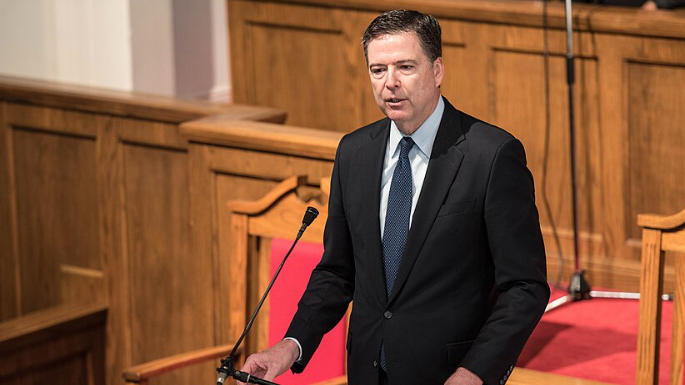
IMAGE: James Comey Source FBI Director Speaks on Civil Rights and Law Enforcement at Conference Author Federal Bureau of Investigation (FBI) CC0