
Google and Unity are making game development accessible without coding, while Disney expands its AI strategy. New research also raises concerns about responsible use, creative ownership and industry oversight.
Artificial intelligence is changing how video games and entertainment experiences are created, giving developers new ways to build interactive worlds while raising concerns about creativity, jobs and responsible technology use.
Google and Unity announced a partnership on October 7, 2026, to develop AI-powered gaming tools that allow people to create playable games using written instructions. Meanwhile, Disney has appointed a new chief technology officer to guide its growing investment in artificial intelligence and digital entertainment.
These developments come as companies across the entertainment industry consider how AI might lower production costs, accelerate development and create opportunities for people without traditional programming experience.
However, questions remain about the quality of AI-generated content, intellectual property, employment and whether companies are developing adequate safeguards.
Google and Unity Make Game Creation Easier
One of the most significant recent developments is the collaboration between Google and Unity, the company behind a widely used game development engine.
Their partnership introduces a platform called Playground, which allows users to create games by describing their ideas in ordinary language.
Instead of writing computer code, a creator can explain the desired setting, characters, challenges and gameplay mechanics. The system then uses AI to generate a playable experience.
Playground became available on October 7 to users aged 18 and older in the United States.
The platform supports creating and modifying games through conversational instructions. Users can request changes to gameplay, environments and characters without directly editing traditional programming code.
Google also provides ways for creators to share their games and participate in community features.
Some experiences support multiplayer gameplay, leaderboards and connections through Google Play Games profiles.
The companies say their goal is to make game development accessible to people who have ideas but lack the technical skills needed to build games through conventional methods.
This could give students, independent artists and hobbyists new opportunities to experiment with interactive storytelling.
However, creating a playable game is different from producing a polished commercial release. Complex games require careful design, testing, consistent mechanics and ongoing technical support.
Unity Spark Promises More Advanced Tools
Google and Unity plan to expand their collaboration later in 2026 with another product called Unity Spark.
The companies describe Spark as a more advanced creation environment that will connect AI-assisted development with Unity’s established game engine technology.
According to Unity’s official announcement, the planned platform will support more sophisticated game mechanics, high-quality three-dimensional graphics and broader creative control.
Users would be able to begin with simple prompts and gradually develop more complex interactive experiences.
Unity Spark is intended to connect beginner-friendly creation methods with tools used by professional developers.
The partnership also includes plans to help creators distribute their games to wider audiences through Google’s products and services.
Google intends to promote selected Playground creations across its network, potentially giving independent developers greater visibility.
Still, the advanced features are largely promises rather than demonstrated results at commercial scale. Unity Spark has not yet reached broad public availability.
Early reviews of Playground show both the possibilities and limitations of the approach.
Wired tested the platform and found that it could quickly generate unusual game concepts. However, the resulting experiences sometimes suffered from repetitive gameplay, limited customization and problems with overall quality.
TechRadar similarly found that AI could turn basic ideas into functioning games, but the results did not consistently match the creativity and refinement expected from experienced developers.
These experiences suggest that AI may be especially useful for experimentation and early prototypes, even if substantial human work remains necessary to produce sophisticated games.
Disney Expands Its Artificial Intelligence Strategy
The shift toward AI-assisted entertainment extends beyond video game development.
The Walt Disney Company appointed Karandeep Anand as senior executive vice president and chief technology officer, effective October 2, 2026.
Anand previously led Character.AI and held senior technology positions at Meta and Microsoft.
He reports directly to Disney chief executive Josh D’Amaro and oversees companywide technology operations, including infrastructure, data systems, AI platforms, engineering and product development.
Disney established the position as part of a broader effort to coordinate technology across its entertainment businesses.
Those operations include streaming services, digital products, film and television activities, theme parks and other consumer experiences.
D’Amaro has emphasized using technology to support storytelling and creativity rather than treating technological change as an end in itself.
Anand’s appointment reflects the importance Disney places on developing products that can compete in an increasingly digital entertainment market.
AI could assist with technical production tasks, customer experiences, content discovery and internal operations.
Disney’s theme park teams have also explored tools that help employees access institutional knowledge and evaluate complex operating environments.
However, the appointment does not establish that Disney intends to replace human artists or automate its creative departments.
The company has not announced a comprehensive timetable for introducing generative AI across all its entertainment operations.
AI Creates New Questions About Creative Work
As generative AI becomes more capable, artists and developers face questions about how their work will change.
Traditional game production involves writers, programmers, character designers, animators, composers and many other specialists.
AI systems can assist with portions of that work, including generating images, producing draft dialogue, suggesting code and creating preliminary environments.
Supporters argue that these capabilities could reduce repetitive tasks and allow creators to concentrate on more demanding artistic decisions.
Smaller development teams might also gain access to capabilities that previously required larger budgets.
Critics worry that companies may use automated tools to reduce employment or replace work traditionally performed by experienced artists.
There are also concerns about the information used to train generative AI systems, particularly when that material includes copyrighted artwork, music or writing.
Creators may question whether their work was used with permission and whether AI-generated material too closely resembles existing intellectual property.
Another concern involves the effect of automated content on artistic originality.
When systems generate material by identifying patterns in large collections of existing work, their results can appear familiar or predictable.
Human creators still play an important role in deciding what makes a game engaging, emotionally meaningful and worth playing.
The challenge for developers is determining which tasks benefit from automation and which require direct artistic judgment.
Responsible AI Research Reveals Major Gaps
Questions about responsible AI extend into another industry commonly described as gaming: casinos, sports betting and online gambling.
An April 2026 report from KPMG and the University of Nevada, Las Vegas International Gaming Institute examined AI practices among 83 gambling operators and suppliers.
The researchers found that approximately 70% of surveyed companies reported having some form of responsible AI practices.
However, fewer than 5% said those practices were fully embedded throughout their organizations.
The industry’s overall AI maturity score was 45 out of 100, indicating that implementation remained behind many companies’ stated ambitions.
The report also identified concerns about deepfakes and other forms of AI-assisted deception connected with illegal or inappropriate gambling.
Deepfakes can use artificially generated images, video or audio to imitate real people. Such material can potentially be used to mislead consumers or promote fraudulent operations.
KPMG emphasized the importance of transparency, accountability and stronger governance as companies expand their use of artificial intelligence.
The findings specifically concern gambling businesses, not video game developers. They therefore cannot be used to establish how many video game studios have adopted responsible AI policies.
Nevertheless, the research illustrates challenges that can arise when organizations introduce increasingly powerful technology without fully developed oversight systems.
The Future of Game Development Remains Uncertain
The rapid expansion of AI tools presents both opportunities and difficult decisions for the entertainment industry.
Google and Unity are testing whether ordinary users can become game creators through conversational software. Disney is reorganizing its technology leadership to support its long-term digital strategy.
These developments could change how entertainment products are developed, distributed and experienced.
They also raise questions about whether AI-generated games can maintain the quality, originality and emotional depth associated with successful human-created experiences.
For established studios, the immediate task involves finding practical uses for AI while protecting intellectual property and maintaining creative standards.
For independent developers, accessible tools may provide new opportunities to experiment, build prototypes and reach audiences.
Consumers will ultimately judge these products by how enjoyable, reliable and original they are, rather than simply by how quickly they were generated.
Google’s Playground is already available to eligible users, while Unity Spark is expected to enter its next development stage later in 2026.
How those tools perform as more people use them will provide an important test of whether AI can make sophisticated game creation more accessible without sacrificing the qualities that make games compelling.
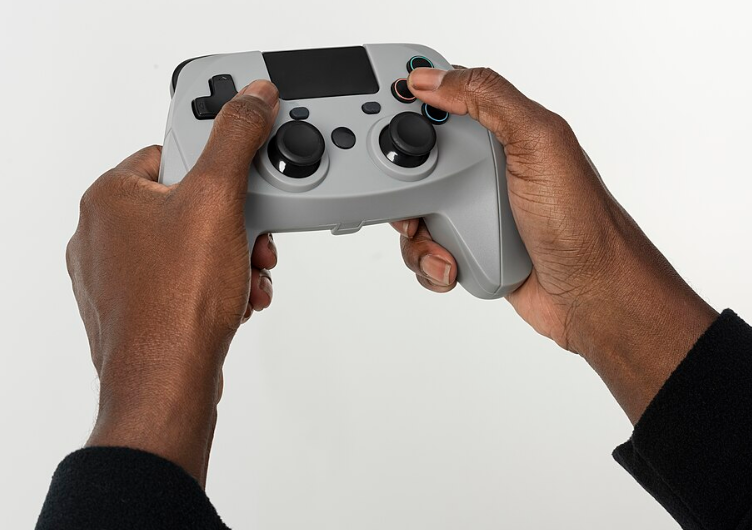
IMAGE: Source Hands holding video game controller Author Vu Hoang This file is licensed under the Creative Commons Attribution 2.0 Generic license.