
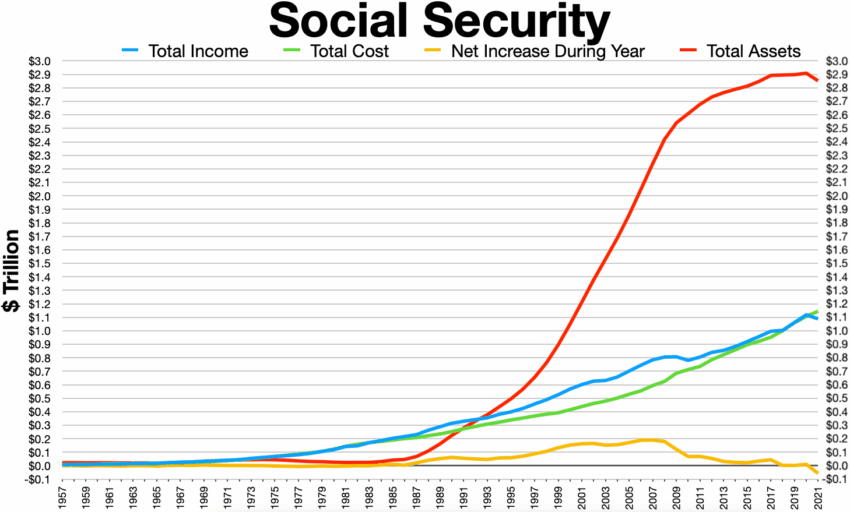
The Social Security Administration confirms an average $75 monthly increase beginning in January, but rising healthcare costs and long-term funding concerns leave many retirees worried about their finances.
Millions of Americans receiving Social Security will see their benefits increase by 3.6% in 2027, providing an average additional $75 per month for retired workers. The Social Security Administration announced the adjustment on October 14, 2026, following the release of September inflation figures.
The annual cost-of-living adjustment (COLA) will affect nearly 72 million Social Security beneficiaries beginning in January. Another 7.3 million people receiving Supplemental Security Income (SSI) will receive their increased payments starting December 31, 2026.
The increase is intended to help retirees and other beneficiaries keep pace with rising prices. However, advocates for older Americans warn that higher costs for housing, healthcare and everyday necessities continue to strain household budgets.
How Much Will Social Security Payments Increase?
The 3.6% adjustment is the largest Social Security COLA since the 8.7% increase that took effect in 2023. It also exceeds the 2.8% increase for 2026 and the 2.5% adjustment implemented in 2025.
According to the Social Security Administration, the estimated average monthly retirement benefit will rise from $2,095 to $2,170 in January 2027. That represents an additional $75 per month, or approximately $900 over a full year.
The actual increase will vary because benefits are calculated individually. Someone receiving a smaller monthly payment will generally receive a smaller dollar increase, while those collecting larger benefits will see a greater dollar adjustment.
For example, a retiree receiving $1,500 monthly would receive approximately $54 more before any deductions. A person collecting $2,500 would see an increase of roughly $90.
Retired couples who both receive benefits are expected to see their combined average monthly payment rise from $3,238 to $3,355.
The adjustment also applies to disability and survivor benefits. Average payments for disabled workers are projected to increase from $1,642 to $1,701 per month.
The maximum federal SSI payment for an eligible individual will rise from $994 to $1,029. For an eligible couple, the maximum will increase from $1,491 to $1,544.
These figures represent national estimates or federal benefit standards rather than guaranteed payments for individual recipients.
How the Government Calculates the COLA
Social Security’s annual adjustment is determined using the Consumer Price Index for Urban Wage Earners and Clerical Workers, commonly called the CPI-W.
The Bureau of Labor Statistics measures changes in the prices paid by urban wage earners and clerical workers for goods and services.
To calculate the 2027 COLA, the government compared the average CPI-W reading during July, August and September 2026 with the corresponding average from 2025.
The resulting 3.6% increase determines how much benefits will rise.
September’s inflation report showed that overall consumer prices had increased 3.7% over the previous 12 months. Higher energy costs contributed to the latest increase, placing renewed pressure on household budgets.
The COLA calculation is automatic under federal law. It does not depend on a separate annual vote by Congress.
Although the formula is intended to preserve purchasing power, the adjustment compensates for inflation that has already occurred. Beneficiaries typically experience higher prices before the corresponding annual increase reaches their payments.
This timing can be particularly challenging for retirees who have limited savings or rely heavily on their monthly benefits.
Many Older Americans Say the Increase Is Not Enough
AARP welcomed the adjustment while emphasizing the financial challenges facing older Americans.
In a statement released October 14, AARP Chief Executive Officer Dr. Myechia Minter-Jordan said that one in five older Americans has no retirement savings. She also warned that financial insecurity has increased among people approaching or living in retirement.
AARP’s recent survey found that 76% of adults aged 50 and older believed a projected 3.5% COLA would not adequately cover rising prices.
The survey was conducted before the official 3.6% announcement, meaning respondents were evaluating a slightly lower estimate.
The findings nevertheless demonstrate widespread concern about whether benefit increases can keep pace with essential expenses.
Shannon Benton, executive director of The Senior Citizens League, has also questioned whether traditional inflation measurements accurately reflect the spending patterns of older Americans.
Retirees often devote substantial portions of their income to medical care, prescription medications, housing and utilities. Their personal expenses may therefore increase at different rates from the broader basket of goods used to calculate the COLA.
Some advocates support replacing or supplementing the current inflation measurement with an index designed specifically around spending by older adults.
Such a change would require federal legislation and could produce different annual adjustments depending on economic conditions.
Medicare Costs Could Reduce the Increase
The Social Security raise will not necessarily translate into an equivalent increase in the amount deposited into every retiree’s bank account.
Many beneficiaries have Medicare Part B premiums deducted directly from their Social Security payments. Any increase in those premiums can reduce the net amount they receive.
The official 2027 Medicare Part B premium had not been announced as of October 14, leaving beneficiaries uncertain about how much of their upcoming COLA they will retain.
Part B helps cover outpatient medical services, doctor visits and certain preventive care. Premiums are generally paid monthly, and higher-income beneficiaries may pay additional amounts.
Prescription drug expenses can also affect retirement budgets. Medicare Part D coverage varies by plan, including differences in premiums, deductibles and covered medications.
Beneficiaries will have an opportunity to review their Medicare coverage during the annual open enrollment period, which runs from October 15 through December 7.
Comparing available plans may help people identify changes in premiums, provider networks and prescription drug coverage before 2027 begins.
The interaction between Social Security adjustments and Medicare expenses remains an important consideration for retirees planning their budgets.
Social Security Faces Long-Term Funding Challenges
The COLA announcement also comes amid continuing concerns about the future finances of Social Security.
The program’s 2026 trustees report projects that reserves in the Old-Age and Survivors Insurance Trust Fund will be depleted during the fourth quarter of 2032 unless federal law changes.
That fund pays retirement and survivor benefits. Its projected depletion would not mean that all Social Security payments would stop.
Payroll taxes would continue generating revenue, but the trustees estimate that incoming funds would initially cover approximately 78% of scheduled benefits.
The combined retirement, survivor and disability trust funds are projected to have sufficient reserves until 2034. At that point, continuing income would cover approximately 83% of scheduled benefits under the trustees’ assumptions.
These projections highlight the difference between the retirement program’s immediate ability to make payments and its longer-term financing challenges.
Lawmakers have discussed possible changes, including raising the maximum earnings subject to payroll taxes, increasing revenue and modifying future benefit formulas.
Those proposals involve competing priorities concerning retirement security, taxation and federal spending. No comprehensive funding agreement had become law by the time of the latest COLA announcement.
When Retirees Will Receive Their New Benefit Notices
The Social Security Administration will begin making personalized 2027 COLA notices available online in late November.
Beneficiaries with a personal my Social Security account can review information about their updated monthly payment, including applicable deductions.
People who do not yet have an account must create one and choose paperless notices by November 18, 2026, to qualify for early online access.
Recipients who continue receiving paper notices will generally get their information through the mail in December.
The agency has simplified its annual COLA notices to provide clearer information about payment amounts and effective dates.
Most Social Security recipients will receive their increased benefits with their regular January 2027 payment. SSI recipients will receive the increase on December 31 because January 1 is a federal holiday.
Other annual Social Security rules will also change. The maximum amount of earnings subject to Social Security payroll taxes will increase from $184,500 in 2026 to $192,300 in 2027.
Workers who receive retirement benefits before reaching full retirement age will also face higher earnings limits before benefits are temporarily withheld.
For millions of retirees, the immediate benefit of the 3.6% adjustment is additional monthly income at a time when prices remain elevated.
The amount beneficiaries actually retain will depend partly on Medicare deductions and individual circumstances. Personalized notices arriving later this year will provide the clearest picture of what each recipient can expect when the new benefits take effect in January.
IMAGE: Social Security Trust Fund. Photo: Wikideas1 / Wikimedia, taken 2020-05-17, CC BY-SA 4.0