
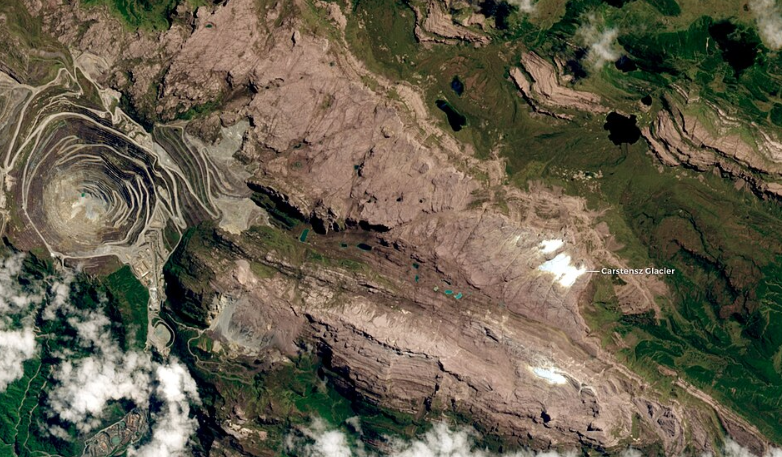
The eternal snow that once blanketed the tropical island of Papua is now nearly gone. Only small patches remain around Puncak Jaya, also called Carstensz Pyramid. Glaciers that covered about 1,900 hectares around Puncak Jaya in 1850 had shrunk to about 16.5 hectares by 2024.
These glaciers are special because they are separated from other ice systems by thousands of kilometers, according to the BBC. Ice cores from the slopes of Puncak Jaya hold records of past climate conditions. Researchers recovered three ice cores from the mountain in 2010. Two of them reached bedrock and contained records of tropical Pacific climate conditions going back to the 1960s.
Scientists say warming temperatures are the main force behind the disappearance of the ice. El Niño events can speed up the melting by raising temperatures and changing precipitation. A 2025 study found that the remaining glaciers could disappear around 2030 if recent rates of retreat continue. More recent estimates cited by the World Meteorological Organization indicate the remaining ice could disappear even sooner.
The Moni people call the mountain Mbainggela, and believe their ancestors are watching over it. A young Amungme woman named Elfrida Natkime shared how her people see the mountain as sacred. She said that parents and grandparents prayed their children would have hearts like the White Arrow, never straying from the proper path.
The Amungme call the mountain range Nemangkawi, or the White Arrow. The name represents ideas of honesty, purity and living on the proper path. Amungme activist Adolfina Kum compared the possible destruction of the sacred mountain to the destruction of important religious sites such as Mecca or the Vatican.
The mountain is more than just a place of beauty and history for the people of Papua. Mining and other development in the region have created employment and economic activity. But it has also caused environmental damage and long-standing social conflict.
The Grasberg gold and copper mining operation is located in the same mountain region. Research published in 2026 found that mining has brought economic benefits while also contributing to environmental damage and conflict involving the Amungme and Kamoro Indigenous communities.
Some people have lost access to their ancestral lands due to expanding mining operations. Elfrida Natkime said that every time she sees the mountains, she feels amazed but also sad. She added that since mining companies came to the area, she has seen exploitation happening.
Elfrida’s family has deep ties to the land surrounding Nemangkawi. She told the BBC that her family once lived in an area that later became part of Tembagapura, the mining town built for Freeport employees. She also said that the benefits of the region’s mineral wealth have not reached everyone in her community.
The remaining glaciers are now just a fraction of their former size. Their area declined from about 1,900 hectares in 1850 to 640 hectares in 1974 and about 210 hectares in 2002. By 2024 only about 16.5 hectares remained.
There is almost no ice left on the mountain now, scientists say. The loss is significant not only as evidence of climate change but also because the glaciers have spiritual meaning for several Indigenous communities in Papua.
For scientists, the disappearing ice also means the loss of a rare climate record. For the Amungme and Moni people, it means the possible disappearance of part of a landscape tied to their ancestors, traditions and identity.
IMAGE: Author European Union, Copernicus Sentinel-2 imagery Contains modified Copernicus Sentinel data 2020