
Paleontologist Dirk Knaust found fossilized pellets that resemble the compact regurgitated pellets produced by owls but were likely made by ancient marine reptiles. These pellets contained shells, worm tubes, sea lily fragments and other hard remains from the seafloor. The remains pointed to a large animal that fed heavily on shellfish and other hard-bodied prey.
Some of the pellets were as large as a mango or about four inches across, according to Popular Science. Knaust studied more than twenty of these regurgitalites, which are fossilized vomit deposits. He compared the contents to similar fossils from Europe and North America.
The shellfish species found in the pellets could not have lived in the river-delta environment where the fossils were deposited. They required the more stable salinity of open marine water. This led Knaust to believe that the animal ate in deeper water before moving into shallower delta waters and regurgitating the hard remains.
A nearby fossilized bone and coprolites initially led Knaust to consider an ichthyosaur as the possible source. CT scans showed that the bone belonged to an ichthyosaur. However, the ichthyosaur did not turn out to be the best match for the pellets.
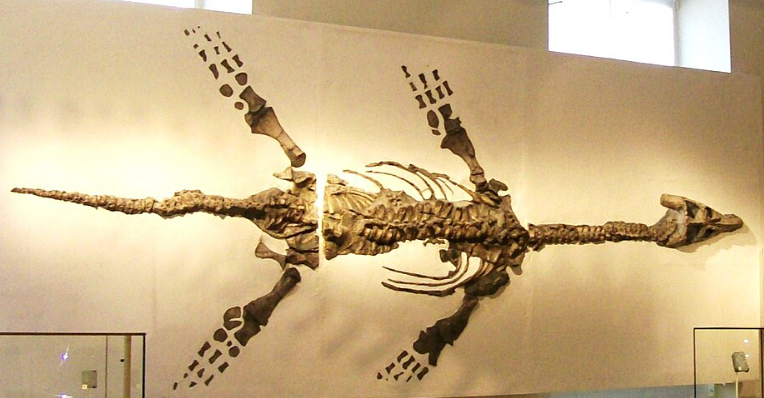
The evidence instead pointed toward plesiosaurs as the animals that made the pellets. Knaust said the size of the deposits and the type of prey inside them most closely matched plesiosaur feeding habits.
Plesiosaurs were marine reptiles that survived for more than 140 million years. Different species ranged from about 6.5 feet to more than 40 feet long. The cryptoclidid plesiosaurs that Knaust considers the best candidates were about 13 to 26 feet long and lived from the Middle Jurassic into the Early Cretaceous.
These animals were adapted for life in the water and used four powerful flippers for swimming. Previous studies of their anatomy suggest that some plesiosaurs may have pointed their heads downward while feeding on animals living on the seafloor. Their teeth were not well suited for crushing hard shells. Knaust proposes that their stomachs instead compacted the indigestible material before it was vomited as pellets.
Knaust believes these creatures swam into shallow river deltas to rest and vomit their indigestible meals. This behavior may have resembled what is seen in modern fur seals and marine crocodiles. However, plesiosaurs probably remained underwater during this process because of their body structure and weight.
The fossils were recovered from drill cores taken from the North Sea off Norway. Much of the material came from the area near the Troll oil and gas field where subsea carbon dioxide storage is being developed. The sediments formed in shallow and marginal marine environments during the Jurassic period.
Knaust has spent decades studying fossilized traces from drill cores in the region. He works for Norwegian energy company Equinor and has examined thousands of meters of North Sea core samples.
The pellets were too large to come from small predators such as most fish or cephalopods. Knaust also considered sharks and crocodiles. But those predators were more commonly associated with eating fish and the pellets lacked fish skeleton remains.
He identified cryptoclidid plesiosaurs as the best match for the vomit pattern. The contents included bivalves, hard tubes built by marine worms, crinoids and belemnite remains. This mixture suggests an animal that regularly fed on hard-bodied creatures living near the seafloor.
The discovery gives researchers a rare look at plesiosaur digestion and feeding behavior. Fossilized vomit can reveal information that bones alone cannot show because it preserves evidence of what an animal ate and how it processed its food.
Mucus may have helped preserve the pellets during fossilization, though they would still have been vulnerable to waves and tides. Knaust said some deposits survived because they were quickly buried by sediment. Others ended up in burrows made by crustaceans on the seafloor and were partly protected there.
Knaust said this is only the beginning of what can be learned from studying fossilized vomit. The study was published in Geological Magazine by Cambridge University Press. The paper is titled “The fate of supposed plesiosaur vomit from Jurassic delta deposits offshore Norway.”
Researchers also found parts of dinosaur footprints in drill cores from the same ancient delta region. Those footprints were not inside the vomit pellets. They show that two-legged predatory dinosaurs and long-necked plant-eating dinosaurs lived on nearby land while plesiosaurs and other marine reptiles occupied the surrounding waters.
The fossils provide an unusual glimpse into the behavior of marine reptiles that lived roughly 160 million years ago. They suggest that some plesiosaurs may have traveled between deeper feeding grounds and shallow coastal waters after eating.
IMAGE: Plesiosaur skeleton Source Own work Author Poliphilo CC1