
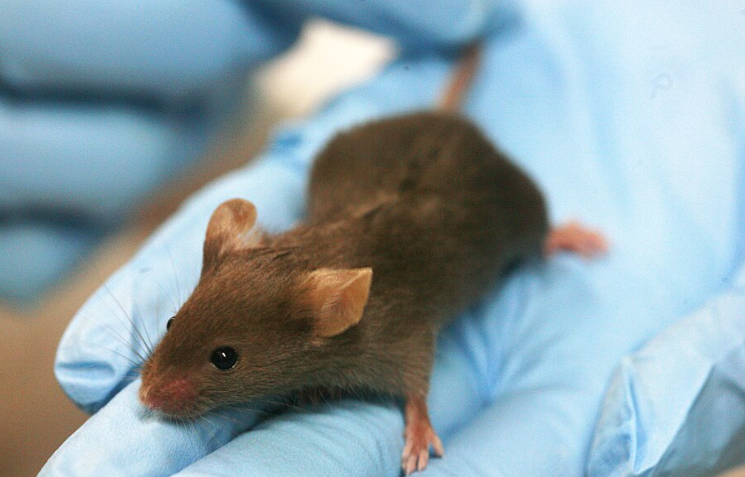
Stanford Medicine researchers have created mice in which human cortical organoids grew through much of the space normally occupied by the animals’ cerebral cortex. The technique is called xenocortication, a term that describes the process of adding human brain tissue to a mouse with a modified brain structure, according to Gizmodo. These specially engineered mice were missing large parts of their neocortex and hippocampus, areas that are essential for complex thinking and memory. Despite the absence of these brain regions, the mice still survived and showed some basic behaviors, though they had memory issues compared to normal mice. The study was published September 16 in the journal Nature.
When human brain cells were added to the mice, they grew and formed connections with the existing mouse nervous system. The human neurons expanded over time, taking up more space in the brain and forming complex neural networks, according to a report from NPR. Three months after transplantation more than 90% of the cortical tissue by volume in the xenocortical mice was human-derived. The human tissue also sent nerve fibers into other parts of the nervous system including the spinal cord.
On a Y-maze working-memory test the xenocortical mice performed above chance while mice missing the cortex and hippocampus without human tissue did not. The study did not find that the xenocortical mice had better memory than normal mice. Researchers said the animals generally performed similarly to normal mice on several behavioral tests.
The researchers believe this method could help study conditions including cerebral palsy, epilepsy, autism and schizophrenia. One of the surprising findings was that the mice with missing brain areas still managed to function, although they had memory problems. The human brain cells in these mice were able to integrate into the mouse nervous system and showed a strong response when the animals were exposed to very low oxygen levels. The researchers used that experiment as a model for studying human brain injury caused by oxygen deprivation. Xenocortical mice exposed to low oxygen later showed problems with their gait and balance while normal mice and mice without the human graft were much less affected.
This development marks a significant step forward in using animal models to understand human brain disorders. The research was conducted under strict ethical oversight, with experts reviewing the experiments and ensuring responsible practices were followed. Stanford’s team also consulted with ethicists and legal scholars to evaluate the implications of their work. The study says human-cell experiments followed relevant guidelines and were reviewed by Stanford committees as well as an independent ethics group.
Some scientists and bioethicists have raised concerns about how more advanced versions of these experiments could affect an animal’s abilities or experience. However, researchers say they are not concerned that the mice have any form of human cognitive abilities at this stage, technologyreview.com reported. Bioethicist Insoo Hyun told Science News that the important question is what new abilities the human tissue gives the animals and said these mice showed no obvious extra cognitive power.
Pașca has warned that similar experiments involving animals closer to humans would raise greater ethical concerns. He told Live Science that transplanting human organoids into monkeys is an experiment he does not believe is justified at this point. The new method shows how genetic engineering and stem-cell technology can be used to reshape biological systems in unprecedented ways. This work builds on earlier research where scientists placed human brain organoids into mice, but this latest approach allows for much more growth and integration.
The ability to grow human neural tissue in a mouse brain opens new possibilities for testing treatments for neurological diseases. Researchers say the technique is powerful but will require continued ethical oversight as the human tissue becomes more mature or more closely integrated with an animal nervous system. The Nature paper specifically calls for early ethical guidance before experiments involving more mature tissue or animals such as nonhuman primates.
The mice created in this study still lacked several features of a mature human cortex including a well-defined layered cortical plate and the full range of inhibitory neurons. The researchers also found rare von Economo neurons in the human tissue. These cells are associated with parts of the human brain involved in social awareness and decision-making and had not previously been produced in ordinary laboratory cultures.
Still, the research represents a major advancement in how scientists model human brain function in laboratory settings.
IMAGE: Rama Taken on 3 July 2008, CC2
This article passed automated originality and source-verification checks before publishing.