
NASA’s Nancy Grace Roman Space Telescope is set to launch this weekend aboard a SpaceX rocket from Kennedy Space Center in Florida. The telescope will travel about 300 million kilometers from Earth before beginning its mission at the L-2 point. It is designed to survey large areas of the sky quickly using a mirror that matches the size of Hubble’s but with a field of view more than 100 times larger. Once operational early next year, it will search for signs of dark energy and detect perhaps 100,000 exoplanets.
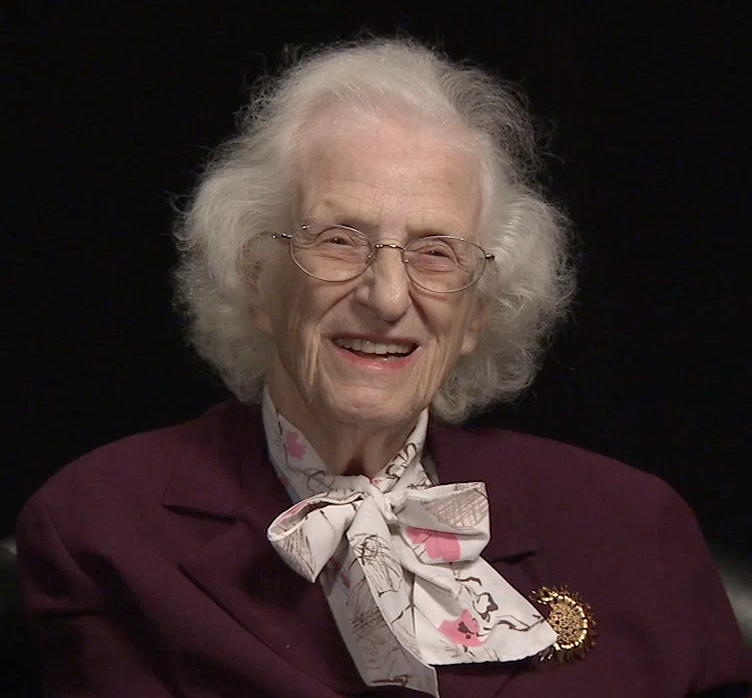
The telescope is named after Nancy Grace Roman, NASA’s first chief of astronomy and a pioneering figure in space science, according to Phys.org. Roman was born in Nashville, Tennessee, in 1925, and developed an early interest in the stars with encouragement from her mother. She pursued her education in astronomy despite facing gender-based obstacles in academia and eventually earned a doctorate in 1949. Her research focused on stellar dynamics and the motion of stars within the Milky Way, contributing to understanding how galaxies evolve over time. Roman joined NASA in 1959 as part of its early space science program and became the first woman to hold an executive role at the agency. She championed the idea of a large space telescope that would observe the universe without Earth’s atmospheric interference. This vision led to the development of what became the Hubble Space Telescope, launched in 1990. Roman also helped launch other missions like the Orbiting Solar Observatory series and the Orbiting Astronomical Observatory.
She retired from NASA in 1979 and received many honors for her contributions to science, including an asteroid named after her. The Roman Space Telescope has a five-year prime mission and will use a 300-megapixel infrared camera, according to a report from SpaceNews. It also carries a coronagraph instrument to block starlight and directly observe planets orbiting those stars. Scientists expect the telescope to help understand dark matter and dark energy, which make up about 95% of the universe.
The mission is led by Julie McEnery, senior project scientist for Roman at NASA, who said it will conduct revolutionary surveys in astronomy. The telescope’s mirror was donated by the National Reconnaissance Office and originally intended for a canceled spy satellite program. NASA had to adjust its design after facing cost and schedule issues during development. The agency refigured the telescope’s optical prescription and turned the coronagraph into a technology demonstration to reduce costs. Despite political pressure and pandemic-related delays, the project finished ahead of schedule and is now set for an early launch in August 30, 2027.
The telescope will take about 100 days to reach its destination and begin commissioning its instruments after launch. NASA officials expect science observations to start shortly after the spacecraft arrives at L-2. The telescope will complete three major surveys during its five-year mission, though astronomers anticipate it may operate longer.
Shawn Domagal-Goldman, director of NASA’s astrophysics division, said the team has delivered on schedule and within budget. The telescope’s mirror was originally intended for a future mission but is not planned for reuse at this time.
NASA’s Roman Space Telescope represents a major step forward in space-based astronomy and the exploration of our universe.
IMAGE: Astronomer Nancy Grace Roman at age 88 (still from a NASA-produced video). Roman was NASA’s first Chief of Astronomy in the Office of Space Science. In her role, she successfully managed numerous astronomy-based projects including the Hubble Space Telescope.. Photo: NASA / Wikimedia, taken 2015-05-13, Public domain