
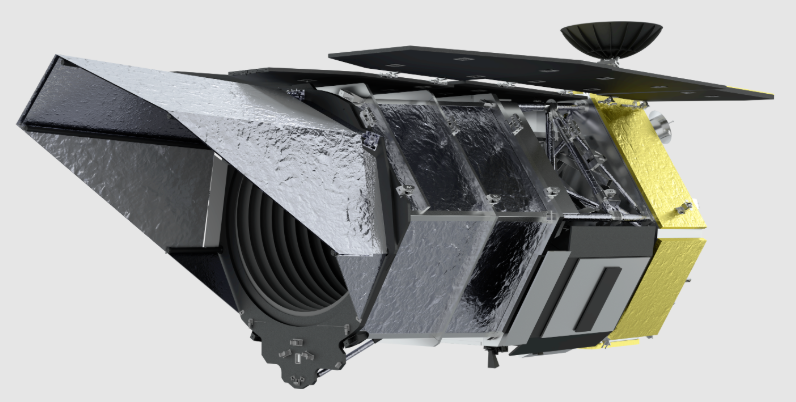
NASA is set to launch the Nancy Grace Roman Space Telescope on August 30, honoring the agency’s first chief astronomer. The telescope will have a field of view 100 times larger than the Hubble Space Telescope, allowing it to capture vast areas of the sky. This new space observatory is designed to transform our understanding of the universe by surveying billions of galaxies. The mission will search for dark matter and dark energy, two of the biggest mysteries in science. The telescope will also hunt for new exoplanets, including small worlds that have not been seen before.
Dr. Dominic Benford, NASA program scientist for the mission, spoke about the telescope’s goals and its connection to past space efforts, according to Yahoo News. The Nancy Grace Roman Space Telescope will be placed at the second Sun-Earth Lagrange point, a location about a million miles from Earth, according to a report from science.nasa.gov. Like the James Webb Space Telescope, it will orbit around this point and stay far from other spacecraft.
The spacecraft is equipped with two main instruments: the Wide Field Instrument and the Coronagraph Instrument, thedebrief.org reported. The Wide Field Instrument is a 300-megapixel near-infrared camera that will allow for large-scale surveys of the sky. This instrument will help scientists study dark energy and search for exoplanets with high precision. The Coronagraph Instrument is designed to image planets around other stars by blocking out the light from their host stars. It will make it possible to see planets that are much fainter than what has been seen before. With this technology, scientists may be able to directly image planets that are a billion times fainter than their host stars.
The telescope could also capture the first images of an exoplanet with rings. Its Coronagraph Instrument will also test new technologies that could be used in future space missions.
The mission is expected to last at least five years, with the possibility of an additional five-year extension. Fuel is expected to be the mission’s life-limiting resource for how long the telescope can operate. The spacecraft is designed to be refuelable, which could extend its life if needed.
Roman will work with other space missions like Webb and Euclid to give a full view of the universe. It will uncover interesting targets that other telescopes can follow up on with more detailed observations.
The telescope’s data will be made public as soon as it’s processed, allowing many teams to analyze it simultaneously. More than a million people have had their names included on the spacecraft as part of the mission.
The mission will use a method called gravitational microlensing to find new planets. This method can detect planets that are too small or faint for other techniques. Roman may discover hundreds to thousands of new exoplanets using this method alone.
The telescope will help scientists learn more about objects in our solar system and distant galaxies. Its wide view and sharp images will allow for a broad range of scientific studies.
The mission is named after Dr. Nancy Grace Roman, who led NASA’s early astronomy efforts. Her leadership helped establish NASA as a major scientific organization.
Roman’s mission is expected to bring new discoveries in astronomy and space exploration. It will continue the legacy of space telescopes like Hubble and Webb.
This telescope will help answer big questions about the universe and our place in it.
IMAGE: NASA Public Domain