
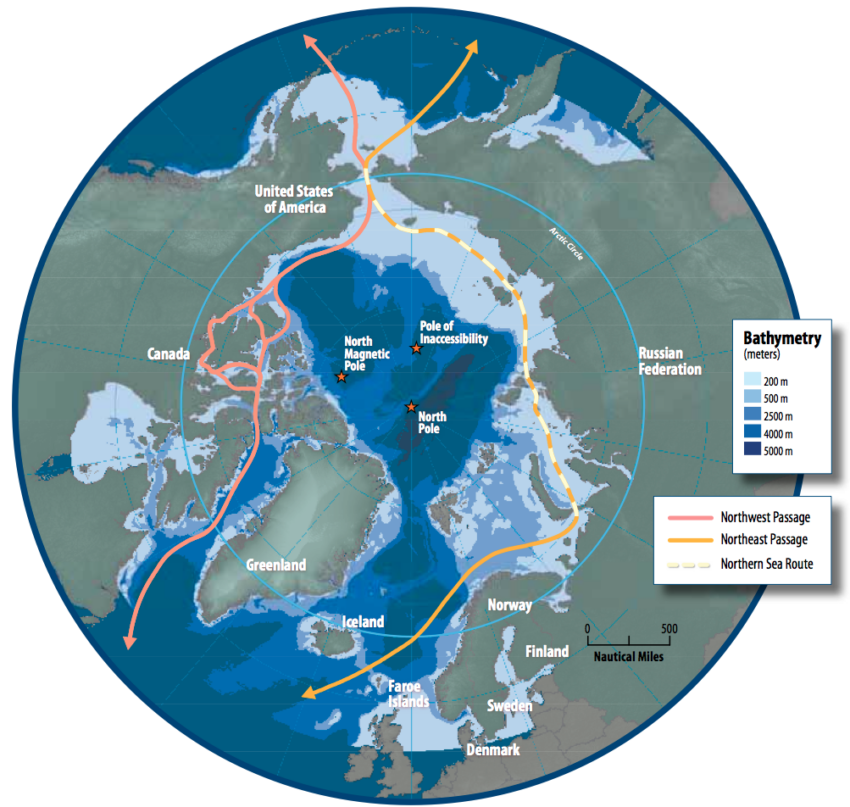
A Chinese shipping company has started weekly container ship voyages along the Northern Sea Route, a passage that runs along Russia’s northern coast to Europe via the North Sea. These trips began on August 15 and will continue through October, marking a significant development in Arctic shipping. The route is shorter than traditional paths, cutting travel time from around 40 days to about 20 days. This makes the journey more efficient and potentially less expensive for exporters from Asia. The move also reflects growing economic ties between Russia and China. China uses the route to transport goods to Europe, while Russia sends oil to Asia through it.
The increased activity in the region is tied to climate change, which has reduced sea ice in recent years, according to Yahoo News. According to the National Snow and Ice Data Center, the past 20 years have seen 17 summers with the lowest sea-ice cover on record. Experts say this shrinking ice cover is making Arctic shipping more feasible during the summer season. Marine risk consultant Anastasios Leonburg noted that Arctic shipping will likely increase as ice continues to decline.
Environmental groups are concerned about the impact of these new shipping routes on the fragile Arctic ecosystem. They worry that black carbon emissions from ship fuel could accelerate ice melting in the region. A recent analysis by the Bellona Foundation examined a large cargo ship named Istanbul Bridge using this route. The study highlighted potential environmental risks associated with increased Arctic traffic.
International agreements to regulate Arctic shipping are unlikely due to current geopolitical tensions. Russia alone sets regulations for the Northern Sea Route. Environmentalists fear that without strong oversight, Arctic shipping could harm the environment.
The expansion of Arctic shipping is part of a broader trend influenced by changing climate conditions. This development underscores the complex relationship between global trade and environmental sustainability in polar regions.
IMAGE: Map of the Arctic region showing shipping routes Northeast Passage, Northern Sea Route, and Northwest Passage, and bathymetry. Photo: Susie Harder / Wikimedia, Public domain