
Oil prices jumped sharply Monday as hopes faded that negotiations involving Iran could quickly restore normal shipping through the Strait of Hormuz, one of the world’s most important energy transportation routes.
U.S. crude oil climbed about 5% to roughly $82.13 a barrel during Monday’s trading, while Brent crude, the international benchmark, rose to about $87.72 a barrel. The increase came as investors reassessed the likelihood that Iran and the United States could reach an agreement capable of restoring reliable tanker traffic through the strait. According to a report by The Associated Press, the increase in oil prices also weighed on U.S. stocks, which pulled back slightly from recent record highs.
The Strait of Hormuz sits between Iran and Oman and connects the Persian Gulf with the Gulf of Oman and the Arabian Sea. Its importance to the global economy is difficult to overstate. According to the U.S. Energy Information Administration, about 20.9 million barrels of petroleum liquids passed through the strait each day during the first half of 2025. That represented approximately 20% of worldwide petroleum liquids consumption and about one-quarter of all oil traded by sea.
Traffic through Hormuz has been severely disrupted since the conflict involving Iran, the United States and Israel began earlier this year. The International Energy Agency has described the resulting loss of supply as the largest disruption in the history of the global oil market. Before the conflict, roughly 20 million barrels of oil moved through Hormuz each day, according to the agency.
There appeared to be some progress toward reopening the route over the weekend. Iran said an agreement with Oman establishing new shipping arrangements through the Strait of Hormuz was in its final stages, according to a report by Reuters. However, Iranian officials made clear that such an agreement would not automatically mean unrestricted shipping would resume.
Iran has linked a full reopening of the strait to concessions from the United States. Iranian officials have sought measures that include sanctions relief, the release of frozen Iranian assets and compensation related to previous U.S. and Israeli attacks. Tehran has also demanded an end to actions it considers hostile toward Iran and its regional allies.
Those conditions have created another obstacle for negotiations. President Donald Trump on Monday rejected Iran’s demand for war reparations and argued that Iran itself should compensate the United States for Americans killed in attacks attributed to Iranian-backed groups, according to The Associated Press. The competing demands have reduced expectations that a comprehensive agreement will be reached quickly.
Markets responded almost immediately.
Earlier Monday, Brent crude had been trading around $84 a barrel as investors remained cautiously optimistic about an agreement. As expectations for a deal weakened, prices moved substantially higher. By the end of the U.S. trading session, oil had gained around 5%, while major U.S. stock indexes edged lower.
The problem extends beyond crude oil. Diesel supplies are also under pressure. U.S. ultra-low sulfur diesel futures surged 7.4% Monday to about $4.19 per gallon, according to a report by Reuters. Diesel markets have been affected by disruptions in the Middle East as well as refinery problems and attacks in Russia and Saudi Arabia. U.S. inventories of distillate fuels, which include diesel and heating oil, have fallen to unusually low levels for this time of year.
Higher diesel costs can spread rapidly through the broader economy because the fuel is heavily used by trucking companies, farmers, construction companies and other industries. Rising transportation expenses can eventually increase the cost of food and consumer goods.
There are pipelines capable of moving some Middle Eastern oil without using the Strait of Hormuz, but they cannot replace the enormous amount normally carried through the waterway. The EIA estimates that major pipelines in Saudi Arabia and the United Arab Emirates can provide about 4.7 million barrels per day of capacity that bypasses Hormuz, far below normal flows through the strait.
Governments have already taken extraordinary steps to limit the economic damage. Earlier this year, member countries of the International Energy Agency agreed to make 400 million barrels of emergency oil reserves available, the largest coordinated stock release in the organization’s history. The agency has said that alternative supplies, pipelines and emergency reserves can soften the disruption but cannot completely replace normal traffic through Hormuz.
The latest increase in crude prices also creates another potential problem for central banks. Higher oil and fuel costs can push inflation upward just as policymakers are trying to determine the direction of interest rates. Monday’s increase therefore affected more than energy companies, contributing to renewed caution across financial markets.
For now, traders are likely to remain highly sensitive to developments involving Iran, Oman and the United States. A credible agreement that allows tankers to move safely and consistently through Hormuz could ease pressure on oil prices. Continued disagreement, renewed attacks or further restrictions on shipping could push energy prices higher again.
The key issue is no longer simply whether Iran and Oman can agree on shipping procedures. Markets are waiting to see whether the broader political dispute between Tehran and Washington can be resolved well enough for one of the world’s most important oil routes to return to something resembling normal operations.
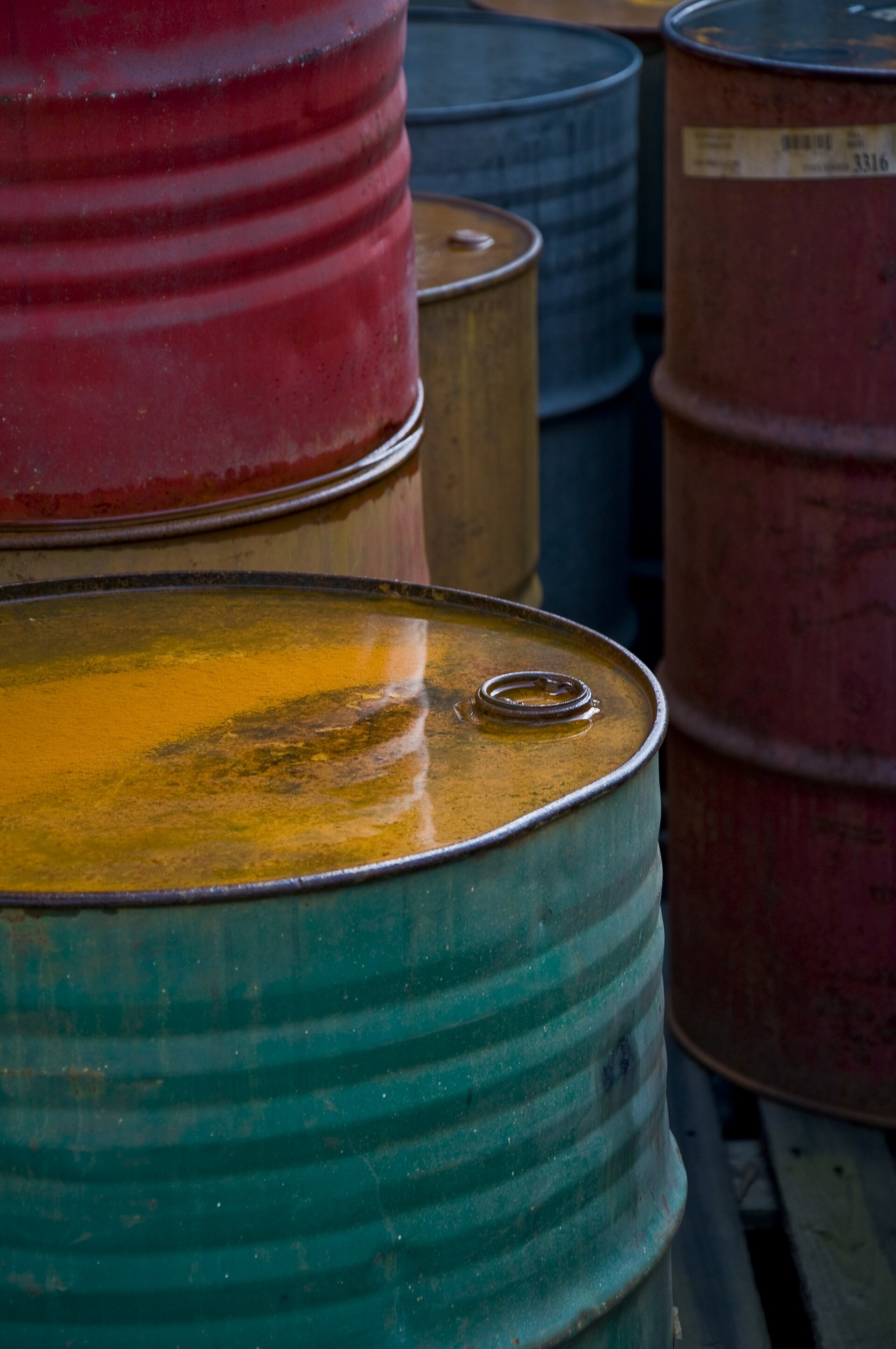
IMAGE: Lars Christopher Nøttaasen / Wikimedia Commons (CC BY 2.0)