
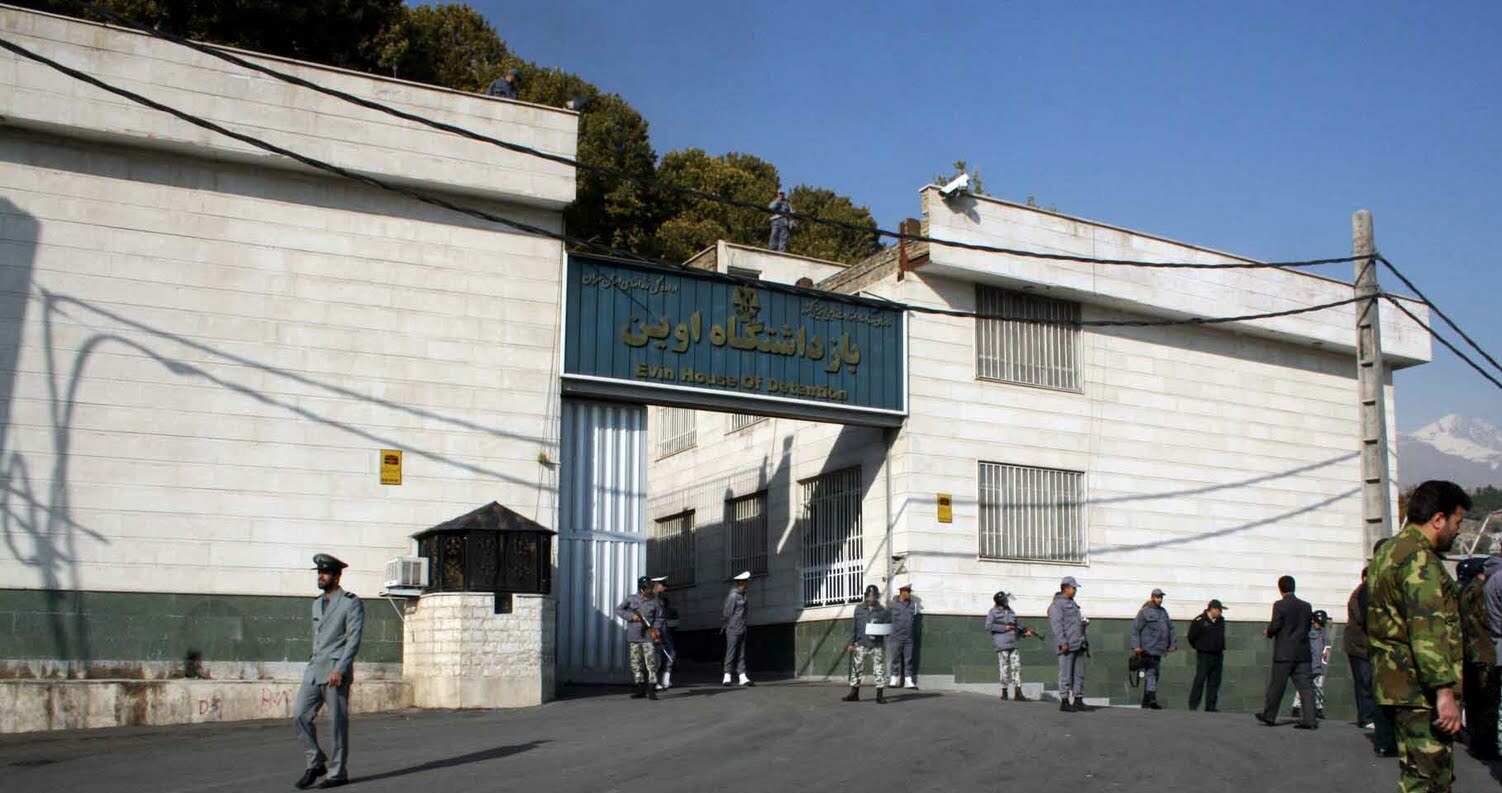
A U.S. citizen held in Iran’s Evin Prison has shared an audio update describing the difficult living conditions inside the facility. The man, Reza Valizadeh, is a dual Iranian-American citizen who previously worked for Radio Free Europe’s Persian service. He has been held in Evin since 2024 and is among several American citizens currently detained in the country.
Valizadeh said that access to libraries and sports facilities has been denied for over a year, according to CBS News. He added that medical care inside the prison is nearly nonexistent. Medicines brought by families often disappear before reaching the prisoners. The prison doctors are described as unprofessional and unmotivated. Diseases once thought to be under control have reappeared inside the prison, including tuberculosis. One prisoner had symptoms of tuberculosis for six months before being sent to a hospital outside the prison. He had been living in close quarters with other inmates for six months before receiving care.
The food provided by the prison is so poor that most prisoners refuse to eat it. Authorities have recently moved non-political inmates, mostly those convicted of financial crimes, into the same ward as political prisoners. This is seen as an effort to break down the unity of political prisoners.
Valizadeh said he has not been allowed to see his family for five months. Some of this restriction is due to punishment, while other parts are justified by the government under wartime conditions.
He also mentioned another American citizen in Evin, Kamran Hekmati. Hekmati is an Iranian-American Jew from New York who was arrested during a recent Israel-Iran conflict. He was granted permission for cancer treatment but was sent back to prison before receiving chemotherapy. His leave was cut short even though it should have been extended to allow him to begin treatment.
Valizadeh’s message was shared with CBS News and cleared for release by his legal representative. The audio update gives a firsthand account of the growing concerns about human rights in Iran’s prison system. It highlights the lack of access to basic needs and the deteriorating health conditions for those held in Evin.
The situation has drawn attention from international advocates and human rights organizations. Many are calling for urgent action to address the treatment of detained U.S. citizens in Iran.
The prison environment continues to raise serious questions about the rights and well-being of those held inside. Valizadeh’s statement is one of the latest accounts from inside Evin that underscores the urgent need for reform. His words reflect a growing concern among those monitoring conditions in Iranian prisons.
The U.S. government has previously expressed concern over the treatment of its citizens in Iran. But without direct intervention, many believe the situation inside Evin will only worsen.
Advocates continue to call for transparency and access to those being held in the prison. They say that more information is needed to understand how the health and rights of prisoners are being protected.
The voices from inside Evin are a reminder that the world is watching, and pressure may continue to mount. The conditions described by Valizadeh and others are a stark reminder of the challenges faced by those imprisoned in Iran.
As more details emerge, the international community remains focused on how to respond.
IMAGE: Evin House of Detention Prison’s main entrance in 2008 CC BY-SA 2.0