
Marathon Petroleum reported second-quarter financial results that surpassed analysts’ forecasts as disruptions to international oil supplies created unusually favorable conditions for major U.S. refiners.
The company reported net income of $5.14 billion for the quarter, more than four times the $1.22 billion earned during the same period in 2025. Analysts surveyed by LSEG had expected net income of approximately $3.91 billion. Diluted earnings reached $17.73 per share, while adjusted earnings before interest, taxes, depreciation and amortization rose to approximately $8.5 billion.
The improvement came as global fuel markets adjusted to disruptions affecting major supply and shipping routes. Restrictions on crude-oil movements through the Strait of Hormuz, combined with attacks affecting refineries in the Middle East and Russia, reduced the amount of fuel readily available to international buyers. Importers were willing to pay higher prices to secure gasoline, diesel and jet fuel from reliable suppliers, benefiting American refiners with access to export facilities.
Marathon Petroleum’s refining and marketing margin reached $36.33 per barrel during the quarter, approximately double the level recorded one year earlier. Refining margins represent the difference between the cost of crude oil and the value of the fuels produced from it. Wider margins generally allow refiners to earn more from every barrel processed, although operating expenses, maintenance costs and transportation charges also affect final profits.
The company processed approximately 2.9 million barrels per day during the quarter and operated its refineries at about 94% of capacity. That was slightly below the 3.1 million barrels per day and 97% utilization reported during the same period last year. Marathon’s Gulf Coast refineries, however, operated at full utilization as the company worked to meet strong domestic and export demand.
Rick Hessling, Marathon Petroleum’s chief commercial officer, told investors that consumer demand remained resilient across gasoline, diesel and jet fuel markets. The company said that strength was visible both inside the United States and in international markets.
U.S. jet-fuel demand reached a record level in June, according to Marathon, while exports of distillate fuels such as diesel also reached record highs during the quarter. The company estimated that planned and unplanned refinery outages around the world removed more than 9 million barrels per day of processing capacity from the market. That was about 4 million barrels per day above historical levels.
Those outages helped tighten the supply of refined products even when crude oil remained available. Refineries turn crude into usable products, meaning a shortage of operating refinery capacity can push gasoline and diesel prices higher independently of movements in crude prices.
The U.S. gasoline crack spread climbed to approximately $53 per barrel in May, reaching a level last seen in June 2022. The diesel crack spread had reached about $86 per barrel in March, which was a record at the time. A crack spread is commonly used as an indicator of the potential profit available from converting crude oil into finished fuels. It is not identical to a refinery’s final profit margin, but it provides an important measure of market conditions.
Marathon’s results also benefited from its renewable-diesel business. The segment produced adjusted core earnings of $258 million, reversing a $19 million loss during the same quarter last year. The improvement was attributed to stronger margins, increased production and higher values for regulatory credits connected to government renewable-fuel requirements.
Renewable-diesel operations have previously placed pressure on the earnings of some U.S. refiners because of high production costs and changing credit values. Higher diesel prices and stronger demand created by biofuel mandates helped make the business a more meaningful contributor during the quarter.
Marathon also completed refinery investments designed to increase the amount and value of the fuels it can produce. An improvement project at the company’s El Paso refinery expanded production capabilities for specialty gasoline serving markets in El Paso, Phoenix and Mexico.
A separate project at the Robinson refinery in Illinois increased its ability to shift production toward higher-value jet fuel. Marathon said the Robinson investment could support approximately 10,000 barrels per day of additional jet-fuel production.
Additional projects are planned at the company’s Garyville and Galveston Bay refineries. These investments are intended to expand crude-processing capacity, increase production of ultra-low-sulfur diesel and give Marathon greater flexibility to produce fuels for export markets. The company expects to spend approximately $1.5 billion on its own capital program during 2026, excluding spending by its MPLX midstream business.
Marathon returned $2.8 billion to shareholders during the second quarter through dividends and share repurchases. That compared with approximately $1 billion returned during the same period in 2025. The company had about $6.1 billion remaining under previously approved share-repurchase authorizations at the end of the quarter.
The company expects refinery utilization to remain near 94% during the third quarter. Continued profitability will depend heavily on the duration of international supply disruptions, the availability of global refinery capacity and consumer demand for transportation fuels.
High refining margins can decline quickly when disrupted facilities return to operation or demand weakens. For now, however, Marathon Petroleum is benefiting from its large refining network, Gulf Coast export access and ability to shift production toward fuels commanding the strongest prices.
The company’s shares rose approximately 1.7% following the release of the quarterly results.
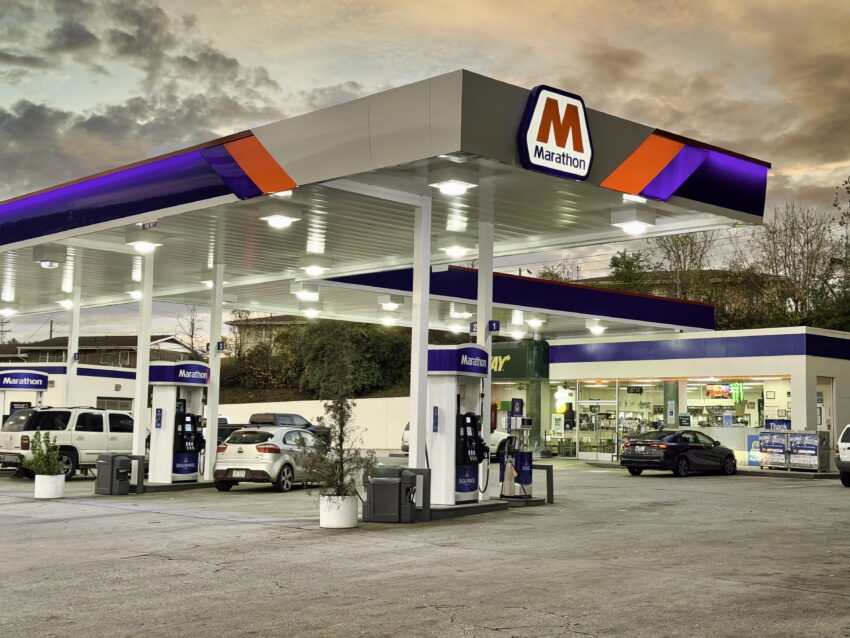
IMAGE: A Marathon Petroleum gas station in Murphy, North Carolina. Photo: Harrison Keely / Wikimedia, taken 2024-11-04, CC BY 4.0