
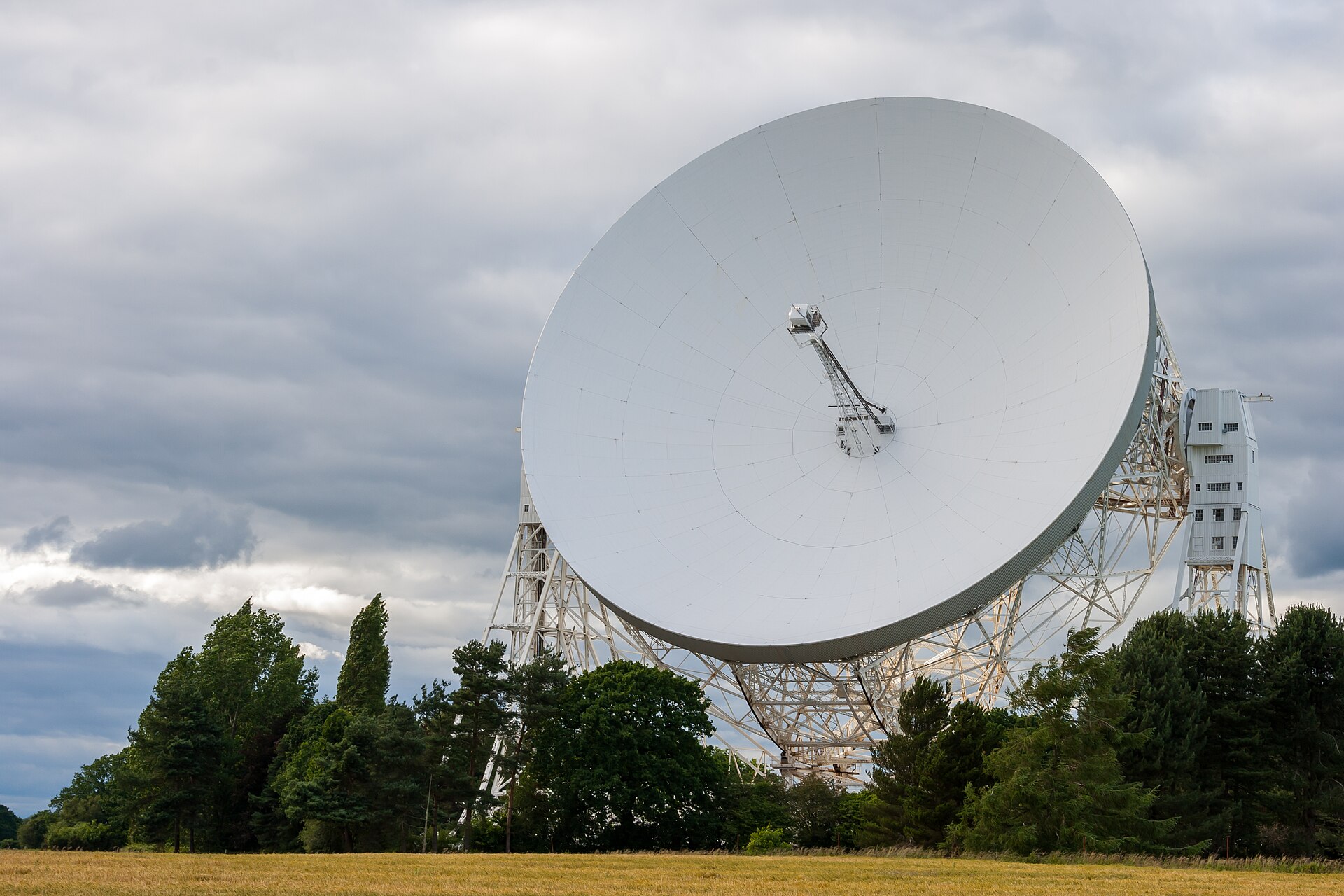
The future of one of the world’s most important radio telescopes is uncertain due to financial concerns. The Lovell Telescope, which has been standing since 1957, is the largest in the United Kingdom and ranks as the third-largest steerable radio telescope globally. It plays a key role in capturing detailed images of space and studying faint signals from stars and galaxies.
While the main scientific operations are at risk, the educational programs at Jodrell Bank will continue to operate for school groups. Leaders have stressed that the observatory is vital not just for science but also for regional development.
The decision to stop funding for e-MERLIN, a network of radio telescopes, was made after careful review of available resources. Despite this, efforts are still underway to support the future of Jodrell Bank through other initiatives. The UK’s participation in hosting the SKAO headquarters is one such effort that brings benefits to the University of Manchester and the surrounding area.
The withdrawal of funding has raised alarm among scientists and educators around the world. They warn that such a move could discourage young people from entering careers in science, engineering, and technology. They emphasize that space exploration and fundamental physics research are essential to building the next generation of discoveries.
Without support, it is likely that the largest telescope in the UK will be shut down. This 2-meter steerable radio telescope is the world’s third-largest of this kind.
Advocates are urging new leadership to reconsider and restore funding to the facility. They argue that maintaining this important scientific infrastructure is crucial for both national pride and global research efforts.
The situation has sparked a broader conversation about how science funding should be prioritized in the country. Many believe that cutting support for such a long-standing and internationally recognized facility would have lasting consequences.
The observatory’s legacy in radio astronomy is undeniable, and its future remains uncertain as funding decisions are made. If no action is taken, the telescope may stop contributing to scientific knowledge and education programs.
The international community watches closely as decisions are made about its future.
IMAGE: Mike Peel; Jodrell Bank Centre for Astrophysics, University of Manchester / Wikimedia Commons (CC BY-SA 4.0)