
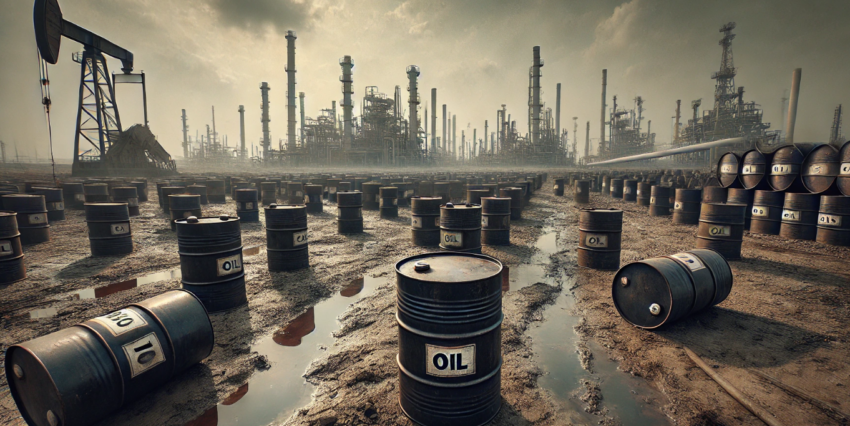
Energy traders are reporting exceptional profits as the ongoing conflict in Iran disrupts global oil flows. The war has caused major disruptions to supply routes, especially through the Strait of Hormuz. This has led to sharp increases in prices for physical oil and fuel products. Several large commodity firms have seen their earnings surge significantly in recent months.
Vitol Group, which is the world’s largest oil trader, reported making around two billion dollars in the first quarter. Gunvor Group also said its profits for the first quarter exceeded all of last year’s total. Mercuria Energy Group’s chief executive mentioned that company returns could reach historic levels, suggesting a profit range between two point three and three point two billion dollars.
Trafigura Group has had two of its best quarters in recent years, particularly during January through March and October through December. These periods saw high prices for metals like copper and gold. The group did not comment on its financial results but confirmed strong performance.
Executives from these companies say the profits come from the large dislocations in energy markets. Physical oil trading has seen huge premiums, especially as cargoes became scarce due to the near closure of the Strait of Hormuz. Some traders have reported making as much as twenty to thirty dollars per barrel on certain crude oil trades, which is unusual for a business that typically operates on small margins.
The situation has created both opportunities and challenges for commodity traders. While some firms have seen strong results, others have faced losses in their derivatives operations. Supply disruptions from the Middle East have also led to force majeure declarations by producers, affecting those who had contracts with them. Vitol’s CEO described the early days of the conflict as a time of urgent response and triage.
Despite these difficulties, overall performance has been good. Executives caution that it is too early to predict how long the current market conditions will last. The outcome of the war remains uncertain, and oil prices are still vulnerable to sudden changes driven by political developments or social media posts from leaders.
The profits have also come from other factors beyond the conflict. A cold snap in the United States earlier in the year helped drive up energy demand. Additionally, soaring metals prices have supported trading gains for some firms. These conditions show how global markets are responding to disruptions and adjusting to new realities.
Commodity markets have been managing through this period of instability by drawing down inventories that normally protect against such shocks. Global oil stockpiles have fallen to levels not seen in decades. Inventories of metals like aluminium are also under pressure. The systems that usually buffer the economy from supply disruptions are now nearing dangerous limits.
Governments, producers, and consumers have all contributed to this effort by using reserves and adjusting their operations. Strategic petroleum reserves in countries like the United States and Japan have been tapped to help stabilize prices. American jet fuel production has reached record levels, and China has managed to reduce imports without depleting its reserves.
These adjustments are temporary solutions that buy time but do not solve underlying problems. The depletion of inventories means that eventually, supply and demand must be reconciled through price changes. When buffers run out, higher prices become the main way to balance consumption with available resources.
The situation is especially concerning for energy markets. As stockpiles shrink, markets will begin to rely more heavily on price signals to manage demand. If inventories become critically low, prices could rise sharply. Some experts suggest that oil prices might reach one hundred fifty or even one sixty dollars per barrel if supply disruptions continue.
While governments may try to shield consumers from the full impact of rising energy costs, these measures only shift the financial burden rather than eliminate it. Subsidies and price caps do not create more oil or other commodities. They simply redistribute costs among taxpayers, bondholders, or currency holders.
Shell plc reported strong earnings in the first quarter of 2026. The company made six point nine billion dollars, up from previous quarters. Its integrated gas operations saw declines due to disruptions in Qatar. Production levels were lower than before, and some facilities had to shut down temporarily.
The company’s upstream business benefited from higher realized prices for crude oil and natural gas. Shell also reported improved results in its chemicals and products segment. Refinery margins increased, and trading activities contributed significantly to overall performance. The company announced a share buyback program worth three billion dollars.
Market volatility has affected working capital for many firms. Inventory values and receivables have fluctuated greatly, leading to significant impacts on cash flow. Shell noted that these changes were largely due to the unpredictable nature of commodity prices during times of global disruption.
The energy sector continues to be influenced by geopolitical developments. As tensions escalate in the Middle East, markets react quickly to any signs of supply risk. Traders are closely watching military actions and diplomatic efforts related to Iran and the United States. The Strait of Hormuz remains a key point of concern for global oil trade.
Investors have responded to the uncertainty by adjusting expectations for future prices. There is growing speculation that oil prices could rise further if the conflict continues or escalates. Some prediction markets now show increased odds for higher WTI crude prices in July. The situation underscores how fragile global energy markets can be when faced with geopolitical instability.
India has taken steps to secure its energy supply by increasing imports of Russian crude oil. In June 2026, Indian refiners bought record amounts of Russian oil worth more than five billion dollars. This move helped them maintain high refinery run rates and avoid disruptions experienced by other Asian countries. Russian crude has become a strong energy security hedge for India since the Strait of Hormuz disruptions began.
The price of Russian Urals crude fell slightly in June, but it remained well above the price caps imposed by European and UK governments. Despite this, Indian refiners continued to rely heavily on Russian supplies. The Jamnagar refinery saw the largest increase in imported volumes, followed by refineries in Paradip, Kochi, and Vadinar.
The growing dependence on Russian oil reflects a broader trend among Asian nations. India’s imports of Russian crude rose to around two point seven million barrels per day in June 2026, accounting for over half of all crude imports. This shift shows how quickly countries are adapting their energy strategies in response to global disruptions.
As the conflict continues, energy markets remain sensitive to developments in the Middle East. The potential for further escalation or diplomatic resolution will shape future price trends. Traders and policymakers alike are watching closely for any signs of change in the region’s stability. The outcome could have lasting effects on global energy security and economic conditions.
This article passed automated originality and source-verification checks before publishing.