
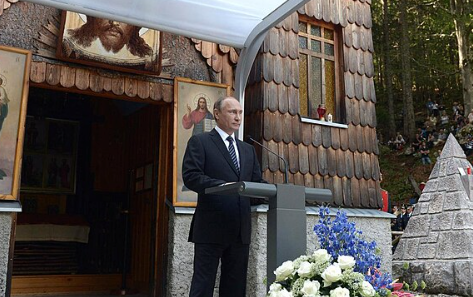
After more than 25 years of Vladimir Putin’s rule, some of Russia’s wealthiest businessmen are reportedly considering what comes next. Their concerns reflect a changing relationship between wealth and political power, Western sanctions and uncertainty over the country’s future leadership.
Some of Russia’s wealthiest businessmen are quietly considering what their country might look like after President Vladimir Putin leaves power. Although there is no indication that a leadership change is imminent, the discussions reflect growing uncertainty among business figures who have accumulated enormous fortunes while losing much of their former political influence.
A BBC investigation published in November 2026 describes an elite business community that remains wealthy but increasingly dependent on the Kremlin. Some businessmen reportedly hope a future Russian government might restore the political influence they enjoyed during the 1990s.
Putin, who turned 74 in October, has led Russia as president or prime minister since 1999. Constitutional changes allow him to seek another presidential term in 2030 and potentially remain in office until 2036.
His eventual departure raises important questions about who would control Russia’s political institutions, enormous business interests and military policies. For the country’s billionaires, the answer could determine whether they regain influence or remain dependent on another powerful leader.
A Kremlin Meeting That Revealed the Balance of Power
On February 24, 2022, just hours after Russia began its full-scale invasion of Ukraine, Putin summoned more than three dozen prominent businessmen to the Kremlin.
The executives gathered in the grand Yekaterininsky Hall, seated along one side of the room. Many wore face masks because of the COVID-19 pandemic, while Putin sat at a considerable distance from them.
The gathering illustrated how dramatically the relationship between Russia’s government and its wealthiest citizens had changed.
Putin urged the businessmen to support the economy as Russia entered a confrontation with Ukraine and Western governments. Video released by the Kremlin showed the executives listening without publicly challenging his statements.
For businessmen whose companies depended on government contracts, regulatory decisions and access to financial markets, open disagreement carried considerable risks.
The meeting also came as Western countries prepared economic sanctions that would restrict Russian financial institutions, businesses and wealthy individuals.
Those restrictions would soon make it more difficult for many Russian business figures to maintain their international investments and lifestyles.
How Russia’s Oligarchs Lost Their Political Influence
The relationship between money and political power in Russia changed dramatically after the Soviet Union collapsed in 1991.
During the following decade, the Russian government sold numerous state-owned businesses to private investors. The privatization process allowed a relatively small group of businessmen to acquire valuable interests in oil, natural gas, banking, metals and other industries.
Some became billionaires almost overnight. Their fortunes also allowed them to acquire television stations, finance political campaigns and develop close relationships with senior government officials.
These businessmen became known internationally as oligarchs because of the extraordinary combination of wealth and political influence they possessed.
The situation changed after Putin became president in 2000.
His government strengthened federal control over major industries and limited the ability of powerful businessmen to influence national politics independently.
Those who maintained cooperative relationships with the Kremlin often preserved their businesses. Others faced investigations, political pressure or the loss of valuable assets.
The case of Mikhail Khodorkovsky became one of the most prominent examples of this transformation.
The Khodorkovsky Case Sent a Warning
Khodorkovsky was once Russia’s richest man and controlled Yukos, one of the country’s largest oil companies.
He publicly criticized government corruption and financially supported political organizations outside Putin’s governing party.
In October 2003, Russian authorities arrested him on charges involving fraud and tax evasion. He was later convicted and spent approximately 10 years in prison before receiving a presidential pardon in December 2013.
Khodorkovsky and his supporters maintained that the prosecution was politically motivated. Russian authorities defended the criminal proceedings as legitimate enforcement of the country’s laws.
The case had consequences far beyond one businessman.
Yukos was dismantled, and substantial portions of its assets eventually came under the control of state-owned Rosneft.
For other wealthy Russians, the episode demonstrated the risks associated with challenging the Kremlin.
Businessmen could retain substantial fortunes, but independent political activity became increasingly dangerous.
That arrangement helped establish the system of state authority and business dependence that continues to shape Russia’s economy.
Russia Has More Billionaires Than Ever
Despite international sanctions and the economic disruption caused by the war in Ukraine, the number of Russian billionaires has reached a record high.
Forbes identified 155 Russian billionaires in its 2026 global ranking, compared with 146 in 2025 and 125 in 2024.
Their combined wealth reached approximately $696.5 billion, according to Forbes Russia figures reported by Reuters.
Alexei Mordashov, whose business interests include steel production, topped the Russian ranking with an estimated fortune of $37 billion.
Vladimir Potanin, associated with mining and metals company Nornickel, ranked second with approximately $29.7 billion.
Vagit Alekperov, the former head of oil producer Lukoil, followed with an estimated $29.5 billion.
The figures demonstrate that sanctions have not prevented substantial wealth accumulation among Russia’s business elite.
However, the financial success has not necessarily translated into greater independence from the government.
Some business owners have benefited from state contracts, higher commodity prices and opportunities created when foreign companies reduced their operations in Russia.
Others have suffered frozen assets, travel restrictions and reduced access to international financial markets.
Rich at Home but Restricted Abroad
Western sanctions have dramatically changed the lives of many Russian businessmen.
Before the invasion of Ukraine, wealthy Russians regularly maintained homes, yachts, investments and businesses across Europe and other international markets.
Sanctions imposed by the United States, European Union and Britain have restricted some of those activities.
Individuals placed on sanctions lists may face asset freezes, travel bans and limitations on financial transactions.
Not every Russian billionaire is sanctioned, and restrictions differ between countries. Nevertheless, the changes have reduced the international flexibility once enjoyed by parts of Russia’s wealthy class.
Exiled Russian politician and analyst Dmitry Nekrasov told the BBC that wealthy businessmen have little political leverage despite their fortunes.
Their ability to preserve wealth, he argued, depends heavily on relationships with the current political system.
That creates a difficult situation for businessmen who may privately oppose some government decisions but remain unwilling to risk their companies or personal security through public criticism.
For some, a future change of leadership offers the possibility of recovering economic independence and international access.
What Could Russia Look Like After Putin?
Analysts discussing Russia’s political future generally identify several possible paths, although there is no reliable way to determine which might emerge.
One possibility is continuity under a successor who preserves the existing political institutions and maintains close relationships with the security services.
Such an outcome could leave the current distribution of economic and political authority largely unchanged.
Another possibility would involve a broader political opening, including greater competition between political parties and changes to the relationship between government and private business.
A third scenario could see powerful business groups regain some of the influence they exercised during the 1990s.
The BBC’s reporting suggests that a return to greater oligarchic influence appeals to at least some wealthy Russians.
However, the interests of individual businessmen differ substantially. There is no evidence that Russia’s billionaires have formed a united political movement or agreed on a preferred successor.
The country’s security institutions, regional leaders, government officials and military establishment would also have significant interests in any transition.
A change in the presidency would therefore involve far more than competition among wealthy business figures.
Putin Could Remain in Power Until 2036
Russia’s constitutional system provides a legal route for Putin to continue serving beyond his current presidential term.
Amendments adopted in 2020 reset the presidential term count for Putin, allowing him to seek additional six-year terms.
He began another term in May 2024 following a presidential election that Western governments and independent observers criticized for the absence of meaningful political competition.
His current term runs until 2030.
During a June 2026 discussion with international news agency executives, Putin declined to say whether he intended to stand for election again.
He acknowledged that the constitution permitted another candidacy but said it was too early to discuss the question.
Consequently, there is no announced timetable for his departure.
The Russian constitution also establishes procedures for an unexpected presidential vacancy. Under Article 92, the prime minister temporarily assumes presidential responsibilities, and an early presidential election must take place within three months.
Those constitutional provisions establish the formal process but cannot predict how competing political interests might behave during a leadership transition.
What Would Putin’s Departure Mean for Ukraine?
A future change in Russian leadership would also have important implications for Ukraine and European security.
Some observers believe a different government could pursue negotiations and seek improved relations with Western countries.
Others warn that Russia’s security institutions and longstanding strategic interests might continue influencing foreign policy even after Putin leaves office.
There is no guarantee that a leadership transition would automatically end the war in Ukraine or produce a more cooperative relationship with European governments.
The European Council on Foreign Relations has examined possible future Russian threats to Estonia, including scenarios involving cyberattacks, political unrest and limited military operations near the border city of Narva.
These are hypothetical security scenarios rather than verified Russian military plans.
They illustrate why European governments are examining longer-term security risks that could persist under different Russian leaders.
For Ukraine, the immediate concern remains Russia’s military operations and the prospects for a negotiated settlement. Questions about Russia’s eventual political succession are separate from the decisions being made by its current government.
The Uncertain Future of Russia’s Business Elite
Russia’s wealthy businessmen occupy an unusual position after more than two decades of Putin’s leadership.
They control businesses worth billions of dollars but operate within a political system where major decisions are concentrated in the presidency and other state institutions.
Some have become wealthier despite sanctions and war. Others have lost access to international markets or faced pressure to align their commercial interests with government priorities.
The BBC’s reporting indicates that at least some of these figures are beginning to consider how a future change in leadership might affect their position.
Their calculations do not establish that Putin is preparing to leave office or that a political transition is approaching.
Instead, they reflect a longer-term question facing Russia’s economic and political establishment: how much of the current system depends on Putin personally, and how much would survive under someone else?
For now, Russia’s billionaires remain wealthy within a political structure that gives them limited independent influence. The next presidential election is scheduled for 2030, and Putin has not announced whether he intends to seek another term.
IMAGE: Source http://en.kremlin.ru/events/president/news/52621/photos Author Russian President’s official website CC4