
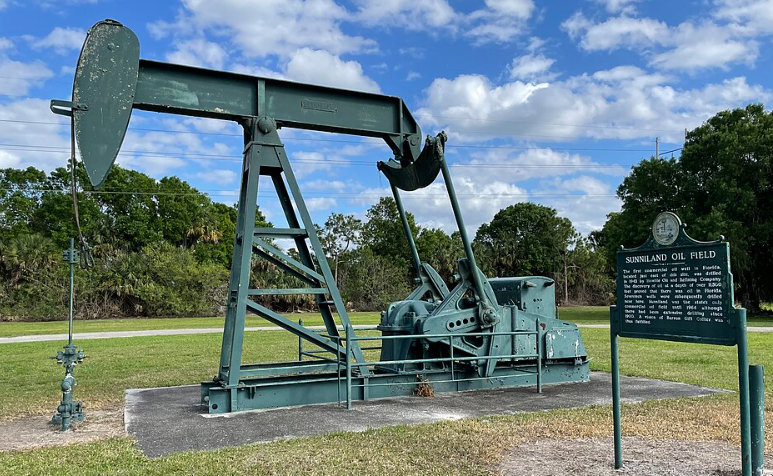
Renewed diplomacy pushed Brent crude to $104.77 and WTI to $96.46, although major disputes over Iran and the Strait of Hormuz remain unresolved.
Oil prices fell sharply Monday as investors reacted to renewed diplomatic efforts aimed at ending the eight-month U.S.-Israeli war with Iran. Brent crude, the international benchmark, settled at $104.77 a barrel, down $8.66, or 7.63%, while U.S. West Texas Intermediate fell $7.66, or 7.36%, to $96.46.
The drop came after Iranian President Masoud Pezeshkian said Supreme Leader Ayatollah Mojtaba Khamenei had granted the government certain authority to pursue peace talks. Iranian negotiators had spent several days in Doha meeting Qatari mediators, and Qatar later sent mediators to Tehran to continue discussions on a possible agreement.
Reuters reported that President Donald Trump said Monday that Iran wanted to make a deal and that an agreement “could happen.” Later, when reporters asked whether he was considering striking Iran after Tuesday’s U.S. midterm elections, Trump answered “no,” raising doubts about an immediate return to U.S. attacks.
Vice President JD Vance also said Washington had held “a number of good conversations” with Iranian officials. He said the administration remained focused on a negotiated settlement while maintaining its demand that Iran not acquire a nuclear weapon.
Diplomacy pushes risk premium lower
The price move was among the sharpest daily declines for crude since July. Oil had climbed strongly during October as traders prepared for the possibility of another escalation after the U.S. midterm elections.
Despite the renewed talks, no peace agreement has been reached. Iran said consultations through mediators were continuing after its negotiators left Doha, while Iranian officials said a seven-step proposal submitted in September remained the basis for discussions.
The proposal includes an end to the U.S. blockade of Iranian ports, reopening the Strait of Hormuz, relief for Iranian oil sales and the cancellation of new sanctions before wider talks begin. Iran has also said negotiations over its nuclear program would come only after it verifies that its conditions have been met.
That leaves major disagreements unresolved, and months of failed diplomatic efforts have made traders cautious about treating any new round of talks as decisive. Raymond James analyst Pavel Molchanov told Reuters that skepticism was warranted after several earlier periods of optimism failed to produce a lasting settlement.
The Strait of Hormuz remains central to the market outlook because disruptions there have restricted one of the world’s most important energy shipping routes. The U.S. Energy Information Administration said earlier this year that Iran’s closure of the strait sharply increased tanker costs and created a backlog of vessels in the Persian Gulf.
The International Energy Agency has also taken emergency steps to soften the supply shock. In October, the agency said member countries had released about 325 million barrels of oil under a collective action launched in March and still held about 1.1 billion barrels of publicly controlled emergency oil stocks.
Reuters reported that ADNOC chief executive Sultan Al Jaber said nearly 1 billion barrels had been drawn from global inventories since the war disrupted shipping through Hormuz. That loss of stored oil leaves the market more exposed if fighting intensifies again or shipping suffers another major interruption.
Fuel costs remain high despite Monday’s drop
The fall in crude prices does not mean U.S. drivers will immediately see cheap fuel. AAA reported a national average of about $4.17 a gallon for regular gasoline on November 2 and about $6.29 for diesel.
Diesel remains especially expensive because the conflict has tightened supplies of crude and refined fuels while raising transportation and insurance costs. The IEA said in October that its members supported prioritizing releases of diesel stocks because the global diesel market remained tight.
Those current prices are much higher than the $4.29 diesel figure cited in the original version of this story. AAA’s November 2 data showed diesel more than $2.60 a gallon above its level a year earlier, while regular gasoline was more than $1.13 higher.
European energy markets also reacted to the possibility of lower geopolitical risk. European benchmark gas prices fell sharply Monday after reaching their highest levels since 2022 in late October as Middle East shipping problems restricted liquefied natural gas supplies.
The wider energy picture remains complicated by the war in Ukraine. Kazakhstan temporarily halted oil shipments to Russia through the Atyrau-Samara pipeline Monday after a drone attack hit pipeline facilities in Russia’s Samara region, according to Kazakhstan’s Energy Ministry as reported by Ukrainian media.
That route carried about 7.57 million metric tons of Kazakh oil during the first nine months of 2026. The available reporting does not support the claim that nearly 5 million tons failed to reach Russia during that period, so that figure should not be used without stronger documentation.
Oil traders are also watching whether Monday’s decline was amplified by market positioning after crude’s October rally. The Wall Street Journal reported that traders unwound crowded bullish positions as diplomatic headlines reduced the perceived risk of a near-term supply shock.
Analysts continue to warn that prices could move sharply in either direction depending on what happens next. Reuters reported that Goldman Sachs sees the possibility of Brent reaching $140 in 2027 if Gulf oil output remains far below its 2025 average, while a lasting diplomatic agreement could remove much of the war-related premium.
For now, Monday’s selloff reflects optimism rather than a completed settlement. The next major test will be whether U.S.-Iran contacts produce terms both sides will accept and whether those terms can restore safer, more reliable shipping through the Strait of Hormuz.
IMAGE: Source Own work Author Declan M. Martin CC0