
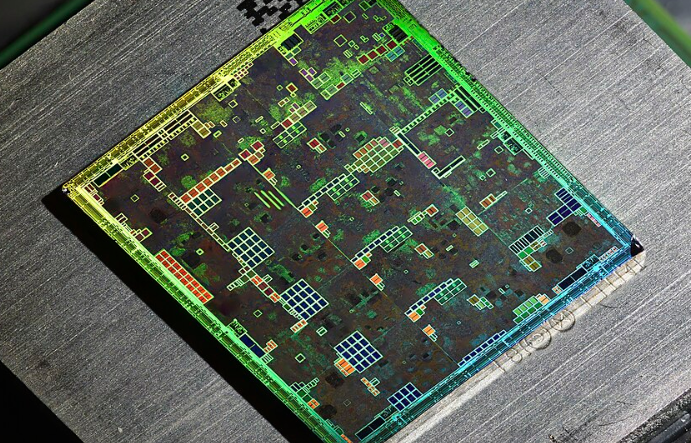
Representative Bill Foster says NVIDIA privately acknowledged that tracking advanced AI chips is technically possible, despite industry objections to mandatory tracking. The disclosure comes as lawmakers examine chip smuggling and the company’s leadership transition.
NVIDIA representatives privately acknowledged that the company could technically track advanced artificial intelligence chips, according to U.S. Representative Bill Foster, raising questions about the semiconductor industry’s opposition to mandatory location monitoring. Foster disclosed the conversation on Thursday, November 12, 2026, as Congress considered legislation intended to prevent restricted American technology from reaching China. The Illinois Democrat said company representatives recognized that the proposed safeguards were technically achievable, although NVIDIA has not publicly confirmed his account.
The disclosure comes as lawmakers consider the Chip Security Act, which would establish location-verification requirements for certain advanced processors. Such technology could help federal authorities identify chips that have been transferred to unauthorized destinations. The proposal has attracted renewed attention following NVIDIA’s leadership change and growing scrutiny of its international sales.
Foster’s account also contrasts with public objections from the Semiconductor Industry Association, which represents major chip manufacturers, including NVIDIA. The organization warned earlier this year that requiring new tracking mechanisms could create technical, financial and security problems. The disagreement centers on whether location verification is practical enough to become a mandatory safeguard across the industry.
Congressman Describes Private NVIDIA Discussions
Foster, a Democrat from Illinois who serves on the House Committee on Science, Space, and Technology, discussed the issue in an interview with MIT Technology Review. He is a cosponsor of the Chip Security Act and has advocated stronger measures to prevent the unauthorized transfer of advanced processors. According to Foster, NVIDIA representatives acknowledged the technical feasibility of the proposed safeguards during discussions with his office.
The congressman explained that the company did not provide a written statement confirming its position. Instead, he described the representatives as recognizing that implementation was possible when questioned about the technology. NVIDIA did not respond to the publication’s requests to confirm his account.
That distinction is important because Foster’s description does not establish that NVIDIA has already implemented a comprehensive tracking system for every processor it sells. It indicates that company representatives allegedly acknowledged the technical possibility of developing such safeguards. Whether the technology could operate reliably across different generations of chips remains a separate question.
The semiconductor industry has raised broader objections to mandatory tracking. In a March 2 statement, the Semiconductor Industry Association said it opposed imposing untested security features across the industry. The organization argued that premature requirements could increase costs, weaken customer confidence and damage American technology competitiveness.
The association also emphasized its support for enforcing existing export restrictions. Its position was not that every form of chip tracking was impossible, but that the legislation proposed requirements it considered insufficiently tested. Foster’s account nevertheless suggests that at least one major manufacturer may believe some of the proposed measures are technically achievable.
NVIDIA Developed Technology That Can Estimate Chip Locations
NVIDIA had already developed software capable of estimating where some of its advanced AI processors were operating. In December 2025, the company described technology associated with its Fleet Intelligence system, which was designed to help customers monitor large groups of chips across data centers. Its functions included performance monitoring, hardware identification and security-related reporting.
The technology uses information generated by the processors and their communications with trusted computer systems. By examining the time required for signals to travel between servers, the software can help estimate a processor’s geographic location. NVIDIA acknowledged that the system could identify the country in which a supported chip was operating.
However, the existence of this capability does not mean NVIDIA automatically knows the locations of every processor it has sold. The system depends on software, compatible hardware and participation by customers. It also does not establish that government agencies have unrestricted access to the information collected.
The company has maintained that location monitoring is different from remotely controlling a processor. Its previously described system uses read-only information and does not include a mechanism that allows NVIDIA to disable a chip remotely. That distinction matters because tracking a restricted processor and preventing it from operating are two different capabilities.
NVIDIA has also faced questions about whether monitoring technology could create security concerns for legitimate customers. Some governments and technology companies have warned that remotely accessible hardware features could expose sensitive information. Supporters of location verification argue that properly designed systems could provide useful safeguards without allowing manufacturers to control customers’ equipment.
Chip Security Act Targets Illegal Transfers to China
The Chip Security Act was introduced in May 2025 by a bipartisan group of lawmakers seeking stronger enforcement of American semiconductor export restrictions. The legislation would direct the Commerce Department to establish standards for verifying the locations of certain advanced integrated circuits. Its supporters argue that existing supply-chain controls do not always reveal where restricted processors ultimately operate.
The United States restricts exports of certain high-performance AI chips to China because of concerns about military applications and other national security risks. Federal authorities have investigated attempts to move restricted equipment through intermediary companies and overseas distribution networks. Such transactions can make it difficult to identify the final destination of advanced computing hardware.
Under the proposed legislation, manufacturers and other participants in the supply chain could be required to implement location-verification safeguards. The available approaches include physical inspections, information supplied by customers and technical systems that estimate a chip’s location. The requirements would be established through federal rules rather than a single universal tracking method.
Supporters believe location checks could help investigators identify unauthorized transfers more quickly. A processor operating in a restricted country could generate information suggesting that export-control requirements had been violated. Authorities would still need to determine whether the location information was accurate and whether the equipment had been transferred illegally.
The proposal is part of a broader congressional debate over the balance between national security and American semiconductor competitiveness. Manufacturers have warned that extensive monitoring requirements could complicate international sales and create concerns among customers. Lawmakers supporting the bill argue that better enforcement is necessary to protect sensitive American technology.
Research Finds Tracking Possible but Imperfect
A September 2026 study by Georgetown University’s Center for Security and Emerging Technology examined several approaches to verifying AI chip locations. Researchers compared methods including physical inspections and systems that estimate location by measuring network communication delays. They found that ping-based location verification could provide a relatively cost-effective way to identify possible violations.
The researchers examined more than 10 million simulated scenarios involving different chip deployments and inspection arrangements. Their cost analysis favored ping-based verification over relying entirely on physical inspections. However, they also emphasized that the technology would have meaningful limitations.
A processor that stops communicating with a tracking system might have been moved illegally, but it could also be disconnected for maintenance or placed in storage. Skilled operators might attempt to manipulate location signals, while network measurements could struggle to distinguish between nearby facilities. The technology would also have difficulty identifying an unauthorized user operating equipment at an otherwise permitted location.
Researchers estimated that a centralized tracking system could cost millions of dollars annually, depending on its design and operation. They recommended combining automated verification with targeted physical inspections rather than relying on either approach alone. Their analysis also emphasized that detecting suspicious activity would be useful only if enforcement agencies had enough resources to investigate.
These limitations complicate claims that tracking technology could completely prevent chip smuggling. Location verification may provide investigators with additional evidence, but it cannot guarantee that restricted processors will remain in authorized locations. It also cannot automatically recover equipment that has already been transferred.
NVIDIA Faces Scrutiny Following Leadership Change
The tracking debate comes during a significant leadership transition at NVIDIA. Jensen Huang resigned as president, chief executive officer and a member of the board in November, ending more than three decades as the company’s leader. NVIDIA appointed longtime chief financial officer Colette Kress as interim CEO while it searches for a permanent replacement.
Huang’s departure followed reporting about personal relationships and allegations involving a businesswoman linked to the semiconductor distribution industry. U.S. authorities have reportedly examined whether restricted chips were transferred through companies associated with that business network. Allegations involving foreign intelligence connections remain disputed and have not been established as facts.
One company receiving attention is Singapore-based Megaspeed International, which has been linked to questions about the distribution and location of advanced NVIDIA processors. Reports concerning the company’s activities have prompted additional scrutiny of semiconductor supply chains. Congressional investigators have also sought information about whether government inquiries involving chip exports were influenced or interrupted.
The controversy has increased political pressure on NVIDIA to explain how it monitors the sale and use of restricted products. However, allegations involving specific companies or individuals should not be treated as proof of illegal conduct without supporting evidence. The investigation into semiconductor exports is distinct from the technical question of whether location-tracking systems can be developed.
Kress, who joined NVIDIA in 2013, now faces the challenge of maintaining operations while the company responds to regulatory and political scrutiny. NVIDIA has said its existing leadership team will continue executing its business strategy. The company’s position on mandatory location verification could become an important part of its discussions with lawmakers.
Congress Considers Stronger Enforcement Measures
Foster has indicated that location verification alone may not provide enough protection against unauthorized chip transfers. Under the current proposal, authorities could potentially identify a processor operating in an unauthorized location but would not necessarily be able to stop it remotely. The congressman has discussed pursuing additional legislation requiring operating licenses for advanced chips.
Such a system could require a processor to verify its authorization before connecting to certain services. That would represent a more restrictive approach than simply recording its geographic location. Any proposal would need to address technical reliability, customer privacy and the consequences of incorrectly denying access to legitimate equipment.
For now, Congress must determine whether mandatory location checks would improve enforcement enough to justify their cost and operational requirements. Foster’s account adds to the debate by suggesting that NVIDIA recognizes the technical possibility of measures the broader industry has challenged.
NVIDIA has not publicly confirmed the private conversation described by Foster, and lawmakers have not completed the proposed legislation. The next steps will depend on congressional negotiations, industry responses and the government’s assessment of available tracking technology. The central question is whether a system capable of identifying suspicious chip movements can be implemented without creating unacceptable costs or security risks for legitimate customers.
IMAGE: Source https://www.flickr.com/photos/140974729@N05/42366746871/ Author Martijn Boer CC0