
A Massachusetts judge has scheduled a second trial in the deaths of Clancy’s three children after the first jury deadlocked 11-1 over her criminal responsibility. The case centers on competing arguments about postpartum psychosis and premeditated murder.
Lindsay Clancy, the Massachusetts mother accused of murdering her three young children in 2023, will face a second trial beginning March 29, 2027. Plymouth Superior Court Judge William Sullivan scheduled the retrial on Monday, November 16, after rejecting a defense effort to dismiss the case. Her first trial ended in September when jurors could not agree on whether she was criminally responsible for the killings.
The new trial will revisit a case that has drawn national attention to postpartum mental illness and criminal responsibility. Clancy’s attorneys maintain that she was experiencing postpartum psychosis when she killed her children. Prosecutors argue that she planned the killings and understood her actions.
The children were Cora, 5, Dawson, 3, and Callan, 8 months old. They died following an incident at their family’s home in Duxbury, Massachusetts, on January 24, 2023.
Judge Schedules Retrial Despite Defense Objections
Judge Sullivan, who presided over the original proceedings, will oversee Clancy’s second trial. He scheduled jury selection to begin March 29, rejecting a request from prosecutors to delay proceedings until May because of conflicts involving other murder cases.
Assistant District Attorney Jennifer Sprague told the court that prosecutors were prepared to schedule another jury trial. However, the Plymouth County District Attorney’s Office has not formally confirmed whether it will pursue the same first-degree murder charges or consider lesser offenses.
Defense attorney Kevin Reddington interpreted the prosecution’s request for a jury trial as an indication that first-degree murder charges would remain. Massachusetts law requires jury trials for first-degree murder cases, while defendants facing certain lesser charges may waive that right.
Reddington expressed frustration over the possibility of retrying Clancy on the original charges. He pointed to the overwhelming support for an insanity acquittal among jurors in the first trial and questioned whether prosecutors could obtain a different result.
The defense has also emphasized the importance of avoiding prolonged uncertainty. Clancy has remained in psychiatric custody while her case has moved through the courts, and another lengthy delay would extend that period.
Attorneys are scheduled to return to court December 30 to discuss arrangements for the new trial. Those discussions will include courtroom security, media access and other logistical matters.
First Trial Ends With an 11-1 Deadlock
Clancy’s first trial ended September 4, 2026, after jurors failed to reach a unanimous verdict. Eleven jurors favored finding her not guilty by reason of insanity, while one juror disagreed.
The jury had heard more than 20 days of testimony from 84 witnesses. Evidence included medical records, psychiatric evaluations, testimony from family members and accounts from investigators involved in the case.
The central dispute was not whether Clancy had killed the children. Her defense acknowledged her actions but argued that severe mental illness prevented her from understanding their wrongfulness.
Prosecutors maintained that Clancy was capable of understanding what she was doing. The disagreement required jurors to consider competing accounts of her mental condition and behavior before the deaths.
After days of deliberations, jurors repeatedly informed Sullivan that they could not reach a decision. The judge eventually declared a mistrial, leaving the charges unresolved.
The holdout juror became a central issue in subsequent legal proceedings. Defense attorneys questioned whether that juror had properly followed the court’s instructions and argued that the circumstances did not justify ending the trial without a verdict.
Double Jeopardy Challenge Rejected
Following the mistrial, Clancy’s attorneys asked Sullivan to dismiss the charges under the constitutional protection against double jeopardy. The Fifth Amendment generally prevents a person from being prosecuted twice for the same offense after certain final outcomes.
However, that protection does not automatically prohibit another trial when a jury cannot agree on a verdict. Courts may declare a mistrial when a deadlocked jury makes it impossible to complete the proceedings.
On November 9, Sullivan ruled that the deadlock created a legal necessity for a mistrial. He determined that the circumstances permitted prosecutors to bring the case before another jury without violating Clancy’s constitutional rights.
The judge also rejected a defense request for further investigation into the holdout juror’s conduct. He found insufficient grounds to conclude that the juror had refused to deliberate properly or disregarded legal instructions.
Defense attorneys have indicated they intend to appeal Sullivan’s decision. Reddington nevertheless told the court that the appeal would not interfere with the scheduled retrial.
Sullivan also denied a prosecution request for an order restricting public statements by attorneys. That ruling leaves the parties able to discuss the case publicly, subject to their existing professional obligations.
Postpartum Psychosis Remains Central to Defense
Clancy’s mental condition at the time of the killings was the main issue during her first trial. Her attorneys argued that she had developed postpartum psychosis, a rare but serious psychiatric condition that can occur after childbirth.
The illness may involve hallucinations, delusions, severe confusion and disturbances in a person’s understanding of reality. It is different from postpartum depression, although both conditions require appropriate medical assessment and treatment.
The defense presented evidence concerning Clancy’s psychiatric treatment, prescribed medications and attempts to obtain mental health care before the deaths. Attorneys argued that she experienced a severe psychiatric crisis that prevented her from understanding the wrongfulness of her actions.
Clancy reportedly described hearing a voice that commanded her to kill her children. Defense experts cited that account as part of their assessment of her mental condition.
Prosecutors challenged the defense’s interpretation, questioning whether the reported voice demonstrated that Clancy was unable to understand her actions. Their psychiatric witnesses offered different assessments of her mental state.
Under Massachusetts law, a defendant may be found not criminally responsible if a qualifying mental disease or defect prevented the person from appreciating the wrongfulness of the conduct or conforming that conduct to legal requirements.
A psychiatric diagnosis alone does not automatically establish legal insanity. Jurors must evaluate the evidence to determine whether the defendant met the applicable legal standard when the alleged crimes occurred.
Prosecutors Argue Killings Were Planned
Prosecutors presented evidence suggesting that Clancy deliberately arranged to be alone with the children. They argued that she sent her husband, Patrick Clancy, on errands before the killings.
Investigators examined the timing of those errands and other activities at the family’s home. The prosecution maintained that her decisions demonstrated planning rather than an inability to understand her behavior.
Defense attorneys disputed that interpretation and argued that conduct appearing organized does not necessarily rule out a severe psychiatric episode. Their experts maintained that a person experiencing psychosis may still perform familiar tasks or carry out actions that appear purposeful.
Clancy did not testify during her first trial. Jurors instead considered testimony from medical professionals, investigators, relatives and other witnesses.
The jury also participated in a court-supervised visit to locations associated with the case. Massachusetts courts sometimes permit these visits, known as views, to help jurors understand the physical setting discussed during testimony.
The evidence will again be important if prosecutors pursue the original charges. A new jury would need to consider whether Clancy was legally responsible at the time of the killings, rather than simply whether she committed the acts.
Clancy Remains in Psychiatric Hospital
Clancy has been held at Tewksbury Hospital, a state psychiatric facility, while awaiting the outcome of her criminal proceedings. She sustained severe injuries after jumping from a second-floor window at the family home following the killings.
The injuries left her paralyzed from the waist down. She used a wheelchair during the first trial and has continued receiving psychiatric care while in custody.
Her physical condition and mental health treatment have been recurring issues throughout the legal process. Defense attorneys have also raised concerns about her continued confinement while awaiting another trial.
The case has generated sharply divided public responses. Some supporters believe her psychiatric history demonstrates the need for greater understanding of severe postpartum disorders, while others emphasize accountability for the deaths of the three children.
Those views do not determine the legal outcome. The question for the court remains whether prosecutors can establish criminal responsibility under Massachusetts law.
Related Massachusetts Ruling Highlights Mental Health Evidence
Another Massachusetts case has drawn attention to how courts handle psychiatric evidence during murder trials. In August 2026, the Massachusetts Supreme Judicial Court ordered a new trial for Latarsha Sanders, who had been convicted of killing her two sons in Brockton in 2018.
The court determined that excluding relevant medical records concerning Sanders’ psychiatric history had unfairly restricted her ability to present a defense based on mental illness.
Judge Sullivan also presided over Sanders’ original trial. However, the ruling in that case addressed the exclusion of medical evidence, while Clancy’s retrial follows a jury deadlock.
The cases involve different facts and legal questions, and the Sanders ruling does not establish how Clancy’s case should be decided. Both nevertheless demonstrate the importance of psychiatric testimony and medical records when criminal responsibility is disputed.
For now, prosecutors have not formally announced whether they will seek first-degree murder convictions again. That decision, together with any appeals and pretrial rulings, will help determine the scope of the proceedings scheduled to begin March 29, 2027.
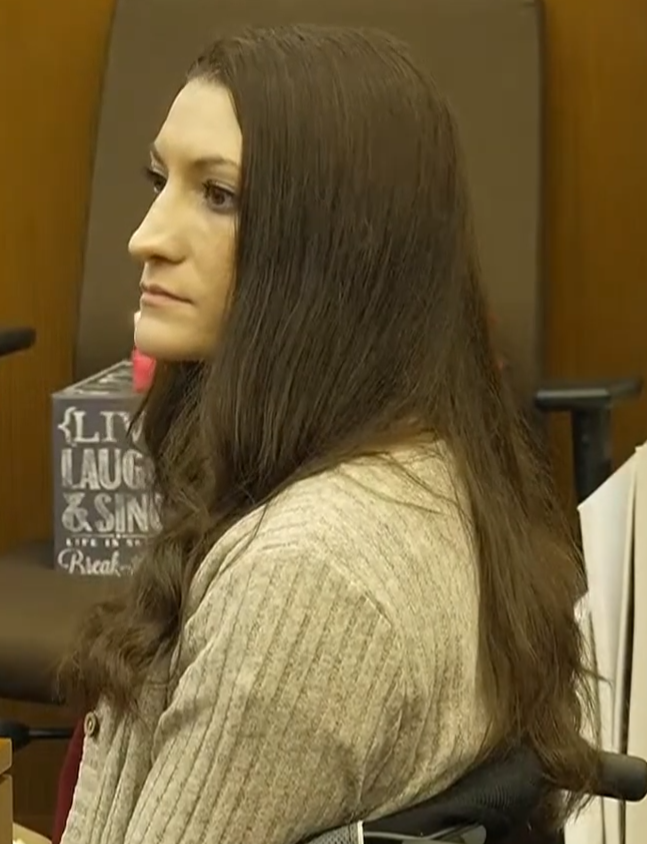
IMAGE: Lindsey Clancy, who murdered her three children, as she appears in court on September 3, 2026.. Photo: Mo News / Wikimedia, taken 2026-09-03, CC BY 4.0