
The Indian capital is tightening vehicle restrictions, limiting construction and encouraging remote work ahead of its most polluted months, while a new health report calls for year-round action.
New Delhi is entering another dangerous winter pollution season with stricter vehicle rules, construction restrictions and workplace measures designed to reduce harmful emissions. The capital’s 2026–27 Winter Action Plan took effect on November 1 and will remain in place through February 28, 2027, as officials attempt to control the annual buildup of toxic smog.
The measures include restrictions on older vehicles entering Delhi, higher parking fees, limits on construction work and increased working-from-home arrangements. The government introduced the plan before the worst winter pollution typically arrives, seeking to prevent severe conditions rather than responding only after air quality deteriorates.
For millions of residents, the return of winter pollution has become a familiar part of life. Schools, workplaces and families must prepare for periods when outdoor air becomes hazardous, visibility declines and breathing problems become more common.
Residents Prepare for Another Difficult Winter
In one Delhi household, teacher Meenu Rana keeps two cardboard boxes ready for the changing season. One contains decorations for Diwali, the Hindu festival of lights, while the other holds air purifiers.
Rana told the BBC that the mornings were already beginning to feel stuffy. Like many residents, she expects conditions to worsen as temperatures fall and pollutants become trapped closer to the ground.
Her preparations illustrate how air pollution has become part of everyday life in the capital. Families that can afford air purifiers bring them out during the colder months, while others have fewer options for reducing their exposure.
Delhi and its surrounding communities experience serious pollution throughout the year, but winter brings additional challenges. Cooler temperatures, weak winds and atmospheric conditions that limit vertical air movement allow pollutants to accumulate instead of dispersing.
Smoke from agricultural burning in neighboring states can add to emissions already produced by vehicles, factories, construction sites and waste burning. Firecrackers used during Diwali can also cause short-term pollution spikes, although they are only one contributor to the wider problem.
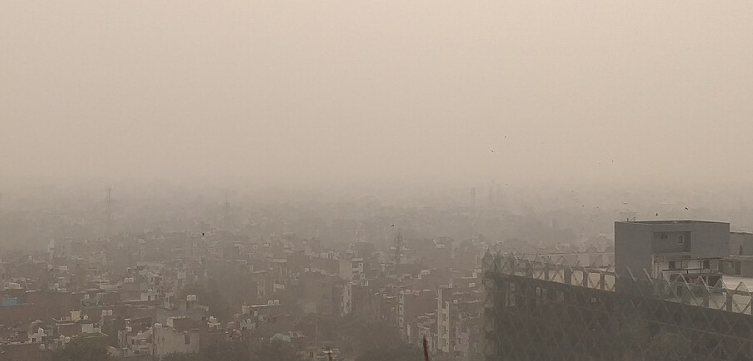
The combination frequently creates a thick haze across the metropolitan area. Poor visibility is one of the most noticeable effects, but the more serious danger comes from fine particles that can enter the respiratory system.
Delhi Tightens Vehicle and Fuel Restrictions
The Delhi government, led by Chief Minister Rekha Gupta of the Bharatiya Janata Party, announced a 10-point winter action plan in October. The measures follow earlier preparations involving federal and local environmental authorities.
One major provision restricts entry by older petrol and diesel vehicles registered outside Delhi that do not meet BS-VI emission standards. Electric vehicles and vehicles running on compressed natural gas are among the exempt categories.
The government is also enforcing a policy that prevents vehicles without valid Pollution Under Control Certificates from obtaining fuel. Authorities are using automatic number plate recognition systems at approximately 500 fuel stations to identify vehicles that fail to meet the requirements.
Parking charges at authorized facilities have been doubled to discourage unnecessary private vehicle journeys. Parking areas managed by the Delhi Metro are exempt, supporting the government’s effort to encourage public transportation.
Officials have also introduced staggered office hours and arrangements for employees to work remotely. The plan calls for reduced physical attendance at government and private workplaces, with provisions for employees to work from home or follow alternative schedules.
These measures are intended to reduce traffic congestion and emissions during the most polluted months. Their effectiveness will depend on enforcement, public cooperation and whether fewer vehicles actually operate on the city’s roads.
Construction and Industrial Pollution Face Greater Scrutiny
Construction activity is another major target of the winter plan. Delhi has announced restrictions on dust-generating demolition and outdoor civil construction, with broader restrictions scheduled between December 10 and January 20.
Government agencies are expanding road cleaning, water sprinkling and other dust-control operations. Construction sites are also subject to monitoring requirements intended to reduce the release of airborne particles.
In September, India’s Ministry of Environment, Forest and Climate Change announced plans for stronger industrial inspections and pollution monitoring. The measures included expanding air-quality monitoring stations from 47 to 60 and deploying 334 enforcement teams.
Authorities are also targeting illegal waste burning, emissions from industrial operations and pollution hotspots. The government identified 37 areas requiring special attention and called for coordinated inspections involving public officials and environmental agencies.
The winter initiative operates alongside the Graded Response Action Plan, known as GRAP. That separate system is administered by the Commission for Air Quality Management and introduces additional restrictions according to pollution conditions across Delhi and the National Capital Region.
GRAP measures can become increasingly strict as air quality moves into more dangerous categories. The system complements Delhi’s seasonal measures, but neither approach guarantees that pollution levels will fall quickly.
Pollution Extends Beyond Delhi’s Borders
Environmental specialists have long warned that Delhi cannot solve its air-quality problems through city-level restrictions alone. Pollution travels across state boundaries, and emissions from surrounding agricultural, industrial and urban areas contribute to conditions in the capital.
A new report from the Federation of Indian Chambers of Commerce and Industry and professional services firm EY reinforces that concern. Released on November 5, the study, titled Clean Air, Healthy India, calls for coordinated action across regions that share the same air.
The report estimates that Delhi’s own emissions account for approximately 36% of its PM2.5 pollution during winter and 26% during summer. These figures suggest that a substantial share of fine-particle pollution comes from sources outside the city.
Agricultural residue burning in neighboring states is one important contributor during certain periods. However, road dust, industrial emissions, diesel generators, brick kilns and household fuel use also affect regional air quality.
The different sources make pollution difficult to control through a single policy. Reducing vehicle emissions may provide benefits, but those improvements can be weakened when pollutants from other locations continue entering the metropolitan area.
Health Report Links Air Pollution to Millions of Deaths
The FICCI-EY study calls for India to treat clean air as a major public-health priority rather than simply an environmental concern. It states that more than two million deaths across India were attributable to air pollution in 2023.
That figure is a national estimate of deaths linked to exposure and associated health risks, not a count of deaths directly recorded as caused by pollution in Delhi. The study also emphasizes the long-term consequences of breathing contaminated air.
Fine particulate matter, known as PM2.5, is especially concerning because its particles can penetrate deep into the lungs and enter the bloodstream. Exposure is associated with respiratory disease, cardiovascular illness, strokes and other serious health problems.
Children, older adults and people with existing heart or lung conditions can face greater risks. Pollution can also affect otherwise healthy people, particularly when exposure continues over months or years.
Dr. Arun Agarwal, chairman of FICCI’s working group on air pollution from a healthcare perspective and a medical adviser to Apollo Hospitals Group, called for a shift away from seasonal responses. He argued that reducing exposure should become a year-round public-health priority.
The report recommends linking air-quality monitoring with hospital surveillance, strengthening health advisories and preparing schools before pollution reaches its seasonal peak. Such measures could help health authorities identify dangerous trends and respond more effectively.
Experts Recommend Smarter and More Coordinated Solutions
The report outlines 10 practical approaches for reducing pollution across Indian cities. These include installing smart traffic signals to reduce vehicle idling and congestion and improving monitoring around industrial and construction sites.
It also recommends upgrading traditional brick kilns, replacing diesel backup generators with cleaner systems and finding productive uses for agricultural residue. Waste plastic and construction debris could be processed into materials used for buildings and infrastructure.
Financing is another important consideration. The report proposes combining smaller clean-air projects into larger investment packages that could attract funding from financial institutions and private investors.
Researchers also want India’s National Clean Air Programme to place greater emphasis on PM2.5 reductions. Current performance assessments focus heavily on PM10, which includes larger airborne particles and does not fully capture the risks from finer pollution.
The study recommends measuring success through sustained improvements in public health and reduced exposure, rather than simply counting inspections, restrictions or completed projects.
Winter Will Test Delhi’s New Strategy
India’s official Air Quality Index ranges from 0 to 500, with readings above 400 classified as severe. The scale’s upper limit does not mean pollution concentrations cannot increase further, and a reading of 500 should not be interpreted as the maximum possible amount of pollution in the air.
Delhi’s new measures represent an attempt to address several pollution sources before the worst conditions develop. However, the city must still contend with unfavorable winter weather, emissions from neighboring regions and the challenge of enforcing restrictions across a large metropolitan area.
The coming months will test whether earlier action, tighter monitoring and regional cooperation can reduce pollution exposure. With the winter plan scheduled to operate through February 28, 2027, authorities will have an extended period to measure results and determine whether the measures produce lasting improvements.
IMAGE: Delhi air pollution 2019 Source Own work Author Prami.ap90 CC4