
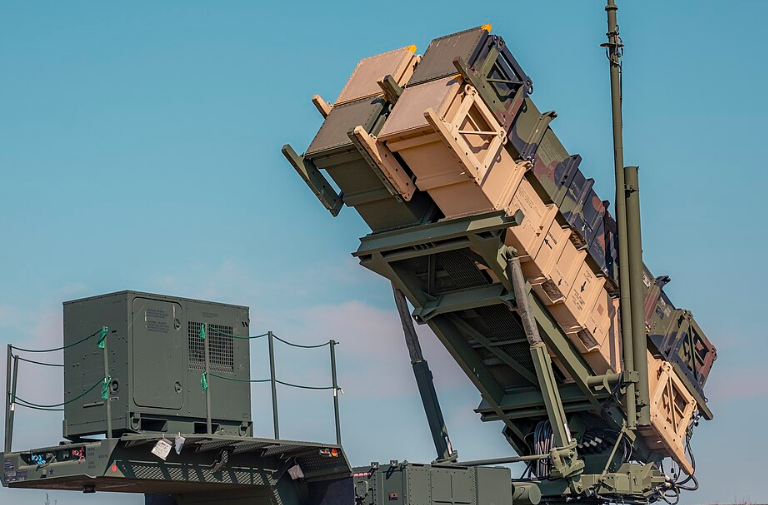
The proposed weapons package will be funded by Canada, Germany, Norway and European-backed financing as Kyiv seeks stronger protection against Russian ballistic missile attacks.
The United States approved a proposed $2.1 billion sale of 500 advanced Patriot interceptor missiles to Ukraine on Friday, October 30, 2026. The decision is intended to strengthen Ukraine’s air defenses as Russian forces continue launching missile attacks against cities, energy facilities and other infrastructure.
The U.S. State Department authorized the possible sale of Patriot Advanced Capability-3 Missile Segment Enhancement missiles, known as PAC-3 MSE interceptors. The package also includes spare parts, logistical assistance and related technical support.
Canada, Germany and Norway will help finance the purchase, along with funds supported by the European Union’s Ukraine Support Loan. The State Department said no U.S. government funds would be used for the proposed transaction.
The announcement follows repeated requests from Ukrainian President Volodymyr Zelenskyy for faster deliveries of air defense ammunition as the country prepares for another winter of Russian attacks.
What the $2.1 Billion Missile Package Includes
The proposed sale includes 500 PAC-3 MSE missiles, one of the most advanced interceptors available for the Patriot air defense system.
The package also covers classified and unclassified spare parts, equipment support and logistics services needed to maintain the missiles.
Lockheed Martin, the Maryland-based defense contractor that manufactures PAC-3 MSE interceptors, will serve as the principal contractor.
The State Department described the purchase as a way to improve Ukraine’s integrated air and missile defense capabilities while supporting the continued operation of its existing Patriot batteries.
The U.S. government has formally notified Congress of the proposed sale under the Foreign Military Sales process.
Congressional notification is an important step, but it does not mean the missiles have been purchased, manufactured or delivered. Final agreements and implementation arrangements must still be completed.
The $2.1 billion figure is an estimated maximum value for the proposed package. The final cost may change as the transaction moves through the contracting process.
The announcement also did not establish a delivery schedule for the 500 missiles.
Why Ukraine Urgently Needs Patriot Interceptors
Patriot systems are among Ukraine’s most important defenses against Russian ballistic missiles.
Unlike slower drones and some cruise missiles, ballistic missiles can approach their targets at extremely high speeds, leaving defenders limited time to respond.
The PAC-3 MSE interceptor is designed to destroy incoming threats through direct impact. This approach, known as hit-to-kill technology, uses the missile’s speed and guidance system to strike an incoming target.
Patriot batteries combine radar, command equipment, launchers and interceptor missiles to detect and engage aerial threats.
Ukraine has received Patriot systems and ammunition from the United States and several European countries since Russia’s full-scale invasion in February 2022.
However, the number of interceptors available has remained a major concern as Russian forces continue launching missiles against Ukrainian territory.
Zelenskyy recently said Ukraine had received an average of approximately 12 Patriot interceptors per month from the United States during 2026.
He contrasted that figure with the country’s need to defend against approximately 150 Russian ballistic missiles each month.
Those numbers illustrate Ukraine’s reported ammunition shortage, although the number of interceptors needed during any attack depends on several factors.
Air defense crews may launch more than one interceptor at a particular threat, and not every Russian missile can necessarily be engaged by a Patriot battery.
The limited supply of advanced interceptors makes deliveries especially important when Russia conducts large-scale attacks.
Zelenskyy Had Complained About Delayed Approvals
The State Department’s announcement came four days after Zelenskyy publicly criticized delays in approving air defense supplies.
On October 26, the Ukrainian president said Kyiv had been waiting nearly a month for U.S. Defense Secretary Pete Hegseth to authorize missile deliveries for Patriot and NASAMS air defense systems.
Reuters reported that Zelenskyy had instructed Ukrainian officials to raise the issue again with Washington because of the growing threat to civilian infrastructure.
The president has repeatedly urged the United States and NATO allies to accelerate deliveries before winter, when damage to electricity and heating facilities can have particularly serious consequences.
The United States has continued providing weapons purchased by European allies through arrangements intended to support Ukrainian defense requirements.
However, disputes over the timing of approvals and deliveries have contributed to tensions between Washington and Kyiv.
The October 30 authorization addresses one major proposed purchase, but it does not establish that every outstanding request for air defense ammunition has been resolved.
European Countries Will Pay for the Missiles
One significant feature of the new package is its financing arrangement.
The State Department said Ukraine would purchase the missiles using contributions from Canada, Germany and Norway through the U.S. Joint Ukraine Multinational Program-Services, Training and Articles Rapid Timeline program, commonly called JUMPSTART.
The program allows partner countries to support purchases of American military equipment, services and training for Ukraine.
Additional financing will come from Ukrainian national funds supported by the European Union’s Ukraine Support Loan.
The European loan program provides a framework of up to €90 billion for Ukraine during 2026 and 2027, with €60 billion designated for defense-related requirements.
The arrangement allows Ukraine to use European-backed financing for certain American-made weapons and related equipment.
The State Department emphasized that the proposed Patriot sale does not require U.S. funds.
Nevertheless, American approval remains necessary because the missiles are manufactured in the United States and the transaction is being conducted through the U.S. foreign military sales system.
The arrangement reflects continued cooperation among Ukraine’s Western partners, even as governments face competing defense requirements and pressure on military inventories.
Missile Production Could Delay Deliveries
Although the authorization represents a significant step, Ukraine may not receive all 500 missiles quickly.
PAC-3 MSE interceptors are in high demand among the United States and other countries operating Patriot systems.
The missiles require specialized components, advanced guidance equipment and extensive manufacturing processes.
Lockheed Martin has been expanding its production capacity to meet growing demand, but major increases take time.
The Financial Times reported that the newly approved missiles are not expected to be delivered immediately because of existing production commitments.
Reuters also reported that the missiles covered by the proposed sale have yet to be manufactured and may not arrive until the early 2030s under current production expectations.
Ukraine has therefore sought ways to accelerate deliveries, potentially including transfers from existing military inventories that could be replenished later.
Such arrangements would require additional decisions by the United States and other countries holding compatible interceptors.
The current authorization does not guarantee that missiles from existing stockpiles will be transferred.
Patriot and NASAMS Serve Different Defensive Roles
Ukraine operates several types of air defense systems to counter different aerial threats.
Patriot batteries are particularly valuable against ballistic missiles, while NASAMS systems are primarily used against aircraft, cruise missiles and other aerodynamic targets.
Both systems are important components of Ukraine’s wider air defense network.
The availability of interceptors can determine how effectively each system protects the territory assigned to it.
Russia has repeatedly targeted Ukrainian electricity infrastructure during the war, forcing repair crews to restore damaged equipment while civilians face disruptions to power and heating.
Additional interceptor supplies could help Ukraine protect critical sites, although successful defense also depends on radar coverage, system placement, personnel and the scale of incoming attacks.
The announcement involving 500 Patriot missiles is separate from broader discussions about additional NASAMS ammunition and other military supplies.
No final approval for every request mentioned by Zelenskyy has been confirmed.
Congressional Review and Contracting Come Next
The proposed Patriot sale must proceed through the remaining U.S. arms export procedures before becoming a finalized contract.
Congress has an opportunity to review the transaction and may act under the Arms Export Control Act.
The State Department said the sale would support American foreign policy and national security objectives by strengthening a European partner facing continued Russian military attacks.
Officials also said the proposed transaction would not adversely affect U.S. defense readiness.
Those assessments form part of the government’s justification for approving the sale, although questions about production capacity and competing demand remain.
The next steps include congressional review, contract arrangements and decisions about manufacturing and deliveries.
For Ukraine, the most important unresolved issue is timing. Approval of 500 advanced interceptors offers the prospect of stronger long-term air defense capabilities, but the country continues to need ammunition for attacks occurring now.
The proposed sale will therefore be judged not only by its financial value and missile quantity, but also by how quickly usable interceptors can reach Ukrainian air defense units.
IMAGE: A U.S. Army Patriot launcher from 5th Battalion, 7th Air Defense Artillery Regiment US Army CC0