
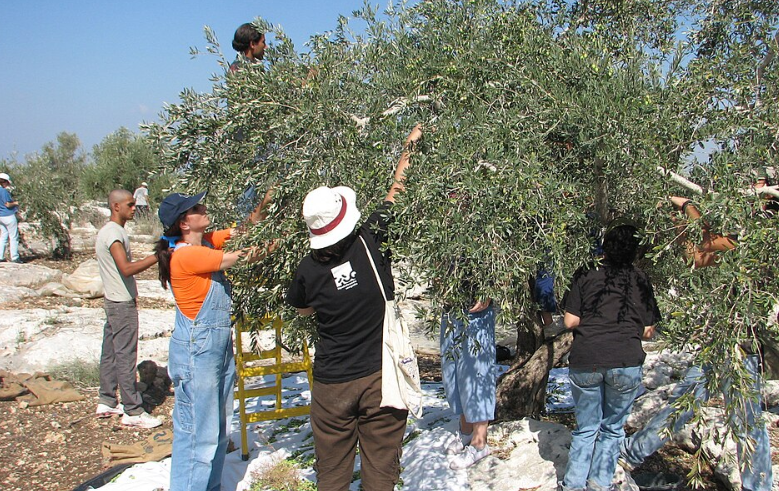
Israeli settler attacks, crop theft and restrictions on farmland are disrupting the 2026 Palestinian olive harvest, leaving farmers injured and thousands of trees damaged.
Israeli settler attacks have disrupted the Palestinian olive harvest across the occupied West Bank, with farmers reporting assaults, stolen crops and the destruction of olive trees. Human rights organizations say violence has increased sharply during the 2026 harvest, threatening a vital source of income for thousands of families.
The Israeli human rights organization Yesh Din has documented more than 325 incidents involving attacks, property destruction or theft since the harvest began in late September. More than 130 involved physical assaults against Palestinian harvesters, according to figures reported by The Associated Press on October 23.
Although the officially scheduled harvest began October 15, many farmers started picking earlier. The season usually continues into November, depending on local conditions and the ripeness of the olives.
The United Nations Office for the Coordination of Humanitarian Affairs recorded 199 olive-harvest-related settler attacks between September 1 and October 12. Those incidents resulted in one Palestinian death, 124 injuries and damage to more than 2,500 trees and saplings.
The figures come from different organizations and reporting periods, so they should not be added together. They nevertheless point to a steep rise in attacks during a season that traditionally brings families together to gather and press olives.
Attacks Spread Across Farming Communities
In the Ramallah and al-Bireh area, the Palestinian Wall Resistance Commission reported that settlers burned and cut down productive olive trees in Burqa. It also described attacks on harvesters and damage to trees in Sinjil, Turmus Ayya and other communities.
In the Nablus region, Palestinian farmers have faced violence while trying to reach or work their groves. Near Burqa and Bizzariya, a 44-year-old Palestinian man was killed during a settler attack on harvesters on October 7, according to the United Nations.
The commission reported further incidents in Salfit, Bethlehem and Qalqilya, including cases in which farmers were chased away or prevented from remaining on agricultural land. It said Israeli forces were involved in some access restrictions, while settlers carried out other threats and assaults.
A separate attack on October 16 in Abu Falah, near Ramallah, drew international attention when settlers assaulted Palestinian residents and Washington Post photographer Heidi Levine. Levine sustained four fractured vertebrae, a broken rib and other injuries while covering the harvest.
Israeli authorities subsequently announced arrests connected to attacks on Levine and visiting European representatives. Israeli President Isaac Herzog condemned the violence, while Prime Minister Benjamin Netanyahu described the perpetrators as a small group of troublemakers.
Those official responses have not ended farmers’ concerns. Some Palestinians say military coordination allows them to enter restricted areas on designated days but does not guarantee protection once harvesting begins.
Olive Groves Support Thousands of Families
Olives are among the West Bank’s most important agricultural products, providing food, oil and seasonal income. The United Nations estimates that the harvest supports between 80,000 and 100,000 Palestinian families.
Many groves have passed between generations, making access to the land important for cultural and family reasons as well as economic survival. When trees are cut or burned, farmers can lose productive assets that may take years to replace.
The Palestinian Ministry of Agriculture estimated that olive oil production could reach approximately 21,000 tonnes in 2026, compared with about 7,000 tonnes in 2025. The higher figure depends on farmers being able to access their trees and complete the harvest.
The threat is not limited to injuries or damaged branches. Farmers also describe losing olives that had already been picked, having equipment stolen and abandoning work because they fear another attack.
Abel Atif Bazaari, a Palestinian farmer near Burqa in the Nablus area, told the Associated Press that olives represent Palestinian identity and a connection to the land. He said his family had suspended harvesting after an attack in which he was injured and his cousin was killed.
His family’s experience illustrates how a violent incident can affect an entire season. Even when trees survive, farmers who cannot return safely may lose the year’s crop.
Settlement Expansion Raises Access Concerns
Human rights organizations have connected the rise in harvest-related violence to the expansion of Israeli settlements and unauthorized outposts. Israeli monitoring organization Peace Now says settlers established more than 180 new outposts in the West Bank after 2023, many near Palestinian communities and farmland.
Israeli settlements in occupied territory are considered illegal under international law by the United Nations and most countries. Israel disputes that legal assessment, and Israeli law also distinguishes between government-authorized settlements and outposts established without authorization.
Some settlers publicly encourage Israelis to gather olives in West Bank areas they consider part of Israel. Palestinian farmers and rights groups argue that harvesting fruit from land belonging to Palestinians amounts to theft and contributes to their displacement.
Reuters reported on October 22 that Yesh Din documented 168 incidents of crop theft and 125 physical attacks during the first 24 days of the harvest. The organization said Israeli forces were present in at least one-quarter of the incidents it recorded.
Israeli officials say they take settler violence seriously. A government spokesperson disputed the characterization of some olive harvesting by Jews as theft, while Israeli police have announced arrests in several high-profile assault cases.
The dispute has also drawn attention overseas. On October 22, the United Nations human rights office urged governments and donors to take action to protect Palestinian farmers rather than relying solely on statements condemning attacks.
For Palestinian families, the immediate concern is whether they can finish picking olives before the season ends. The harvest continues through November, but destroyed trees, stolen fruit and restricted access could leave lasting losses beyond this year’s crop.
IMAGE: Source Own work Author Orrling CC3