
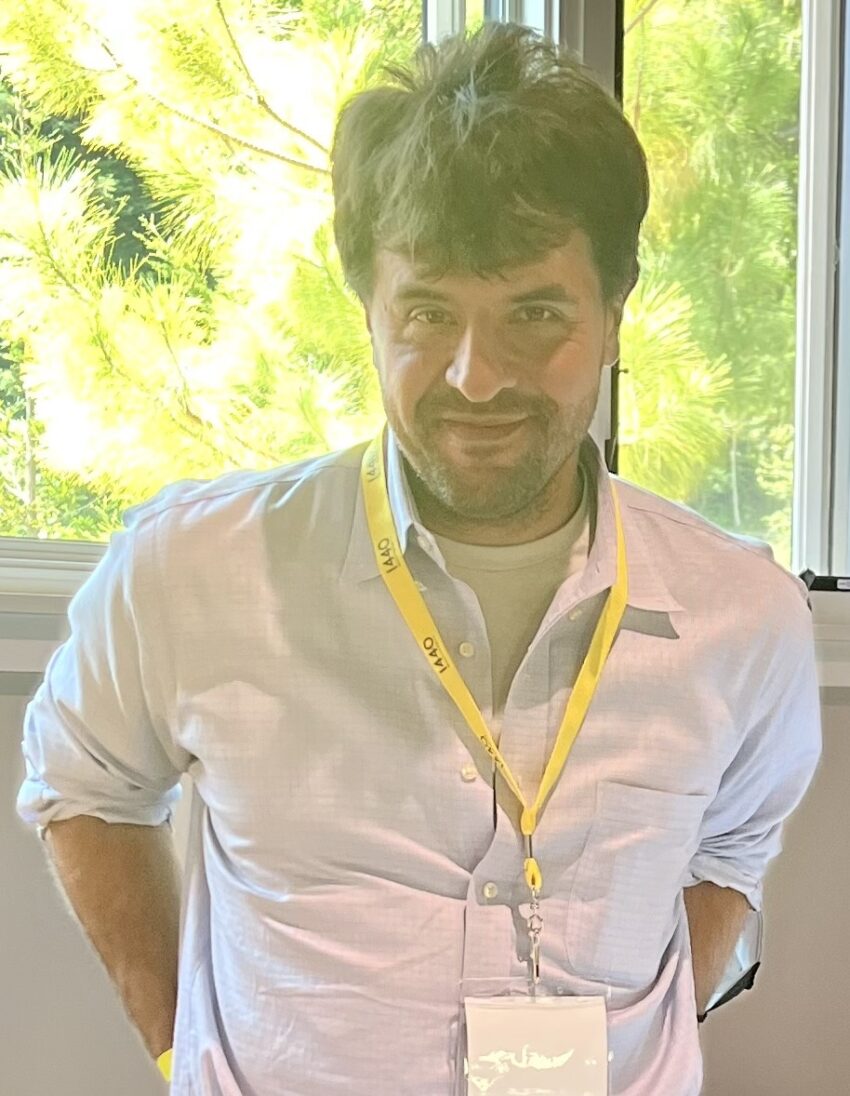
Karl Deisseroth, Peter Hegemann and Georg Nagel share the 2026 Nobel Prize in Physiology or Medicine for discoveries that led to optogenetics.
Karl Deisseroth and Peter Hegemann and Georg Nagel have been awarded the 2026 Nobel Prize in Physiology or Medicine. The prize was announced at the Karolinska Institutet in Stockholm Sweden on Monday October 5 2026. The Nobel Assembly recognized their work on light-gated ion channels and optogenetics.
These scientists developed methods to control nerve cells using light which has advanced understanding of how the brain works. Optogenetics is a technique that uses genetic engineering and light to activate or silence specific cells in the brain. The process involves introducing genes into cells so they produce proteins sensitive to light known as opsins.
This approach allows researchers to study how individual neurons and brain circuits influence behavior and mental processes.
The research began with work on a single-celled alga called Chlamydomonas by Hegemann and Nagel. They helped identify and characterize channelrhodopsins that allow electrically charged ions to pass through cell membranes in response to light. Deisseroth and his colleagues later showed that channelrhodopsin-2 could be used to control the firing of mammalian nerve cells with blue light.
Those findings were published in 2005 and his team later expanded the method for use in living animals. This led to the development of optogenetics as a powerful tool in neuroscience research. Traditional methods often affected many cells at once making it hard to study individual neuron roles.
Optogenetics allowed scientists to target specific groups of neurons with high precision. The technique has been used in studies involving movement and sleep and learning and behavior. Deisseroth is a professor at Stanford University in California according to a report from NPR.
Hegemann works at Humboldt University in Berlin Germany. Nagel is affiliated with the University of Würzburg in Germany. The three scientists will share the Nobel Prize amount of 12 million Swedish kronor.
This year’s prize follows last year’s award to scientists studying the immune system.
The Nobel week continues with physics and chemistry and literature and peace prizes in the coming days. The final award — the Nobel Memorial Prize in Economic Sciences — will be announced on October 12. The celebrations for the Nobel laureates end on December 10 on the anniversary of Alfred Nobel’s death.
On that day winners receive their awards at ceremonies in Stockholm and Oslo. Laureates are also honored during Nobel Week celebrations surrounding the ceremonies.
IMAGE: Or: How to change your mind, with psychedelics and optogenetics.
Genevieve introduced the closing keynote for the PSFC Summit today: Karl Deisseroth is the pioneer of the mind-reading and writing tool (<a href=”http://optogenetics.org” rel=”noreferrer nofollow”>optogenetics.org</a> at Stanford) that allows for individual neuron targeting and manipulation, and his new work looks at the effects of mind-altering drugs on brain function in detail.
Exciting work is going on with psilocybin for alcohol use disorder, extreme OCD and the eating disorders (which are also a disassociation of mind from body).. Photo: Steve Jurvetson from Los Altos, USA / Wikimedia, taken 2022-05-23, CC BY 2.0