
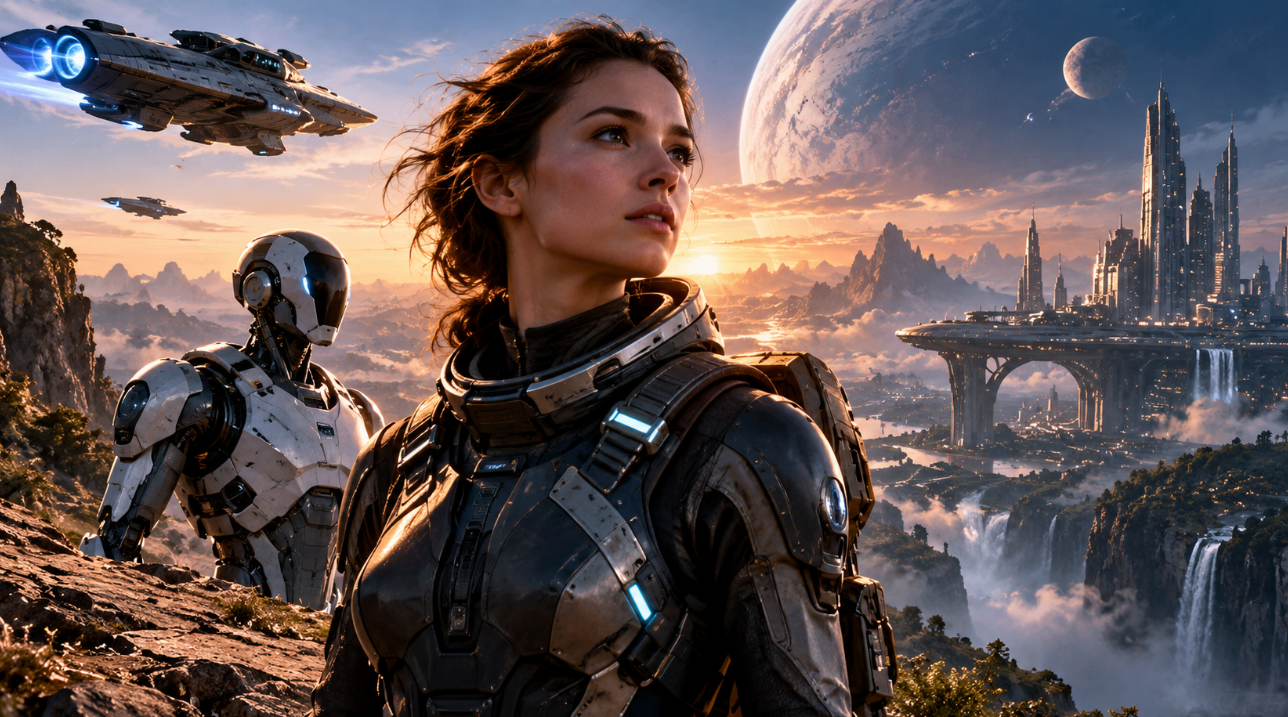
Bill Hader and Christopher Nolan remain skeptical of AI as Netflix expands its use of the technology and Hollywood unions push for stronger protections.
Bill Hader has not yet seen anything truly remarkable from artificial intelligence despite the widespread conversation in Hollywood about its impact. The technology has become a major topic of discussion among industry professionals with concerns over job loss and protection of artists’ work.
Some people worry that AI could replace human roles while others are excited about its potential to enhance creativity. Hader is known for his work on Saturday Night Live and Barry and remains skeptical of AI’s current capabilities.
At the Variety Entertainment & Technology Summit in Los Angeles he shared his thoughts on how new technology often causes fear and concern about jobs. Hader said he does not want production designers to lose work because those workers are real artisans.
Although he sees some possibilities for AI in helping creatives Hader remains uncertain about its full potential. He said he has not yet seen AI work that made him think it was better than something created by Martin Scorsese.
Hader also noted that people react differently to AI. He said younger people he has spoken with seem especially wary because they understand how easily images and information can be manipulated.
Hollywood’s response to AI has shifted from future speculation to present-day challenges. Studios and unions are no longer debating only whether the technology will arrive; they are setting rules for how it can be used.
Christopher Nolan has also warned about AI’s risks. Nolan is president of the Directors Guild of America and compared AI to a Trojan horse whose danger is already visible.
Nolan said he has been encouraged by skepticism toward AI among younger people. The DGA also negotiated new protections in its 2026 agreement that the union says are designed to protect jobs as AI affects the industry.
Netflix recently revealed that it used generative AI in roughly 300 films and shows during 2026. The company said the technology has been used from concept and previsualization through post-production and delivery.
Most of Netflix’s use has been in post-production. Co-CEO Ted Sarandos said the documentary series The American Experiment contains 17 minutes of AI-enhanced footage that was produced faster and at lower cost than traditional alternatives.
Netflix also acquired an AI filmmaking startup earlier this year to strengthen its position in the field. The company bought Ben Affleck’s InterPositive in March and brought its team into Netflix while Affleck became a senior adviser.
In July a UK studio announced plans for the AI-generated character Tilly Norwood to star in a film called Misaligned. The comedy-drama is being developed by Particle6 and places Norwood in the role of an AI character in a surreal digital world.
SAG-AFTRA had already opposed Tilly Norwood after the synthetic performer was unveiled in 2025. The union said creativity should remain human-centered and argued that producers must follow bargaining requirements when synthetic performers are used.
The issue of consent has become a recurring concern in the industry’s AI discussions.
SAG-AFTRA also urged members and other Instagram users to opt out of Meta’s Muse Image tool after it allowed people to generate images using public Instagram accounts without an affirmative opt-in. Meta removed that feature in July after backlash from SAG-AFTRA and Creative Artists Agency.
This mirrors the music industry’s struggle with AI trained on artists who never agreed to it. A key question is who controls a performer’s likeness and whether compensation is required when AI systems use or imitate human work.
The potential job losses are especially high in film television and animation. A CVL Economics study estimated that about 118500 US film television and animation jobs could have enough tasks affected by generative AI to be consolidated replaced or eliminated by 2026.
That study was based on a 2023 survey of 300 entertainment executives and should be read as a projection rather than a count of jobs already lost. Jeffrey Katzenberg separately predicted in 2023 that animation production could eventually require about 10% of the artists traditionally needed for a major feature.
Unions are pushing back by securing contract language that addresses AI’s impact on the workforce. SAG-AFTRA’s 2026 agreement strengthened rules for digital replicas and synthetic performers.
The agreement says producers must bargain with SAG-AFTRA before using synthetic performers in covered productions. It also says producers should favor human performances and should not use a synthetic in a human role unless it brings significant additional value.
The larger issue is about who consents to the use of AI and who benefits financially from it. Nolan’s comparison of AI to a Trojan horse highlights how the technology has already entered Hollywood.
The next chapter will be written in contracts rather than scripts.
Google is also trying to get Hollywood involved in its AI development by reaching out to major studios. The Los Angeles Times reported that Google approached Disney Universal and Warner Bros. Discovery about licensing intellectual property for AI tools.
No deals had been finalized when those talks were reported. Legal questions and union concerns remain major obstacles as studios weigh potential cost savings against the need to protect their intellectual property and workers.
Tom Nunan is a former studio executive and said Google is trying to understand how Hollywood and AI can work together without causing fear. NBCUniversal said it was not in active conversations with Google about licensing its content for AI models.
Google’s current approach differs from how it was viewed by Hollywood a decade ago during piracy disputes. Today the company already works with entertainment businesses through cloud computing YouTube and AI technology. Hollywood’s future will depend on how it manages this balance between AI and human involvement.
IMAGE: DNR Art Department