
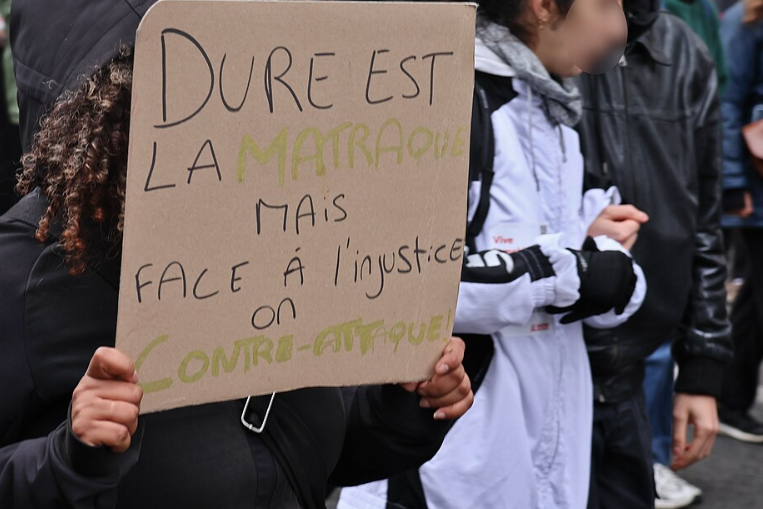
Hundreds of thousands of people demonstrated across France on Saturday, October 31, 2026, in a third consecutive weekend of protests over rising living costs, education and government policies. French authorities estimated that 320,000 people participated nationwide, including approximately 70,000 in Paris, where peaceful marches later gave way to clashes between police and smaller groups of demonstrators.
More than 560 people were arrested nationwide by Saturday night as authorities responded to violence in several cities. The government deployed 70,000 police officers and gendarmes amid concerns that Halloween celebrations could intensify unrest after dark.
The protests were led by students but attracted workers, trade unions, climate activists and people frustrated with President Emmanuel Macron’s leadership. Although participation declined from earlier weekends, the demonstrations remained a significant expression of public dissatisfaction.
Protests Draw Hundreds of Thousands Across France
The French government’s estimate of 320,000 participants was lower than the 410,000 counted on October 24 and the 550,000 estimated on October 17. Protest organizers reported higher participation figures, although their estimates differed from official counts.
Approximately 150 demonstrations were planned across France. The largest gathering took place in Paris, where protesters followed a route around the eastern edge of the capital rather than marching through the city center.
The main procession began near Porte de Bagnolet and moved toward Porte de Charenton. Students walked near the front, accompanied by demonstrators carrying banners about education, living costs and public services.
Police and government officials said the route was intended to reduce the risk of damage near government buildings, major shopping areas and tourist attractions. The final route was authorized after legal disputes over restrictions on the demonstration.
For much of the afternoon, the Paris march was peaceful and festive. Music played from speakers, demonstrators chanted slogans and some participants wore Halloween costumes.
Costumes included Spider-Man, Frankenstein and other fictional characters. Some protesters used the holiday to express their political frustrations through humorous signs and theatrical outfits.
Students Demand Better Schools and Education
The movement began in October with complaints from high school students about deteriorating educational facilities, teacher shortages and unequal opportunities. Young demonstrators said schools were suffering from inadequate resources while university admissions remained difficult for disadvantaged applicants.
Students raised concerns about damaged buildings, overcrowded classrooms and the quality of everyday learning conditions. Some also criticized the Parcoursup university admissions system, arguing that it did not provide equal opportunities for applicants from different backgrounds.
The Associated Press reported that 21-year-old student Corentin Cabreux described poor conditions in his state-run student accommodation. His complaints included damp walls, peeling surfaces and pest infestations.
Education concerns helped bring together students from different levels of schooling. University organizations and high school unions began coordinating demonstrations and calling for additional action.
The protests eventually expanded beyond education. Labor unions and other participants joined with demands involving wages, housing costs, social services and the right to demonstrate.
Some participants said their concerns reflected growing economic inequality. Others criticized the government’s response to earlier protests and questioned the use of police tactics during demonstrations.
Clashes Erupt as Paris March Ends
Violence broke out near Porte de Charenton as the main Paris procession reached its destination. Small groups threw bottles, fireworks and other objects toward police officers.
Police responded with tear gas and stun grenades, sending clouds of smoke through nearby streets. Many demonstrators who had participated peacefully left the area as confrontations intensified.
AFP reported that some masked individuals removed paving stones and threw them toward police. Authorities also reported an incendiary device being thrown during the confrontation.
Interior Minister Laurent Nuñez condemned the attacks on security forces and said a small number of violent groups were responsible for serious disorder. The government maintained that most demonstrators had exercised their right to protest peacefully.
Police reported injuries among members of the security forces during the disturbances. The violence created difficult conditions for officers and demonstrators alike, particularly in crowded streets where tear gas spread beyond those directly involved in confrontations.
Similar incidents occurred in other French cities, including Marseille, Lyon and Grenoble. Although the demonstrations were largely peaceful, confrontations developed as some marches ended.
The disturbances renewed questions about public safety, police responses and the protection of peaceful demonstrations. Protest organizations have criticized restrictions on gatherings, while authorities argue that stronger security measures are necessary to prevent further violence.
Security Measures and Curfews Spark Debate
French officials prepared for the October 31 demonstrations by deploying 70,000 police officers and gendarmes. The security operation included specialized units, helicopters, drones, armored vehicles and water cannons.
The Interior Ministry said it had identified social media messages encouraging disorder during evening Halloween gatherings. Officials warned that some calls for protests went beyond peaceful political activity and included threats of violence.
Paris authorities restricted access to Place de la République and Les Halles from 11 p.m. until 6 a.m. during the weekend. Separate restrictions were announced for unaccompanied minors in areas around the Champs-Élysées.
A Paris court had previously suspended an earlier curfew affecting minors, finding that it unlawfully restricted freedom of movement. The decision added to wider legal disputes over how far authorities could go in limiting public gatherings.
Security officials maintained that the measures were intended to prevent looting and protect residents and businesses. Some retailers boarded up storefronts because they feared damage similar to incidents during previous demonstrations.
Critics argued that broad restrictions could interfere with the rights of people who intended to protest peacefully. The disagreement reflected tensions between maintaining public order and protecting civil liberties.
Demonstrations Spread to Other European Countries
The French protests coincided with youth-led demonstrations elsewhere in Europe. Participants in Germany, Portugal and the Netherlands raised concerns about education, housing affordability and public services.
In Germany, a movement called Gen Z regelt organized demonstrations in more than 30 cities. Its supporters called for greater investment in education, healthcare and climate protection while opposing a return to compulsory military service.
Protesters gathered at Berlin’s Brandenburg Gate carrying signs demanding improved conditions for young people. Organizers argued that decisions affecting schools, housing and the environment would shape their generation’s future.
Some German demonstrations also experienced unrest. Police intervened after confrontations and property damage in several cities, although many participants demonstrated peacefully.
In Portugal, thousands marched through Lisbon demanding action on the housing crisis. Demonstrators carried signs criticizing high rents and the difficulty of securing affordable homes.
The protests were not all organized by a single European movement. Nevertheless, their overlapping demands reflected similar concerns among younger people about living costs, education and economic security.
French Protest Movement Plans Further Action
Student organizations and labor unions have indicated that demonstrations will continue. High school and university groups have called for blockades of educational institutions, while trade unions are preparing additional industrial action.
A nationwide day of strikes and demonstrations is planned for Thursday, November 5. Student organizations have also called for actions at schools and universities during the coming week.
The political pressure comes ahead of France’s presidential election, with the first round scheduled for April 18, 2027, and a possible second round on May 2. Macron is serving his second consecutive presidential term and cannot immediately seek a third.
The government faces competing demands to address public spending pressures while responding to concerns about education, wages and housing. Protest organizers say their grievances have not been adequately addressed.
Saturday’s turnout was lower than during the previous two weekends, but participation remained substantial across France. The next test for the movement will come with planned school blockades and nationwide strikes on November 5.
IMAGE: Source Own work Author FreCha CC4