
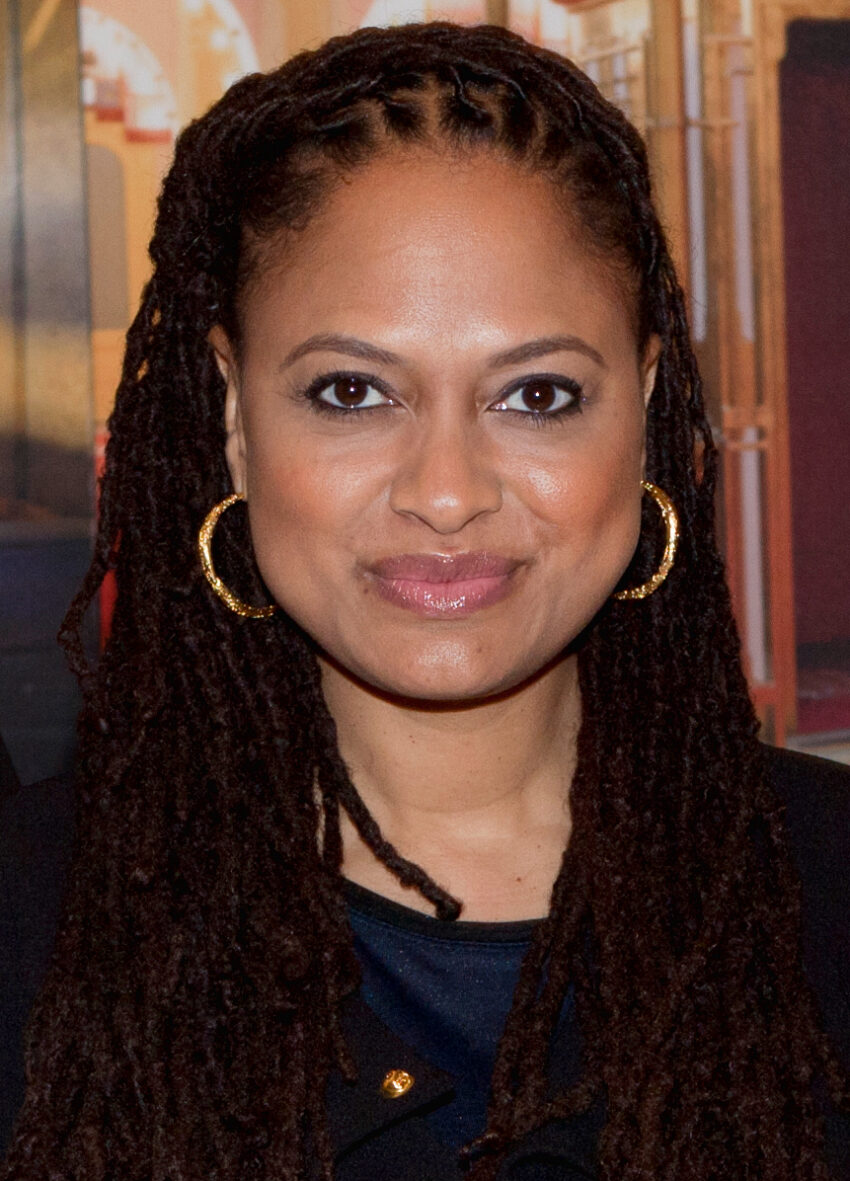
DuVernay’s latest documentary explores the Fourteenth Amendment and America’s continuing struggle over civil rights. The film premieres at the New York Film Festival on October 9 before arriving on Netflix in December.
Ava DuVernay’s new film ‘14th’ serves as a spiritual sequel to her acclaimed documentary ‘13th’. This latest work turns its focus on the Fourteenth Amendment and what it means for citizenship in America today. The film begins by breaking down each of the five sections of the amendment in a way that makes complex constitutional law accessible.
It explains how Section One grants citizenship and guarantees due process and equal protection, according to The Playlist. Section Two addresses representation and disenfranchisement. Section Three concerns officeholders who take part in insurrection or rebellion.
Section Four deals with public debt and debts incurred in support of insurrection. And Section Five gives Congress the authority to enforce the amendment. Together, these provisions form what the film argues is one of the most consequential amendments in American history.
The Fourteenth Amendment was written after the Civil War to push America forward and protect against a return to pre-war inequalities. Its framers understood that military victory alone could not eliminate the ideas behind the rebellion. The amendment was both a promise and a safeguard for building a new country while preventing the old order from reassembling itself.
DuVernay’s approach makes constitutional law engaging and easy to follow without sacrificing its complexity. She uses a combination of historical footage, interviews, and music to bring the material to life. Jason Moran’s jazz-funk score and appearances by artists like Kendrick Lamar and Fleetwood Mac help keep the tone dynamic.
Comedy also plays a role in the film, with stand-up performers like George Carlin and Hasan Minhaj offering sharp commentary on American hypocrisy. These moments start off as humorous but gradually become more serious as the documentary builds its argument. By the end, the humor fades and the tone turns deeply emotional and reflective.
The film explores the Reconstruction era, highlighting lawmakers like John Bingham, Thaddeus Stevens, and Charles Sumner. These figures worked to redefine American democracy through the Thirteenth, Fourteenth, and Fifteenth Amendments. However, DuVernay makes clear that Reconstruction was not simply an ambitious project that faded over time.
Instead, people actively resisted the changes before they could take full effect. The white political and social order that had supported slavery did not accept the defeat of the Confederacy. This resistance evolved into a mythologized version of history known as the Lost Cause.
Historian Karen L. Cox states that this campaign was the most successful propaganda effort in U.S. history. Confederate monuments are shown as symbols of this myth, placing figures who fought to preserve slavery on pedestals. The film traces how the Fourteenth Amendment’s ideals were eroded over time through Jim Crow laws, voter suppression, and resistance to civil rights.
It connects these historical events to more recent issues like Confederate statue removals and political debates around immigration and ICE actions. Frederick Douglass’s warning about the unfinished struggle becomes central to the film’s message. The documentary argues that the Civil War ended but the fight over what kind of country America would become never truly stopped.
Sherrilyn Ifill, former president of the NAACP Legal Defense Fund, provides a strong narrative voice in the film, according to The Guardian. She helps explain how the amendment serves as the foundation for a multi-racial and multi-faith democracy. The film also includes interviews with political figures like Stacey Abrams, Bryan Stevenson, and Alexandria Ocasio-Cortez.
Some critics note that the documentary occasionally loses focus as it moves between historical events and modern political disputes. The Guardian notes that certain sections move away from the central discussion of the amendment. However, the film’s extensive interviews and historical material help explain the connection between past and present.
Some of the archival footage is enhanced with digital effects that give historical photographs lifelike movement. These visual choices include the use of generative artificial intelligence to animate still images. DuVernay has defended the technique as a way to bring historical photographs closer to audiences.
It draws comparisons between past and present issues of civil rights and citizenship. The film’s final section focuses on the Trump administration’s actions that it sees as attacks on the amendment. It argues that policies under Trump have undermined key principles of the Fourteenth Amendment.
While some viewers may already be aware of these issues, the film still manages to make a powerful case for reasserting constitutional protections.
Overall, ‘14th’ is a dense but compelling exploration of American democracy and its ongoing challenges.
The documentary makes its world premiere at the New York Film Festival on October 9. It is scheduled for a limited theatrical release on November 27 before arriving on Netflix on December 4, 2026.
IMAGE: Ava DuVernay, David Oyelowo and Colman Domingo from the film Selma. Photo: usbotschaftberlin / Wikimedia, taken 2015-02-10, Public domain