
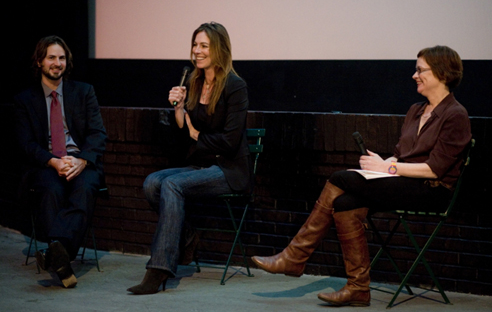
The respected critic died October 18 after battling brain cancer. Her career spanned more than two decades at The Washington Post, and she completed a final book about All the President’s Men before her death.
Ann Hornaday, the longtime film critic for The Washington Post whose thoughtful reviews and appreciation for filmmaking earned her national recognition, died Sunday, October 18, 2026, at her home in Baltimore, Maryland. She was 66.
Her husband, Dennis Greenia, confirmed that the cause was glioblastoma, an aggressive form of brain cancer. Hornaday had been diagnosed in 2025, shortly after leaving the newspaper following more than two decades of film criticism.
Hornaday was a finalist for the Pulitzer Prize for Criticism in 2008 and became one of the country’s most respected voices on cinema. She was known for reviewing films with intelligence, compassion and an understanding of the enormous effort required to bring a story to the screen.
A Distinguished Career in Film Criticism
Hornaday joined The Washington Post in 2002 after working as a film critic for the Austin American-Statesman and The Baltimore Sun. Her career eventually made her a familiar name to moviegoers seeking thoughtful assessments of everything from independent productions to major Hollywood releases.
Before becoming an established critic, Hornaday worked as a freelance journalist in New York. Her writing appeared in several publications, including Premiere magazine, and she spent two years working at Ms. magazine as an assistant to feminist writer Gloria Steinem.
Born March 9, 1960, in Iowa City, Iowa, Hornaday grew up in Des Moines. She graduated from Smith College in Massachusetts in 1982 with a degree in government.
Her early professional experiences helped shape a career centered on culture, storytelling and the relationship between art and society. She developed a reputation for approaching films with curiosity rather than dismissing them because of their genre, budget or popularity.
At The Washington Post, Hornaday wrote hundreds of reviews covering major theatrical releases, independent films, documentaries and works by emerging directors. Her writing offered readers a clear understanding of cinematic techniques without requiring specialized knowledge of filmmaking.
She believed that movies deserved serious attention even when they were created primarily for entertainment. Her criticism examined not only whether a film succeeded but also what its creators were attempting to communicate.
Pulitzer Prize Recognition in 2008
One of Hornaday’s most significant professional achievements came in 2008 when she was named a finalist for the Pulitzer Prize for Criticism.
The Pulitzer Prize organization recognized her perceptive reviews and essays, praising the research and accessible style that distinguished her work. Her submission included a review of Paul Thomas Anderson’s There Will Be Blood, the acclaimed 2007 drama starring Daniel Day-Lewis.
The recognition placed Hornaday among the nation’s leading cultural critics and reflected her ability to explain complicated artistic choices in language that ordinary moviegoers could appreciate.
Although she did not win the award, becoming a finalist was an important acknowledgment of her contribution to American arts journalism.
Hornaday’s approach was particularly notable because she rarely relied on harsh criticism simply to entertain readers. She could be direct when a film disappointed her, but she also recognized the work of directors, performers, editors, writers and production crews.
Her appreciation for filmmaking extended beyond individual performances or storylines. She often considered how music, cinematography, editing and other creative decisions worked together to produce an emotional experience.
A Champion of Emerging Filmmakers
Throughout her career, Hornaday showed particular interest in directors developing distinctive approaches to storytelling.
She supported and wrote about filmmakers including Ryan Coogler, Greta Gerwig, Alexander Payne and Tom McCarthy. Her attention to emerging talent helped introduce readers to filmmakers whose careers later gained widespread recognition.
Coogler went on to direct Fruitvale Station, Creed and Black Panther, while Gerwig earned recognition for films including Lady Bird, Little Women and Barbie.
Hornaday also admired filmmakers who combined strong storytelling with political or social themes. Her interests included documentaries, historical dramas and films that challenged audiences to reconsider familiar events.
Among the movies she held in particularly high regard was Kathryn Bigelow’s The Hurt Locker, the 2008 Iraq War drama that won the Academy Award for Best Picture.
Hornaday later identified it as the best film she had reviewed during her career. Her appreciation reflected her interest in movies capable of creating emotional tension while exploring serious human experiences.
Her opinions were not always aligned with popular enthusiasm. She could question celebrated films while finding unexpected artistic value in productions that other critics dismissed.
That independence helped establish her credibility among readers who wanted more than a simple recommendation about whether to buy a movie ticket.
Bringing Film Criticism to Television Audiences
Hornaday also became a familiar contributor to PBS NewsHour, where she discussed new releases and broader developments in the film industry.
Her television appearances reflected the same qualities that characterized her newspaper writing. She explained filmmaking decisions clearly and spoke about movies with enthusiasm that encouraged audiences to think more carefully about what they watched.
PBS paid tribute to Hornaday on October 19, featuring clips from her appearances and comments from colleagues who admired her ability to communicate a genuine love of cinema.
In one segment, she discussed the excitement of discovering talented first-time filmmakers. In another, she praised Top Gun: Maverick for delivering an unexpectedly enjoyable theatrical experience.
The broadcasts demonstrated her willingness to appreciate popular entertainment alongside more demanding artistic productions.
Former Washington Post executive editor Marty Baron remembered her criticism as work informed by both intelligence and humanity.
Her presence on television expanded her audience beyond newspaper subscribers and introduced more viewers to the idea that understanding movies could enrich the experience of watching them.
Teaching Readers How to Appreciate Movies
Hornaday extended her approach to film criticism into book publishing in 2017 with Talking Pictures: How to Watch Movies.
The book offered readers an accessible guide to understanding the creative decisions involved in filmmaking. Rather than presenting film analysis as something reserved for professionals, Hornaday encouraged ordinary audiences to become more attentive viewers.
She explained how directors, screenwriters, cinematographers, editors and other specialists contribute to the finished product. The book also drew on her interviews with filmmakers and her years of experience examining movies.
Her central message was that viewers could gain a richer appreciation of cinema by understanding how films are made.
Hornaday emphasized the collaborative nature of the medium, recognizing that successful films depend on the combined contributions of many creative professionals.
That perspective also influenced the way she approached criticism. Even when she disliked a movie, she understood the substantial work involved in producing it.
Her willingness to share that knowledge made her an important resource for students, aspiring filmmakers and readers interested in understanding the art of cinema.
Life in Baltimore and Final Illness
Although her professional responsibilities frequently took her to Washington and film festivals around the country, Hornaday maintained strong ties to Baltimore.
She lived with her husband in the city’s Evergreen neighborhood and remained active in the local arts community. Friends remembered her affection for Baltimore and her commitment to the people and institutions that made it home.
The Baltimore Banner reported that Hornaday began experiencing vision problems in June 2025. She was diagnosed with glioblastoma later that summer and underwent brain surgery in August.
Despite her illness, Hornaday continued spending time with her family and enjoying familiar activities. Her husband recalled that they returned to walking around Baltimore’s Lake Montebello following her surgery.
Those outings allowed them to experience moments of normal life during an increasingly difficult period.
Hornaday had accepted a buyout from The Washington Post in 2025, ending her long tenure at the newspaper. Her departure came during a period of significant change across the newspaper industry.
Her diagnosis followed not long afterward, bringing a difficult personal challenge as she entered a new stage of her professional life.
Final Book Examines All the President’s Men
Before her death, Hornaday completed another book devoted to the making of All the President’s Men, the acclaimed 1976 political thriller directed by Alan J. Pakula.
The film stars Robert Redford and Dustin Hoffman as Washington Post reporters Bob Woodward and Carl Bernstein, whose investigation helped uncover the Watergate scandal.
Hornaday had a longstanding interest in the film and its depiction of journalism, political accountability and the creative process behind a major motion picture.
Her forthcoming book examines how the production came together and the people responsible for bringing the story to the screen.
The project reflects two important aspects of Hornaday’s professional life: her commitment to journalism and her fascination with how filmmakers transform historical events into dramatic storytelling.
The book is tentatively scheduled for publication in 2028, although a final release date has not been confirmed.
Its publication would offer readers another opportunity to experience Hornaday’s perspective on cinema and the filmmaking process.
Colleagues Remember Her Generosity and Insight
Following her death, journalists and colleagues remembered Hornaday for her writing abilities, kindness and professional generosity.
Washington Post executive editor Matt Murray praised her informed and approachable voice, describing the experience of reading her criticism as similar to talking with a knowledgeable friend.
Former colleagues also recalled her willingness to give different types of films a fair assessment, even when they fell outside her personal preferences.
Hornaday regularly participated in film festivals, interviews and public discussions, maintaining relationships with filmmakers and audiences throughout her career.
She also encouraged younger people interested in movies and journalism. Her ability to share knowledge without making others feel excluded became an important part of her professional reputation.
The tributes reflected the respect she earned from colleagues who valued both her judgment as a critic
IMAGE: Date 10 May 2009, 22:24 Source THE HURT LOCKER – Closing Night 2009 This file is licensed under the Creative Commons Attribution-Share Alike 2.0 Generic license.