
The US Department of Defense inspector general has confirmed that operations against Iran have caused strategic munitions inventory shortfalls and supply chain bottlenecks. The formal quarterly reporting period runs from April 1 to June 30, although the report includes data dating back to the war’s start on February 28 and details how the war has affected the US military, State Department and other agencies. It shows that the conflict has caused a major drop in ammunition stocks and revealed problems in weapons manufacturing and distribution.
The report estimates that the war cost $33.4 billion from February through June, not including repairs to damaged facilities, according to newarab.com. A Congressional Budget Office estimate released Tuesday put Defense Department costs above $38 billion through August 1. CNN reported that the US military had used nearly 80% of its prewar THAAD interceptor inventory, but Pentagon officials disputed that figure. In addition to ammunition issues, the war led to damage to aircraft and military installations across the region.
The report lists the destruction of four F-15E fighter jets and damage to one F-35A stealth aircraft, among other losses. As many as 30 MQ-9 drones were destroyed in various circumstances, and seven KC-135 refueling aircraft were damaged or destroyed. Iran reportedly targeted the US Navy’s main logistics center in Bahrain with drones and ballistic missiles. The report says seven US service members were killed in action and seven died in non-hostile events through June 30, while 417 were wounded in action.
More than 50,000 US service members were deployed throughout the US Central Command region, while about 3,500 diplomatic personnel were on authorized or ordered departure or already out of the country by June 30. US forces flew as many as 5,000 sorties from European bases to support the conflict, showing strong reliance on allied basing and overflight access. The State Department reported about $184 million in physical damage to diplomatic facilities in Iraq, Kuwait, Saudi Arabia, and the UAE, with about $25 million more in construction delay costs.
US Central Command said the military struck more than 1,000 targets in the first 24 hours of the war. The pace of strikes dropped significantly after the initial phase, according to an analysis by the Center for Strategic and International Studies. Despite these issues, President Donald Trump has denied US ammunition shortages and claimed that US factories are producing more advanced weapons than ever.
He also said the US has large amounts of munitions and that more are being manufactured and shipped to the country as needed. Trump threatened leakers with prison. The Pentagon’s inspector general report is one of the first public documents to detail the financial and logistical toll of the conflict.
It also shows that the US military is facing challenges in replenishing its weapons stocks after a high-intensity campaign. The report raises concerns about how quickly the US can rebuild its inventory, especially for advanced munitions that depend on complex supply chains. The findings could lead to renewed discussions about the US defense industrial base and whether it can handle simultaneous military commitments. The inspector general said some persistent production bottlenecks involve solid rocket motors, high-grade explosives, propellants and skilled manufacturing labor.
The Pentagon is working to streamline procurement, reduce production delays, and stockpile key materials for future needs. The situation has sparked debate over whether the US is prepared for other major military operations in the near future. The war’s impact has extended beyond the battlefield, affecting morale and readiness of forces stationed in the region.
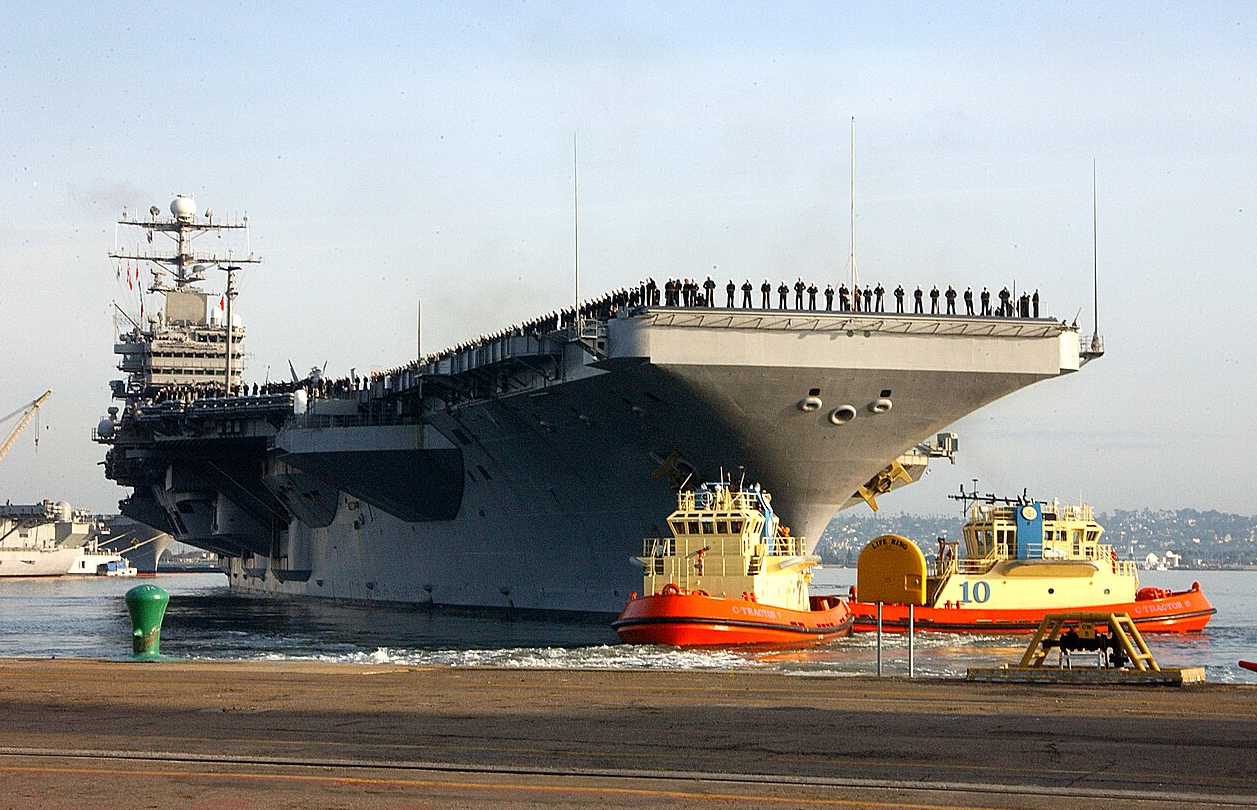
Some US Navy ships, including the USS Abraham Lincoln, have been on extended deployments amid growing concerns about troop conditions. The Navy said the USS Abraham Lincoln would return home as part of a planned rotation, and as of September 14 the carrier strike group was in the South China Sea heading back from deployment. The report highlights strategic concerns and planning issues regarding future conflicts that could strain US military resources.
IMAGE: ID 050301-N-7615S-006