
The Justice Department has spent years working to break up Google’s large advertising business through two separate antitrust lawsuits. One lawsuit, filed in 2020, focused on Google’s dominance in search, while the second, filed in 2023, targeted its ad-technology business. Both cases argued that Google’s control over the digital ad market was illegal and represented a monopoly. Courts have largely supported the government in both cases.
In 2024, a court found that Google’s search business, including its search-ad operation, was an illegal monopoly, according to TechCrunch. Last April, another court ruled the same way about Google’s ad-tech business. Following that ruling, Justice Department officials suggested breaking up Google’s search business by forcing it to sell its Chrome browser and Android operating system. But in September 2025, a judge named Amit Mehta rejected those plans, allowing Google to keep both Chrome and Android. He did require the company to stop exclusive default-placement deals and share some search data with competitors.
Google has been able to keep its advertising business after a recent decision from federal judge Leonie M. Brinkema of Virginia, according to a report from hoodline.com. Brinkema ruled that Google would not have to sell its ad-tech unit, but must change how it operates to benefit competitors. The New York Times reported that the judge’s decision did not explain exactly how Google should alter its practices. Brinkema’s full ruling is sealed for 14 days to allow redactions before it becomes public. Her finding that Google acted illegally in its ad-tech business dates back to April of last year, but this week’s decision only addressed the remedy.
Google described the outcome as a win for the company. The government’s case against Google centered on how it made its search engine the default in many mobile devices worldwide. Google used exclusive agreements with phone manufacturers to make its search engine the default across a large portion of the mobile market. It also entered into revenue-sharing deals with mobile carriers that gave them a cut of ad income in exchange for keeping Google as the default search engine.
Google will not be forced to sell its online advertising exchange, AdX, after a federal judge in Virginia rejected the Justice Department’s push for a breakup. Judge Leonie Brinkema issued the decision under seal on Tuesday, giving Google a win in one of the most closely watched antitrust cases in tech. The short order rejected the government’s request to force a sale of AdX, according to Bloomberg. Instead, Brinkema ordered Google to make changes that would allow rival tools to work with its ad tech systems. The exact behavioral requirements remain secret, with a full redacted version of the ruling expected later.
This case began in April 2025 when Brinkema found that Google held illegal monopolies in two ad markets. She also ruled the government had not proven Google controlled advertiser ad networks. The main issue in the case was AdX, which allows publishers to sell ad space through real-time auctions. Google charges a 20% fee on each auction when users load a web page. That fee accounted for about 4.1% of Google’s total revenue and 1.5% of its operating profit in one year, according to reports.
Google’s lawyers argued that a forced sale of AdX would be technically difficult and hurt publisher customers. The company also pointed out it had previously offered to sell AdX in 2024 during a separate EU antitrust investigation. Investors reacted positively to the outcome, with Google’s stock rising between 1% and 1.5% after the news broke. The stock move showed that Wall Street was relieved that Google’s structure remained intact despite new restrictions.
This decision is the third in a row where federal courts have refused to order a breakup of a major tech company. Judge Amit P. Mehta also denied a request to force Google to sell its Chrome browser in a separate search case. S. District Judge James Boasberg dismissed the FTC’s attempt to force Meta to sell off Instagram and WhatsApp. Together, these rulings show that courts have found big tech companies guilty of monopolizing but have not ordered full breakups.
The ad tech lawsuit was originally filed in January 2023 by the Justice Department and eight states. That number grew to 17 state attorneys general, including Virginia, California, and New York. This wide coalition showed how many states viewed Google’s control over the digital ad pipeline as a serious competitive issue.
Google still faces private lawsuits from publishers who are seeking monetary damages. A judge in Manhattan recently ruled that Google cannot relitigate Brinkema’s liability findings in private antitrust suits brought by major news publishers. This means Google is still exposed to ongoing legal issues even though it avoids a court-ordered breakup of its exchange business.
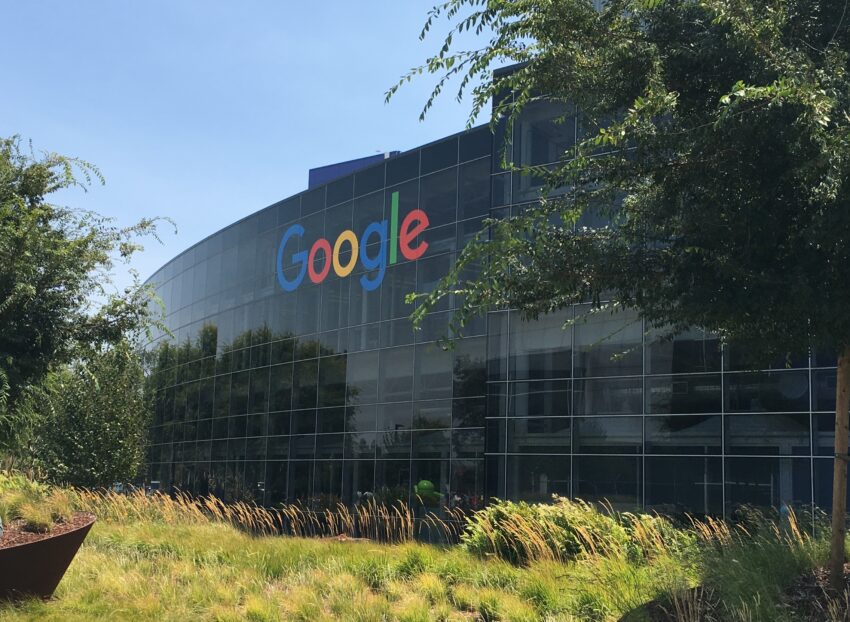
Important details about the required changes are still undisclosed. Google is headquartered in Mountain View, California.
IMAGE: Googleplex Headquarters, Mountain View, US. Photo: Asoundd / Wikimedia, taken 2016-07-27, CC BY-SA 4.0