
European carmakers are increasingly looking at military production as defense spending rises and traditional vehicle manufacturing comes under pressure. Ford, Renault and Jaguar Land Rover are among the companies exploring ways to use automotive engineering and manufacturing capacity for defense projects.
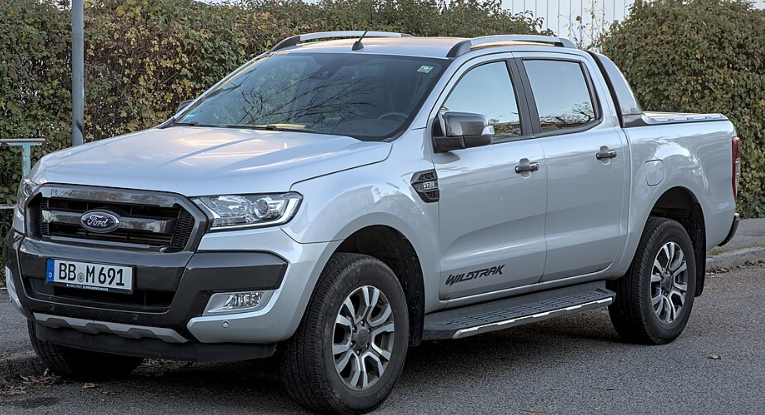
Ford is part of a bid to supply new vehicles for the British Army. A military version of the Ford Ranger has been displayed outside the company’s Dagenham plant in east London. The proposed vehicle is based on Ford’s Ranger platform and is designed to carry heavy loads and operate in demanding conditions.
Ford is working with General Dynamics and engineering company Ricardo on the bid. The group is competing for the British Army’s Light Mobility Vehicle program. The Ministry of Defence is seeking about 9,000 vehicles over the next five to seven years to replace older Land Rover-based vehicles.
Ford hopes defense work could help make better use of its Dagenham facility. The plant now produces engines rather than complete civilian cars. BBC reporting said annual engine output there has fallen from about 90,000 to roughly half that level over the past decade.
The idea of using automobile factories for military production is not new. Ahead of World War II, Ford’s Dagenham plant was one of Europe’s largest car factories. When war broke out in 1939, civilian car assembly there stopped and the factory shifted to military production. Between 1939 and 1945, Dagenham produced about 360,000 vehicles for the Allied war effort.
Ford workers in Manchester also produced about 34,000 Rolls-Royce-designed Merlin engines used in aircraft including Spitfires and Hurricanes. The current move toward defense is far smaller, but companies see military contracts as one possible way to use excess manufacturing capacity.
French automaker Renault has entered into a strategic partnership with Thales, a major defense company. The companies plan to jointly develop and produce Thales’ Toutatis loitering munition. Renault says production could begin as early as 2027.
The partnership is targeting manufacturing capacity of up to 1,000 units per month during the first year. Renault will use its experience in large-scale industrial production to simplify the design and speed up manufacturing. The company says its role is focused on the drone’s structure and industrial production rather than fitting military payloads.
Renault and Thales have also developed the 4 TROOP military vehicle concept. The vehicle is based on automotive technology but is designed to support military communications, drones and other battlefield systems.
Jaguar Land Rover is also looking at defense opportunities. JLR has said it is examining partnerships connected with the British Ministry of Defence and the replacement of the Army’s aging Land Rover fleet.
The British Army formally began retiring its Land Rover fleet in March 2026. More than 5,000 Land Rovers were still in military service in 2025. The Ministry of Defence says the first vehicles from the new Light Mobility Vehicle program are expected to reach soldiers by 2030.
JLR is competing in a field that also includes Ford and other manufacturers. The contract could provide thousands of vehicles and long-term support work to the winning companies.
The push into defense comes as the UK automotive industry faces serious pressure. UK factories produced more than 717,000 cars in 2025. Production remains well below the levels seen a decade earlier. During the first seven months of 2026, UK car production fell another 4.7% compared with the same period in 2025.
The Society of Motor Manufacturers and Traders said total vehicle output fell 7.5% during the first half of 2026. The industry has been dealing with weaker exports, model changes, high energy costs and uncertainty over trade and investment.
Lower production also puts pressure on the companies that supply parts to automakers. Industry leaders have warned that losing large vehicle plants or production volumes can weaken the wider manufacturing supply chain.
JLR is particularly important because of the size of its UK operations. Mike Hawes of the Society of Motor Manufacturers and Traders described JLR as the “critical mass” of UK automotive manufacturing because of the effect its production has on suppliers.
Jaguar Land Rover recently announced plans to cut about 4,000 jobs globally over the next two years. That represents close to 10% of its worldwide workforce. The company has not said that all of those jobs will be lost in Britain.
The cuts are part of a plan to save about £1.7 billion. JLR has cited intense global competition, tariffs and pressure from Chinese automakers among the challenges facing the company.
Despite the cuts, JLR says it plans to invest between £15 billion and £18 billion over the next five years in new technology, manufacturing and electrification.
The broader European auto industry is also facing heavy competition from Chinese manufacturers while spending large amounts on electric vehicles. At the same time, European governments are increasing military spending because of security concerns surrounding Russia and uncertainty about future U.S. support for European defense.
That combination has made defense work more attractive to manufacturers with unused production capacity. Automakers already have factories, engineering teams and supply chains capable of producing large numbers of complex products. Defense companies can potentially use those capabilities to increase production more quickly.
However, military orders are unlikely to replace the scale of civilian car production. Ford UK’s Lisa Brankin acknowledged that a possible order for 9,000 military vehicles spread across several years would be small compared with the plant’s former output.
Defense contracts may instead provide an additional source of work while automakers adjust to lower production and changing markets. Renault has said defense diversification is not part of its main long-term growth strategy and that automobiles remain its core business.
For European carmakers, the new military projects show how industrial capacity built for civilian vehicles can be adapted as governments increase defense spending. Whether that work becomes a major part of the auto industry’s future will depend on the size and duration of military orders.
IMAGE: Ford Ranger Source Own work Author Alexander Migl CC4