
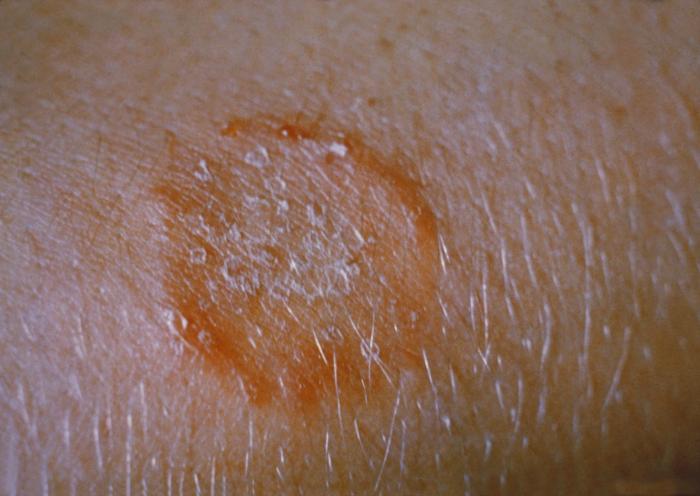
A type of fungus called Trichophyton indotineae that causes ringworm and is often resistant to common treatment with terbinafine is spreading internationally. Ringworm is a common fungal infection that leads to an itchy, scaly rash on the skin. The fungus can also cause other infections such as athlete’s foot. It spreads through direct contact with infected skin or by touching items like towels, clothing, bedding, and hairbrushes that have been contaminated.
Most cases are treated using the antifungal medicine terbinafine, which can be applied as a cream or taken in pill form. However, this particular fungus is frequently resistant to terbinafine, making infections last longer and harder to cure. CDC has described terbinafine as a mainstay of ringworm treatment while warning that T. indotineae isolates are frequently resistant to it.
Researchers reviewed data from March 2022 through the end of 2025 and found that the proportion of T. indotineae among Trichophyton identifications tripled during that time. The monitoring network identified the fungus in 29 countries around the world. The study analyzed 3,399 T. indotineae identifications submitted through the Mass Spectrometry Identification network.
The first reported U.S. cases were identified in 2023, although infections caused by the fungus have been retrospectively identified as early as 2008. In 2016, doctors in India began reporting a sharp increase in widespread and difficult-to-treat fungal infections that were later linked to T. indotineae.
Most identifications in the monitoring network came from Europe, but researchers believe this is due to stronger testing and surveillance rather than a higher actual rate of infection. Europe accounted for nearly 90% of the T. indotineae spectra in the study, but it also had by far the largest share of people using the identification network.
The report noted that infections are likely being missed in Africa and in known endemic areas such as India and the Middle East. Limited access to advanced testing and tracking tools may be preventing health officials from fully understanding how widespread the infection has become. Researchers specifically warned that the geographic results reflect where mass spectrometry equipment and the monitoring system are available.
This growing issue highlights the need for better global monitoring of fungal infections and improved treatment options.
IMAGE: CDC/ Dr. Lucille K. Georg / Wikimedia Commons (Public domain)
This article passed automated originality and source-verification checks before publishing.