
Archaeologists have identified at least 500 prehistoric iron bars that were likely part of a cargo lost in the Danube River in what is now Austria. The find was made during industrial gravel extraction at a site called Deinham. Workers discovered the objects in 2019 while dredging underwater gravel at the site.
Researchers identified 193 complete bars and 307 partial bars. The objects were semifinished iron products that could later be forged into weapons, tools and other objects. Complete bars averaged about four and a half pounds, or two kilograms, according to researchers.
The total mass of the find exceeded one metric ton, making it the largest known collection of prehistoric iron bars in Europe, according to a report from Phys.org. Radiocarbon dating placed the iron in the La Tène period, with researchers linking the find mainly to the third and second centuries B.C.
Researchers believe the iron was produced upstream in Bavaria, where several ancient iron-making sites have been found. Similar iron bars were previously discovered in Manching, Germany, about 125 miles away from the Deinham site.
Researchers believe the iron was probably being transported down the Danube when it was lost, possibly in a shipwreck. The find suggests that large-scale inland shipping was already well organized in Central Europe during this time. Peter Trebsche, a professor at the University of Innsbruck, led the study analyzing the find.
He said that it is remarkable how such a large amount of iron was transported at once in a single transaction. Marion Berranger from the Université de Technologie de Belfort Montbéliard helped date and analyze the iron bars.
Their research was published in the journal Antiquity. The cargo of iron bars would have been enough to forge approximately 500 swords, according to Trebsche.
Researchers estimated that the same quantity of iron could have produced as many as 8,000 nails. The amount shows the scale of iron production that had developed in the Danube region during the Late Iron Age.
Because the find was uncovered during industrial work, its original archaeological context was lost. The iron bars were shaped like double-pointed pyramids and had a distinctive form common to Iron Age production.
These findings suggest that the La Tène period saw a major expansion in iron trade and production across Europe. The value of the cargo may have been comparable to what was found in gold coins at Manching, which were also from the same time period.
Researchers noted that a hoard discovered at Manching contained 443 gold coins weighing a total of about 3.7 kilograms. They said the coins could plausibly have represented a value similar to a metric ton of iron.
This discovery highlights how monetization and trade systems were developing during that era. Researchers believe the iron was being transported from a production area to an unknown destination somewhere downstream.
It is rare for such large quantities of semifinished iron to be preserved together in one place. The discovery was reported to the Austrian monument authority and the collection was later donated to a state museum.
Trebsche said it was fortunate that the objects were recognized as archaeological finds rather than being sold as scrap metal. Researchers are continuing to study trace elements in the iron in hopes of identifying where the metal originated.
This find adds to the understanding of how prehistoric societies managed resources and traded goods over long distances.
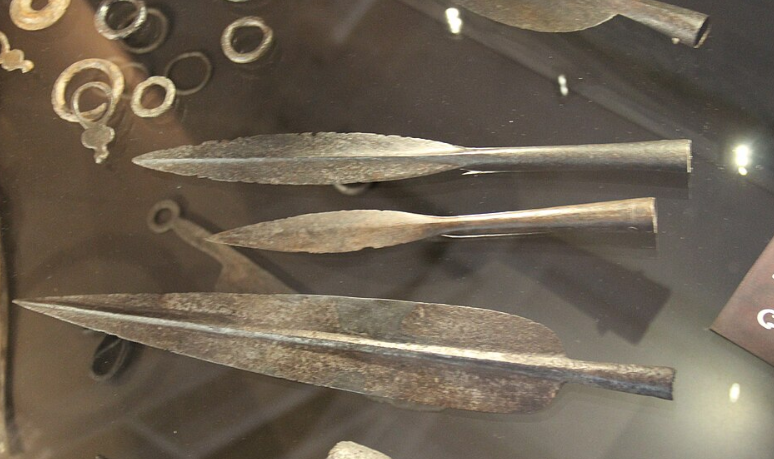
IMAGE: Iron Age La Tene Sacrificial Site 3 August 2016, 22:01 Author Gary Todd from Xinzheng, China CC1