
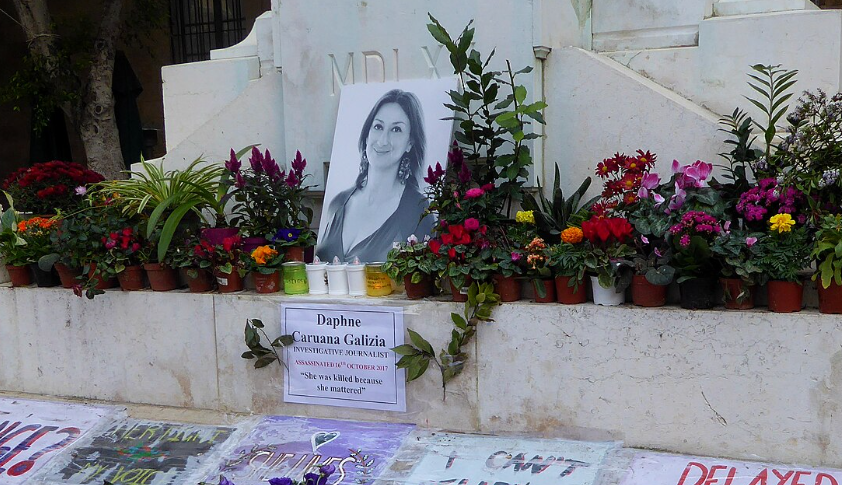
A jury in Malta found a prominent businessman not guilty of involvement in the 2017 assassination of investigative journalist Daphne Caruana Galizia. Yorgen Fenech was the last of a half-dozen people charged in connection with the case to go to trial. Caruana Galizia, a 53-year-old journalist, was killed by a car bomb on October 16, 2017, while driving near her home.
She had written extensively about corruption in Malta’s political and business sectors, including targeting figures in Prime Minister Joseph Muscat’s inner circle, according to NPR. Her work often involved exposing offshore companies linked to the Panama Papers leak, according to a report from europeaninterest.eu. At the time of her death, she was facing more than 40 libel lawsuits.
Prosecutors had accused Fenech of ordering and financing the killing. He pleaded not guilty to the charges and was found innocent by the jury. Fenech was arrested in 2019 while sailing away from Malta on his yacht.
His arrest led to mass protests in the country and ultimately forced Prime Minister Joseph Muscat to resign. After the verdict, Fenech exited the courtroom amid chaos and was not heard to comment. Caruana Galizia’s children were present in court and expressed their disappointment over the outcome.
They said that nine years after her death, the failures that allowed her murder remain unaddressed. The family emphasized that their country failed to protect her. An independent inquiry into the killing in 2021 found that the Maltese state bore responsibility for the murder due to a culture of impunity.
Fenech was part of a consortium that won a controversial contract to build a power station in Malta. The trial was held behind closed doors, as is standard in Maltese criminal proceedings. In the years since the killing, several others involved in the plot have been sentenced.
George Degiorgio and his brother Alfred Degiorgio pleaded guilty in 2022 and were each sentenced to 40 years in prison. In 2025, two other men were sentenced to life in prison for their role in the murder. Jamie Vella and Robert Agius were convicted for supplying the bomb used in the assassination.
Vincent Muscat also pleaded guilty in 2021 and received a 15-year sentence. A taxi driver named Melvin Theuma, who admitted to being a middleman in the case, was granted a presidential pardon in 2019. His pardon was in exchange for testimony that helped prosecutors build their case.
The case has drawn international attention and highlighted serious issues within Malta’s justice system. Caruana Galizia’s death shocked Europe, sparked public protests, and led to political upheaval in the country. The acquittal of Fenech has raised questions about accountability and justice in Malta.
Many believe that the verdict reflects a broader failure to address corruption and impunity in the country.
IMAGES: Makeshift memorial at the Great Siege Monument Ethan Doyle White – Own work CC BY-SA 4.0