
Washington and Tokyo have taken coordinated steps to support the yen after it dropped to multi-decade lows. The action helped the yen recover from its recent sharp decline and drew attention from global markets. Traders are now watching closely to see if more steps will be taken in the coming days.
This kind of joint effort between the US and Japan is not common, making it especially notable. The latest move marks the first time since 1998 that both countries have acted together to buy yen directly.
The US government has said the yen is significantly undervalued compared to its true worth. Japan’s currency had weakened to around 164 per US dollar last month before the intervention.
The yen had previously fallen to levels not seen in over forty years earlier this summer. Japan has already tried several methods to stabilize its currency in recent months. Earlier this year, Japan purchased yen directly and raised its benchmark interest rate to one percent for the first time since 1995.
The US participation in this latest move makes it more impactful than past actions. Japan holds a large portion of US government bonds, which gives the US an interest in keeping the yen stable. A weak yen can force Japan to sell US Treasuries, which could raise bond yields in the United States.
With inflation still high and the Federal Reserve expected to raise rates soon, both countries are trying to manage expectations. The US government has indicated it might use a special facility from the Federal Reserve for future currency operations. This approach could help Japan get access to dollars without disrupting US Treasury markets.
Japanese officials may have sold as much as fifty-nine billion dollars in securities to support the yen. The Bank of Japan kept its short-term interest rates unchanged but signaled that further increases might be needed.
In contrast, the US has not raised rates yet, though there is a strong chance of a rate cut in September. The currency had gained more than three percent in the two days before the intervention.
Investors are watching how this move affects global markets and trade flows. The Indian stock market has a significant exposure to the yen through carry trades involving emerging economies like India. These trades involve borrowing in a low-interest currency such as the yen and investing in higher-yielding assets.
Foreign institutional investors have around two percent of their holdings in yen-based investments. If the yen carry trade unwinds, it could lead to capital outflows from India in the short term. However, crude oil prices remain a bigger concern for Indian markets right now.
The Indian stock market has seen more than two billion dollars in foreign outflows so far this year. Experts say it’s hard to predict exactly how much the yen intervention will affect Indian markets.
The US would have to sell assets when buying yen, which could influence other currencies like the euro. Changes in the dollar index could also affect commodity prices and markets in emerging economies.
The full impact of this intervention on global markets remains uncertain at this time.
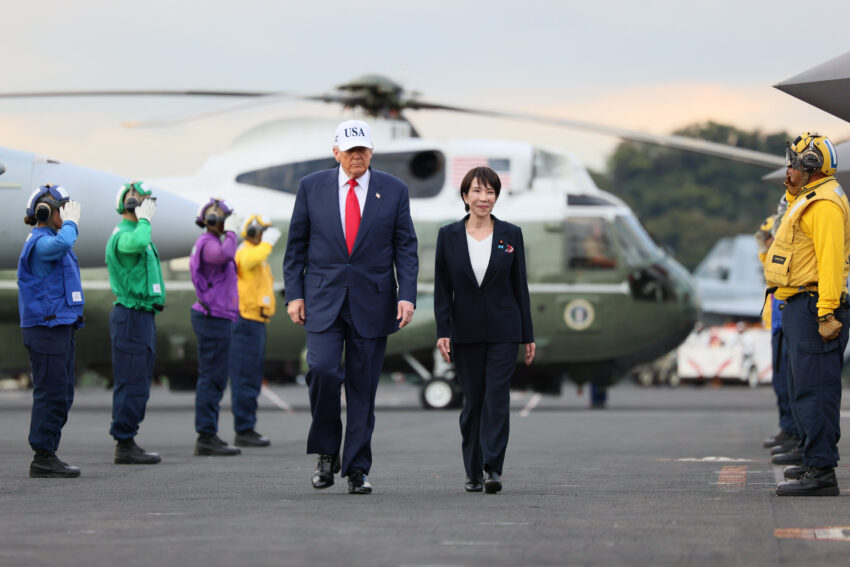
IMAGE: 令和7年10月28日、高市総理は、神奈川県でアメリカ合衆国のドナルド・トランプ大統領と共に、米海軍横須賀基地を訪問しました。. Photo: Cabinet Secretariat / Wikimedia, taken 2025-10-28, CC BY 4.0