
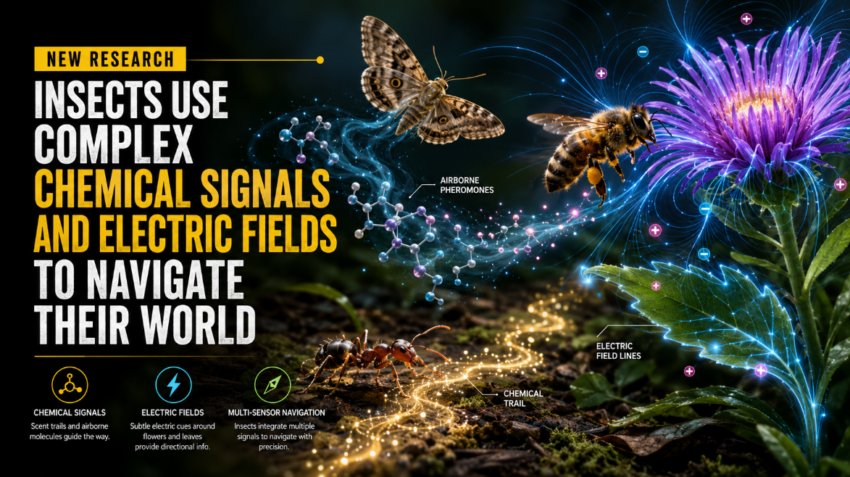
Dutch researchers have found that plants can attract multiple parasites through chemical signals when attacked by caterpillars. When a white butterfly caterpillar eats a cabbage leaf, the plant releases volatile odors to draw in parasitic wasps. These wasps, like Cotesia glomerata, lay their eggs inside the caterpillars and help protect the plant.
However, this same smell also brings in a second type of wasp called a hyperparasitoid that targets the first parasite, according to Wikinews. The study showed that these hyperparasitoids are especially drawn to cabbage plants after they have been infected by the first parasite. Laboratory and field tests confirmed that the hyperparasitoid wasp Lysibia nana prefers plants whose odors come from infected caterpillars.
Researchers believe that the saliva of infected caterpillars changes how the plant smells, which attracts the hyperparasitoid wasp. They collected air samples from plants that were healthy, infected once, or infected twice and tested how the wasps reacted. The results showed that the hyperparasitoid wasp was nearly five times more attracted to plants that had been infected twice.
Tests without the plant also showed no attraction, proving that the cabbage’s smell was key in drawing the wasp. The study suggests that hyperparasitoids may parasitize up to 55% of the parasitoid offspring, affecting population dynamics. In a separate study, scientists found that bees can detect electric fields around flowers and use this to choose which ones to visit, according to a report from Wikinews.
British biologist Dominic Clarke and his team trained bees to find sugar rewards from an array of flowers, some with electric fields and others without. Bees were able to pick the right flower 80% of the time when electric fields were present, but only 50% when they were not. The bees learned to remember these electric fields just like they do with color and shape of flowers.
The researchers tested different types of flowers including petunias, geraniums, and daisies, using bumblebees and honeybees. They used a device called a Faraday Pail to measure the charge on bees as they flew near flowers. The study involved testing 51 individual bees and showed that bees can sense electric fields in their environment.
Scientists also noted that bees had been known to carry charge for decades, but it was not clear if they could sense it. The experiments were done in a lab to control conditions, but future research will look at bees in their natural habitat. Another study revealed that ants can choose medicine when infected by a fungus, Wikinews reported.
Ant researcher Nick Bos and his team studied Formica fusca, a species of ant that lives in large colonies. These ants eat other insects and also consume honeydew from aphids. When some ants were infected with the fungus Beauveria bassiana, they chose food laced with hydrogen peroxide over plain food.
Healthy ants avoided the medicine, showing that infected ants knew what to take. The use of hydrogen peroxide reduced deaths among infected ants by 15%. Ants adjusted their intake based on the concentration of the medicine they took.
In nature, these ants might encounter similar chemicals in aphids or dead ants. The research team collected wild colonies of the ant species and tested them in homemade experimental setups. They infected ants with a fungus solution, then gave them a choice between food with or without medicine.
Over time, they counted how many ants died in each group to measure the effect of the medicine. The study showed that the results were reliable and conducted with a large number of colonies and ants. However, the findings only apply to this one ant species, not all ants.
IMAGE: New Research: Insects Use Complex Chemical Signals and Electric Fields to Navigate Their World DNR Art Department