
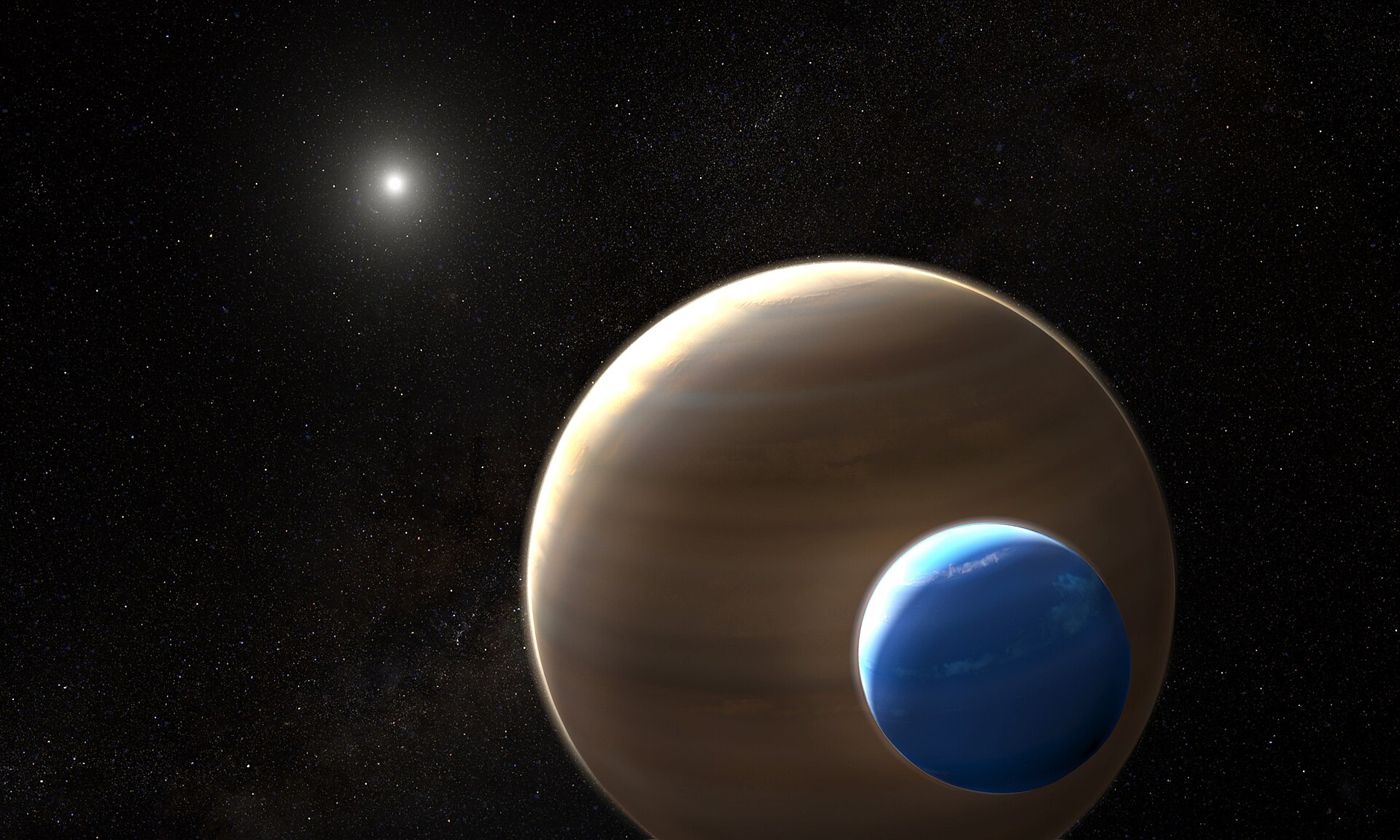
Astronomers have identified a celestial body that may be the first confirmed exomoon ever found beyond our solar system. The object orbits a brown dwarf, which in turn circles a star about half the mass of our Sun. This unusual setup forms a rare three-tiered system that has surprised scientists.
The system is named CD-35 2722 and lies about 72 light-years away from Earth. It was studied using the Very Large Telescope at the European Southern Observatory in Chile. The brown dwarf in this system has a mass about thirty times that of Jupiter.
A large object orbits the brown dwarf, and it is roughly the size of Jupiter. Because this object does not orbit a star directly, scientists are debating how to name it. It is unclear whether it should be called a moon, planet, or something else entirely.
The discovery has been described as ‘super weird’ by researchers who studied it. The object’s mass is large enough to be considered a planet, but it orbits a brown dwarf instead of a star. This makes it difficult to apply traditional definitions of planets and moons.
Scientists have found more than six thousand confirmed exoplanets, but no exomoon has ever been verified. Several candidates have been suggested over the years, but none had enough evidence to be accepted. The method used in this study involved measuring slight changes in the motion of the brown dwarf.
This technique helped detect a periodic signal that suggests an orbiting body exists. The findings were published in the journal Nature and have been met with excitement from the scientific community. Some researchers believe this discovery could lead to more accurate detection methods for exomoons.
It may also help astronomers better understand how moons form in other parts of the galaxy. In our own solar system, many planets have moons, so scientists expected to find similar systems elsewhere. However, the challenge lies in detecting such small and distant objects.
The object in this system is unusual because it is large, yet it orbits a brown dwarf rather than a planet. Despite the debate over its classification, researchers agree that this is an important step forward. It opens up new possibilities for finding more exomoons in the future.
The research team used advanced tools to observe the system and gather data over time. They applied a method that had previously helped find the first exoplanets around stars like our Sun. This approach may be key to identifying more of these rare celestial bodies in the future.
The discovery also brings attention to how definitions in astronomy continue to evolve. It shows that the universe is full of surprises and systems we never expected. Whether or not this object officially becomes an exomoon, it marks a major development in space exploration.
IMAGE: NASA, ESA, and L. Hustak (STScI) / Wikimedia Commons (CC BY 4.0)