
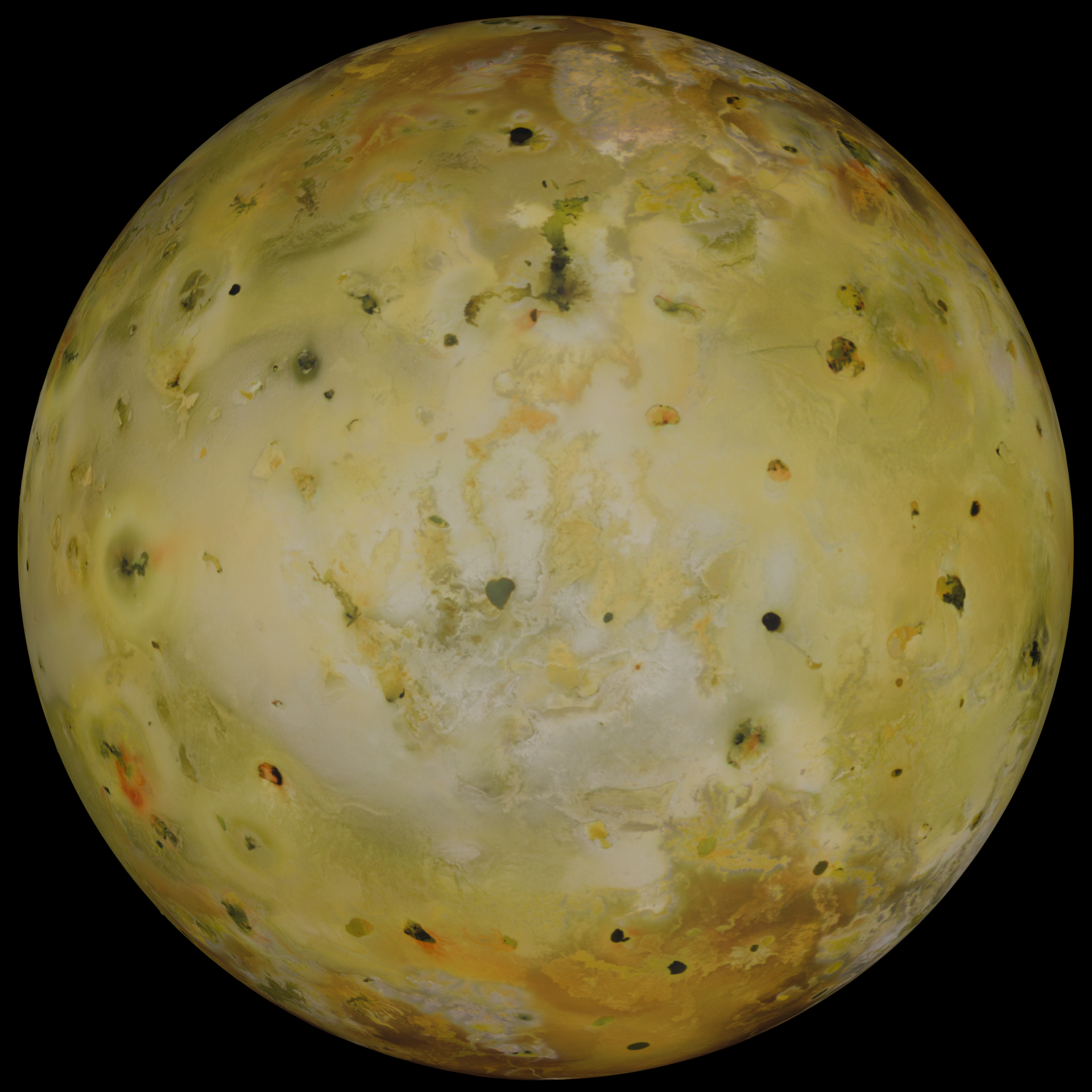
NASA’s Juno spacecraft has provided new insights into the hidden processes occurring beneath the surface of Jupiter’s most volcanic moon, Io. During two recent flybys of Io in late 2023 and early 2024, the spacecraft used its Microwave Radiometer to peer beneath the moon’s rocky surface. The measurements showed that temperatures just a few feet below Io’s surface were significantly higher than what sunlight alone could account for. This heat rise was more than forty degrees Fahrenheit, or about twenty-two degrees Celsius, which is far beyond what surface solar energy could explain.
Scientists were surprised to find that Io’s surface appears unusually smooth and is made of low-density material despite its active volcanism. The source of this heat may be coming from Io’s molten interior through a conductive crust or from lava flows trapped just below the surface. Unlike Earth, Io’s volcanic activity is driven by Jupiter’s strong gravitational pull rather than radioactive decay. This tidal flexing generates massive internal heat, which powers hundreds of active volcanoes and makes Io the most volcanically active object in our solar system.
The study of Io offers scientists a rare chance to understand how tidal heating works across the universe. This process not only creates intense volcanic activity on Io but also helps fuel subsurface oceans found on other moons like Europa and Ganymede. Before these recent findings, scientists could only observe heat escaping at the surface or during eruptions. Io serves as a natural laboratory for studying how heat moves through planetary crusts, which could help in understanding other worlds.
The same microwave technique used on Io can also be applied to icy moons with hidden oceans beneath their surfaces. Juno has previously used this method to study Europa and Ganymede, where scientists believe large oceans lie under thick ice shells.
These findings were published on July 22 in the Journal of Geophysical Research: Planets.
IMAGE: NASA Wikideas1 / Wikimedia Commons (CC0)
This article passed automated originality and source-verification checks before publishing.