Rome’s New Order in Africa
Following the destruction of Carthage, Rome established a new order in Africa that significantly reshaped the region’s political and economic landscape. The former Carthaginian territories were reorganized into the Roman province of Africa, a vital addition to the burgeoning Roman Republic. The establishment of this province marked the beginning of a period of Roman consolidation and expansion in North Africa.
Utica, a city that had allied with Rome during the Third Punic War, was chosen as the provincial capital. This decision underscored Rome’s strategy of rewarding loyalty and leveraging existing political structures to facilitate control. Utica became the administrative and commercial hub of the new province, serving as the center of Roman governance and economic activity in the region.
The province of Africa quickly became one of Rome’s most valuable assets. Its fertile lands, particularly in the areas surrounding the former Carthaginian heartland, were ideal for agriculture. The Romans exploited this potential by establishing large estates, known as latifundia, which were used to produce grain, olives, and other crops for export to Rome and other parts of the empire. The agricultural wealth of Africa contributed significantly to Rome’s food supply, helping to sustain the growing population of the capital and other major cities.
In addition to agriculture, the new province became an important center for trade. The strategic location of North Africa along the Mediterranean allowed for the easy movement of goods between Europe, the Middle East, and Sub-Saharan Africa. Roman merchants and traders flocked to the region, establishing a vibrant market economy that facilitated the exchange of a wide variety of products, including textiles, metals, and luxury items.
The Roman authorities also took steps to integrate the local population into the empire. They implemented Roman laws, built infrastructure such as roads and aqueducts, and encouraged the adoption of Roman customs and language. This process of Romanization helped to stabilize the province and foster a sense of loyalty among its inhabitants. Over time, many local elites were granted Roman citizenship, further binding the region to the imperial center.
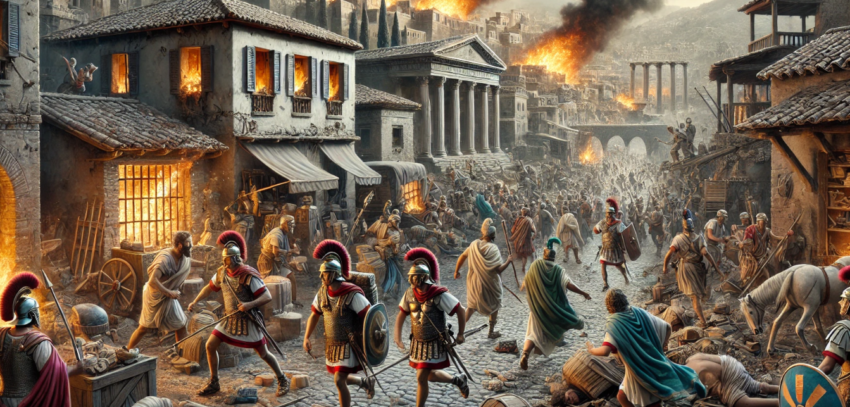
However, the imposition of Roman rule was not without resistance. Some local communities and leaders chafed under Roman domination and the disruption of traditional power structures. Sporadic uprisings and revolts occurred, but these were swiftly and brutally suppressed by Roman military forces. The might of the Roman legions ensured that any dissent was quickly quashed, reinforcing the stability and security of the province.
The creation of the province of Africa also had broader implications for the Roman Republic. It demonstrated Rome’s capacity to manage and integrate new territories into its administrative framework, a skill that would be crucial as the empire continued to expand. The wealth and resources derived from Africa helped to fuel Rome’s imperial ambitions, providing the economic foundation for further conquests and the maintenance of Rome’s existing territories.
In summary, Rome’s new order in Africa marked a significant transformation of the region. The establishment of the province of Africa facilitated economic growth, cultural integration, and political stability. It also underscored Rome’s ability to adapt and thrive as an imperial power, setting the stage for centuries of Roman dominance in the Mediterranean world.
 |
 |
 |