
Researchers have discovered that the continuous contractions of heart muscle cells actively suppress their ability to divide, revealing a biological trade-off that could help guide future treatments for heart damage.
Researchers at Spain’s National Center for Cardiovascular Research, known as CNIC, have identified a biological mechanism that helps explain why the adult human heart struggles to repair itself after injury. Their experiments revealed that the continuous contractions of heart muscle cells actively restrict their ability to divide and produce new cells. Temporarily inhibiting contraction allowed these cells to regain some of their capacity for division, revealing a previously unclear relationship between mechanical activity, metabolism, and regeneration. The study was published in Nature Cardiovascular Research on November 27, 2026.
Dr. Florian Weinberger, who leads the Cardiac Tissue Engineering and Regenerative Therapies Laboratory at CNIC, served as the study’s senior author. Nancy Shehata and Rajiven Srikantharajah were among the researchers who investigated how the demands of maintaining a heartbeat influence the regenerative abilities of heart muscle cells. Their findings could help scientists develop new approaches to repairing damaged cardiac tissue.
Why the Heart Struggles to Repair Itself
The human heart typically beats around 100,000 times each day, supplying organs and tissues with oxygen and nutrients. Its muscular walls contain specialized cells called cardiomyocytes, which generate the contractions responsible for pumping blood. These cells must maintain a highly organized internal structure to perform their function efficiently.
Unlike the skin and liver, the adult heart has very limited regenerative capacity. Although some heart muscle cells are naturally replaced over time, the process is generally too slow to repair extensive damage. Following a heart attack, damaged muscle is often replaced with scar tissue that cannot contract like healthy cardiac muscle.
Heart muscle cells are more capable of dividing during early development. This ability declines substantially after birth as the heart matures and adjusts to the increased demands of circulation outside the womb. Researchers have long investigated whether the biological changes associated with this transition also contribute to the loss of regenerative capacity.
Investigating the Relationship Between Contraction and Cell Division
The research team studied cardiac cells under several experimental conditions to determine whether contraction directly influences their ability to multiply. Their experiments involved heart muscle cells derived from human stem cells, laboratory-engineered cardiac tissue, living slices of heart tissue, and mouse models.
The scientists temporarily suppressed contraction and examined the resulting changes inside the cells. Particular attention was given to sarcomeres, the microscopic structures responsible for generating muscular force. Sarcomeres contain organized protein filaments that move relative to one another during contraction.
When contraction was inhibited, these structures became less organized, and more cardiomyocytes resumed progression through the cell cycle. The researchers also observed increased cell division. Restoring contraction reversed many of these changes, allowing sarcomeres to reorganize while suppressing further proliferation.
The findings indicate that the mature structure of cardiac muscle is not simply an obstacle to regeneration. The mechanical activity of the cells also helps maintain their specialized, largely non-dividing state.
Changes in Cellular Energy Production
The investigators discovered that suppressing contraction also altered how cardiomyocytes produced energy. Mature heart muscle cells require a continuous supply of energy to maintain their demanding workload. Much of that energy normally comes from processes occurring within mitochondria, the structures responsible for generating most cellular energy.
When contraction was inhibited, the cells shifted toward greater reliance on glycolysis. This process breaks down glucose to produce energy and provides materials that can support cellular growth. Increased reliance on glycolysis is also associated with the metabolism of developing heart muscle cells.
When contraction resumed, the metabolic characteristics associated with mature cardiomyocytes returned. The findings suggest that the heart’s mechanical workload influences whether its cells maintain a specialized contractile state or become more capable of proliferation.
This relationship provides researchers with additional biological pathways to investigate when developing experimental regenerative treatments.
Evidence From Adult Human Heart Tissue
One important aspect of the research was the inclusion of adult human cardiac tissue. Studies involving stem cell-derived cardiomyocytes are valuable, but those cells do not always possess the same characteristics as fully mature heart muscle cells. Including native adult tissue allowed researchers to investigate whether similar biological mechanisms operate in a more mature experimental system.
However, experiments involving human tissue outside the body are not equivalent to clinical trials involving patients. The researchers have not demonstrated that temporarily inhibiting contraction can safely regenerate an injured heart in a living person.
A separate study published in the same journal on November 27 also examined the connection between cardiac contraction, cellular specialization, and the suppression of cell-cycle activity. The independently conducted research provides further evidence that the mechanical demands placed on heart muscle cells influence their ability to proliferate.
Potential Implications for Heart Attacks and Heart Failure
Restoring damaged cardiac muscle remains a major objective in cardiovascular medicine. Existing treatments can improve circulation, reduce the workload placed on the heart, and help manage symptoms of heart failure. However, they generally cannot replace substantial quantities of heart muscle lost following a serious injury.
The new findings suggest that future regenerative therapies might target specific mechanisms linking contraction to cell division. Ideally, researchers would stimulate selected cardiomyocytes to multiply without interfering with the heart’s ability to maintain blood circulation.
Achieving that balance presents considerable challenges. Researchers must determine how newly produced cells can mature, integrate with existing tissue, and participate in coordinated contractions. Uncontrolled cell proliferation or disturbances in the heart’s electrical activity could introduce additional medical risks.
The international research received support from several organizations, including the European Research Council, the German Centre for Cardiovascular Research, the European Union’s Horizon 2020 program, and the la Caixa Foundation.
Further experiments will need to establish whether the mechanisms identified in the study can be controlled safely in damaged hearts. The principal challenge is encouraging regeneration while preserving the continuous pumping function on which the rest of the body depends.
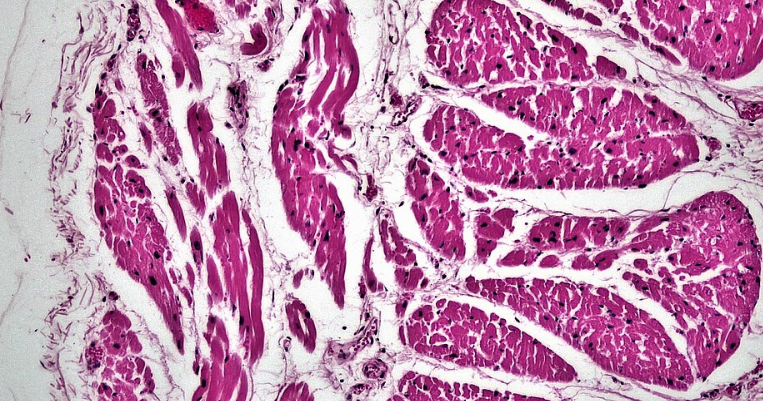
IMAGE: Source Muscle Tissue: Cardiac Muscle Author Berkshire Community College Bioscience Image Library CC1