

Americans planning holiday purchases expect to spend approximately $2,500 on seasonal expenses in 2026. Financial experts recommend setting spending limits, using credit cards carefully, and avoiding debt that could carry into the new year.
With the 2026 holiday shopping season underway, financial experts are encouraging Americans to establish spending limits before purchasing gifts, booking travel, and planning celebrations. Credit cards can provide convenience and valuable rewards, but relying too heavily on borrowed money could leave households struggling with debt well into 2027.
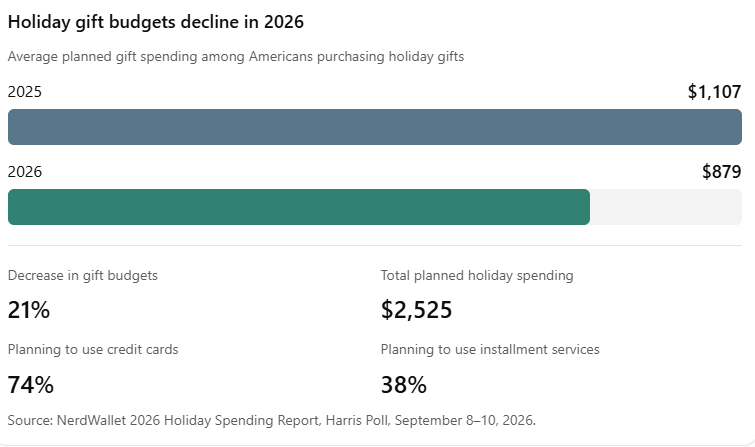
A recent NerdWallet survey found that Americans planning holiday purchases expect to spend an average of $2,525 on seasonal expenses. Many shoppers intend to use credit cards or installment payment services to cover those costs.
Consumers can reduce their financial risks by establishing realistic budgets, understanding credit card terms, and developing repayment plans before making purchases.
Americans Are Cutting Their Holiday Gift Budgets
Despite the considerable amount Americans expect to spend during the holidays, many are reducing their gift budgets.
NerdWallet’s 2026 Holiday Spending Report found that consumers planning to purchase gifts expect to spend an average of $879. That represents a 21 percent decrease from the previous year’s planned spending of $1,107.
The survey was conducted by The Harris Poll between September 8 and 10 and included 2,060 American adults.
Gift expenses represent only part of the financial burden. Holiday meals, decorations, transportation, accommodation, and social gatherings can also consume a significant portion of household budgets.
Establish a Realistic Spending Limit
Consumers should begin by reviewing their income, existing debt, savings, and essential monthly expenses.
Housing payments, groceries, utilities, insurance, and other financial obligations should take priority over holiday purchases. Money remaining after those expenses can help determine an affordable seasonal budget.
Creating separate spending limits for gifts, travel, food, and entertainment can make expenses easier to manage. Shoppers should also account for delivery charges, sales taxes, and other costs that can increase the final purchase price.
A credit card’s available spending limit should not be confused with the amount a household can afford to spend.
Rethink Holiday Gift-Giving Traditions
Financial pressures can make traditional gift exchanges difficult, especially for families with numerous relatives.
Establishing spending limits with friends and family members before shopping begins can help prevent uncomfortable situations.
Families might consider organizing a Secret Santa exchange, purchasing gifts only for children, or combining their money to buy a shared present.
Homemade gifts, family photographs, baked goods, and handwritten letters can also provide meaningful alternatives to expensive purchases.
Discussing these options openly may reveal that other family members are experiencing similar financial pressures.
Pay Credit Card Balances in Full
Credit cards can provide rewards, purchase protections, and convenient payment options. However, those benefits can quickly lose their value when cardholders accumulate interest charges.
The Consumer Financial Protection Bureau explains that most credit cards offer a grace period on purchases. Cardholders who qualify for that benefit can generally avoid purchase interest by paying their entire statement balance by the due date.
Consumers carrying existing debt should review their card agreements carefully. New purchases may begin accumulating interest immediately if the account has lost its grace period.
Making only the minimum required payment can extend repayment considerably. Shoppers should determine how much they can realistically repay before charging additional expenses.
Be Careful With Buy Now, Pay Later Services
Installment payment services have become increasingly common at online retailers and physical stores.
Some offer interest-free payment arrangements, while others charge interest or impose fees under certain circumstances.
NerdWallet’s survey found that 74 percent of holiday spenders expect to use credit cards, while 38 percent plan to use buy now, pay later services.
Among anticipated installment payment users, 38 percent expect difficulty meeting their payment obligations fully and on time.
Managing several installment plans simultaneously can become complicated, particularly when payments are automatically withdrawn from bank accounts.
Consumers should record every scheduled payment and consider how those obligations will affect their January and February budgets.
Understand Promotional Credit Card Offers
Some credit cards offer temporary zero-interest periods for purchases or qualifying balance transfers. These arrangements may help consumers spread repayment across several months without accumulating interest during the promotional period.
However, shoppers should carefully review when the promotional offer expires, whether transfer fees apply, and what interest rate will take effect afterward.
Deferred-interest financing requires particular attention. Some retail financing arrangements can impose previously accumulated interest if the promotional balance is not paid in full by the required deadline.
Consumers should distinguish those arrangements from conventional introductory zero-interest credit card offers.
The National Consumer Law Center has warned holiday shoppers about the potential financial consequences of installment plans and misleading promotional financing arrangements.
Do Not Overspend to Earn Rewards
Cash-back credit cards can return a portion of qualifying purchases to cardholders. Some also offer introductory bonuses for meeting minimum spending requirements.
These benefits are most valuable when shoppers make purchases they already intended to make and can afford to repay.
Buying unnecessary merchandise simply to qualify for a promotional reward can undermine the financial benefit. Interest charges can also exceed the value of cash back earned on purchases.
Before opening another credit card, consumers should compare interest rates, annual fees, rewards restrictions, and repayment requirements.
Find Affordable Ways to Celebrate
Holiday celebrations do not have to involve substantial spending.
Community light displays, public concerts, family movie nights, neighborhood gatherings, and other inexpensive activities can provide opportunities to celebrate without accumulating debt.
Families can also reduce entertainment expenses by preparing meals together instead of dining out or hosting elaborate parties.
Consumers who have already exceeded their holiday budgets can still reduce additional expenses and begin developing repayment plans.
Reviewing outstanding balances, avoiding unnecessary purchases, and directing available money toward high-interest debt can help households enter the new year in a stronger financial position.
FEATURE IMAGE: Source https://www.flickr.com/photos/86530412@N02/8186946980 Author Chris Potter CC2